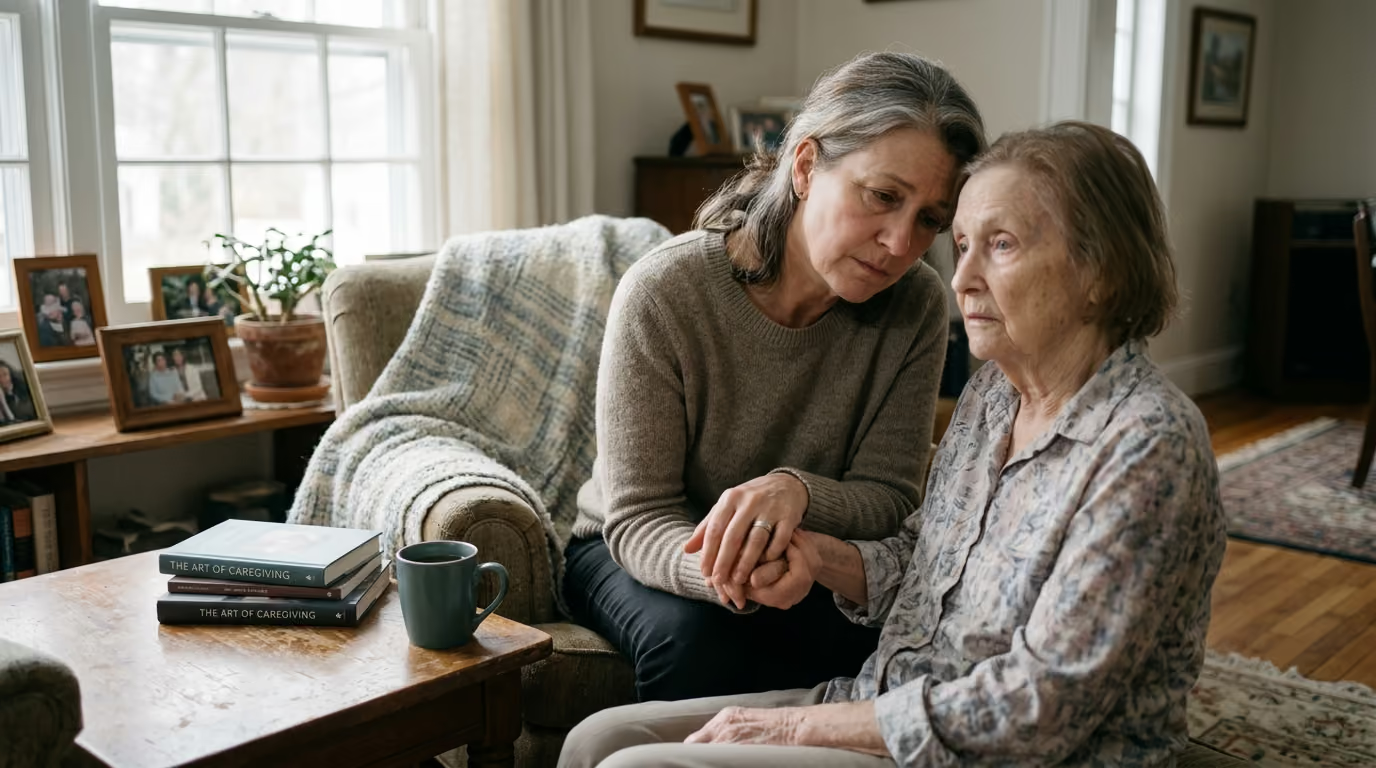

Dementia caregivers can protect their health and prevent severe burnout by managing chronic stress, improving nighttime sleep, and establishing reliable respite support systems.





You wake up at two in the morning to the sound of footsteps shuffling down the hallway. Your heart races before your feet even touch the floor. You redirect your spouse back to bed, clean up a spill in the kitchen, and lie awake watching the clock tick toward sunrise. By morning, you must manage breakfast, track six prescriptions, and handle an unpredictable wave of confusion.
This daily reality is familiar to millions of families. Caring for someone with cognitive decline is demanding work that affects physical health, emotional reserves, and personal finances. When care demands constantly exceed your available energy and time, burnout can take hold.
Preventing burnout does not mean trying harder or remaining endlessly positive. Sustainable care requires structured support, realistic boundaries, protected sleep, and evidence-based skills. This guide provides a practical blueprint for preserving your health while supporting the person you love.
The human brain responds to immediate threats through the autonomic nervous system. When an emergency occurs, such as a loved one wandering out the front door, the brain releases cortisol and adrenaline. These hormones increase heart rate, sharpen focus, and redirect blood flow to large muscles. Once the event resolves, the brain signals the body to return to baseline functioning.
In dementia caregiving, the perceived alarms rarely turn off completely. Caregivers frequently remain in a state of high vigilance, anticipating the next fall, outburst, or medication refusal. Over weeks and months, sustained cortisol production alters normal brain signaling. It affects the hippocampus, which handles memory, and the prefrontal cortex, which governs emotional regulation and decision-making.
Chronic stress also increases systemic inflammation throughout the body. This persistent physical activation explains why caregivers often report brain fog, tension headaches, digestive troubles, and weakened immune responses. Understanding this bodily response helps reframe burnout. Your exhaustion is a measurable physiological response to relentless nervous system activation.
Data from public health agencies shows the vast scope of unpaid caregiving. According to reports from the Alzheimer's Association, more than 12 million Americans provide unpaid care for someone living with dementia. Together, these family members contribute nearly 20 billion hours of assistance annually, valued at over 400 billion dollars. Families absorb roughly 70 percent of the total lifetime cost of dementia care through out-of-pocket expenses and unpaid labor.
The personal toll of this work is documented across medical literature. Research shows that 59 percent of family caregivers rate their emotional stress as high or very high. Around 38 percent report substantial physical strain. A meta-analysis published in public health records confirmed that dementia caregivers experience significantly higher rates of depression and anxiety than peers without caregiving duties.
Data from the Centers for Disease Control and Prevention indicates that nearly one in five caregivers reports fair or poor personal health. Frequent mental distress and diagnosed depression remain higher among caregivers than non-caregivers. Furthermore, nearly 60 percent of dementia caregivers live with at least one modifiable risk factor for chronic disease. These include elevated blood pressure, physical inactivity, poor sleep, and neglected medical checkups.
Research evaluating support methods shows clear patterns. Studies on single-focus approaches, such as providing brochures alone, show minimal long-term benefit. In contrast, systematic reviews confirm that multicomponent interventions offer significant relief. Programs that combine disease education, practical communication skills, psychological counseling, and planned respite create measurable reductions in caregiver burden. Skill-based training consistently outperforms basic information delivery.
When looking at sleep, research highlights nonpharmacological strategies. A systematic review of informal caregiver studies found that structured behavioral sleep programs, exercise, sensory adjustments, and overnight monitoring systems produce notable gains in sleep quality. Clinical trials demonstrate that caregivers benefit most when interventions address both their own sleep habits and the nighttime disturbances of the care recipient.
Caregiving experiences exist along a wide continuum. Distinguishing between different emotional and physical states makes it easier to choose the right support strategy.
Caregiver stress is the immediate physical and emotional reaction to everyday challenges. It rises during acute situations, like a doctor visit or an episode of agitation, and falls when things calm down.
Caregiver burden represents the cumulative impact of care on your overall life. Researchers separate this into distinct categories:
A person with heavy objective tasks may experience low subjective burden if they have strong family teamwork. Conversely, a light physical workload can feel crushing if the caregiver feels isolated or receives criticism from relatives.
Burnout occurs when your emotional, physical, and mental reserves are entirely spent. It is marked by chronic exhaustion that sleep does not fix, emotional numbness, growing cynicism, and a feeling that nothing you do matters. Burnout is a functional crisis that makes safe caregiving difficult.
Burnout can share traits with clinical depression, thyroid dysfunction, or nutritional deficiencies. When severe fatigue or apathy appears, a complete medical evaluation is appropriate.
Grief in dementia often starts years before physical death. As cognitive changes alter your loved one's memory and conversational ability, you may mourn the loss of your shared history.
This experience is known as ambiguous loss. The person is physically present, but the psychological connection you once shared has fundamentally shifted. Grieving these continuous micro-losses is normal. Experiencing profound sadness does not mean you have given up on your family member.
Many caregivers feel deep shame when they experience anger or resentment toward their situation or their loved one. Resentment is not a moral failure. It is an emotional alarm indicating that your workload is unbalanced, your boundaries have collapsed, or your basic human needs are being ignored.
Healthy management of resentment requires separating the feeling from dangerous actions:
If anger begins leading toward unsafe behavior, immediate outside intervention is necessary to protect both you and the person in your care.
Sleep disruption is one of the fastest paths to physical breakdown and burnout. Many people with dementia experience altered circadian rhythms, leading to nighttime wandering, confusion, and frequent awakenings. When a caregiver must listen for footsteps all night, their own restorative sleep stages disappear.
Addressing sleep requires an organized approach rather than relying solely on sedative medications, which can increase fall risks.
Work with a doctor to determine why nighttime awakenings occur. Common medical drivers include:
Simple adjustments can reduce the need for constant overnight surveillance. Install door chimes or motion sensors that alert you only if the person leaves their bedroom area. Use low-glare nightlights in hallways and bathrooms to reduce disorientation. Keep walking paths clear of rugs to lower fall risks.
You cannot maintain your health if you are on call seven nights a week. Create a schedule where another family member or a paid overnight aide handles night monitoring at least twice a week. During those off-duty nights, sleep in a separate room with a sound machine so your nervous system can fully disengage. You can explore broader lifestyle brain resilience practices to help support your nervous system during high-stress periods.
Respite means taking planned breaks from caregiving duties. It is a preventive health practice, not an optional luxury. Waiting until you are completely exhausted to arrange respite reduces its benefits and increases family stress.
Different forms of respite serve different needs:
Evidence regarding temporary residential respite is mixed. A sudden change of environment can sometimes cause temporary confusion or agitation for the person with memory loss. If you use residential respite, introduce it gradually. Share detailed written notes about daily routines, favorite foods, and calming strategies with the staff.
Friends and relatives often say, "Let me know if you need anything." While well-intentioned, this statement places the mental burden of planning back onto the exhausted caregiver.
Convert vague goodwill into specific, actionable requests:
Building redundancy into your plan protects against emergencies. Ensure at least two people know your daily routine and medication lists so a single illness does not cause the care system to collapse.
Family dynamics frequently become strained during cognitive illness. Disagreements over financial choices, driving safety, and hands-on duties can create significant resentment. Setting healthy boundaries protects your capacity to provide safe, stable care.
Boundaries define what you can sustainably offer without destroying your own physical health. Divide your care tasks into three distinct categories:
When an unshared task falls into the third list, the response must be operational: "I cannot safely transfer Dad into the shower alone. We must hire an aide for bathing, or arrange an occupational therapy assessment."
Siblings who live far away may not see the daily reality of cognitive decline. They might minimize the difficulties or offer critical advice without providing practical help.
Use clear, factual communication scripts:
Clear communication prevents emotional arguments and keeps the focus on practical solutions. If you want to understand how memory changes influence behavior, reviewing memory and focus guidance can provide helpful clarity.
Clinical research confirms that specific educational and psychological strategies significantly improve caregiver outcomes.
Reading about dementia is helpful, but active skill training delivers far greater reductions in stress. The World Health Organization and leading academic centers emphasize training caregivers in concrete behavioral management techniques.
Key skills include:
Learning these approaches prevents daily friction and conserves emotional energy. For a deeper understanding of underlying brain changes, our resources on brain aging outline how cognitive pathways evolve over time.
Support groups provide emotional validation and practical tips from peers walking the same road. However, study findings show that group fit matters. A support group focused on early-stage challenges may not serve someone managing late-stage physical care. Choose a group that aligns with your loved one's specific diagnosis and disease stage.
Individual counseling, particularly cognitive behavioral therapy and acceptance-based approaches, helps caregivers process ambiguous grief, manage guilt, and untangle complex family dynamics. A skilled therapist provides a confidential space to express difficult feelings without judgment.
Several widespread beliefs contribute directly to caregiver isolation and exhaustion.
Believing that love alone equips someone to manage complex dementia care creates unrealistic expectations. Dementia involves progressive neurological changes that eventually require round-the-clock supervision. Seeking outside help is a mark of responsible planning, not a sign of weakness.
Moving a loved one to a memory care community or assisted living facility is often an appropriate safety decision. When physical transfers become dangerous, medical needs exceed home capacity, or a caregiver's health collapses, professional residential care provides a structured, secure environment. Transitioning to a care community changes your role from an exhausted physical aide back to a supportive family member.
Resentment is an almost universal response to chronic exhaustion, loss of personal freedom, and unbalanced family help. It reflects the difficulty of the situation, not the depth of your affection.
Abrupt changes in confusion, agitation, or lethargy often signal an underlying medical issue rather than gradual cognitive decline. The National Institute on Aging highlights that conditions like urinary tract infections, pneumonia, constipation, dehydration, and adverse medication reactions frequently manifest as sudden behavioral shifts. Any rapid change warrants prompt medical evaluation.
You do not need a complicated self-care routine to protect your health. When time is scarce, focus on maintaining a non-negotiable "health floor" that prevents physical decline.
When long breaks are impossible, build short periods of recovery into your day:
Reduce decision fatigue by organizing essential medical and legal records in a single binder:
Having these documents ready reduces chaos during unexpected medical visits or emergency room trips. You can browse our educational library for additional reference materials on long-term cognitive care planning.
Recognizing the boundary between standard caregiving strain and a clinical crisis is critical for long-term safety.
Schedule an evaluation with your physician or a mental health professional if you notice:
If thoughts of suicide or self-harm occur, contact local crisis services or call emergency support lines immediately.
The person in your care may require a higher level of medical support or residential memory care when the following issues arise:
Evaluating these issues with a social worker, geriatrician, or care manager helps you make decisions based on safety and objective capacity rather than guilt.
Take these practical questions to your next appointment to improve your caregiving plan:
Revisit this guide whenever your caregiving responsibilities shift, such as after a hospital discharge, when nighttime waking increases, or when you notice rising feelings of resentment and exhaustion.
Sustainable caregiving is built on clear limits, structured support systems, and regular physical recovery. Protecting your well-being is an absolute necessity that preserves dignity, safety, and health for both you and your loved one.

Follow FitBrainLab for research-led insights on memory, focus, brain aging, nutrition and mental fitness after 60. Stay connected for new articles, practical guidance and ideas for a sharper, more engaged life.


Build habits that support memory, focus and a curious, connected life.
Read the Blog