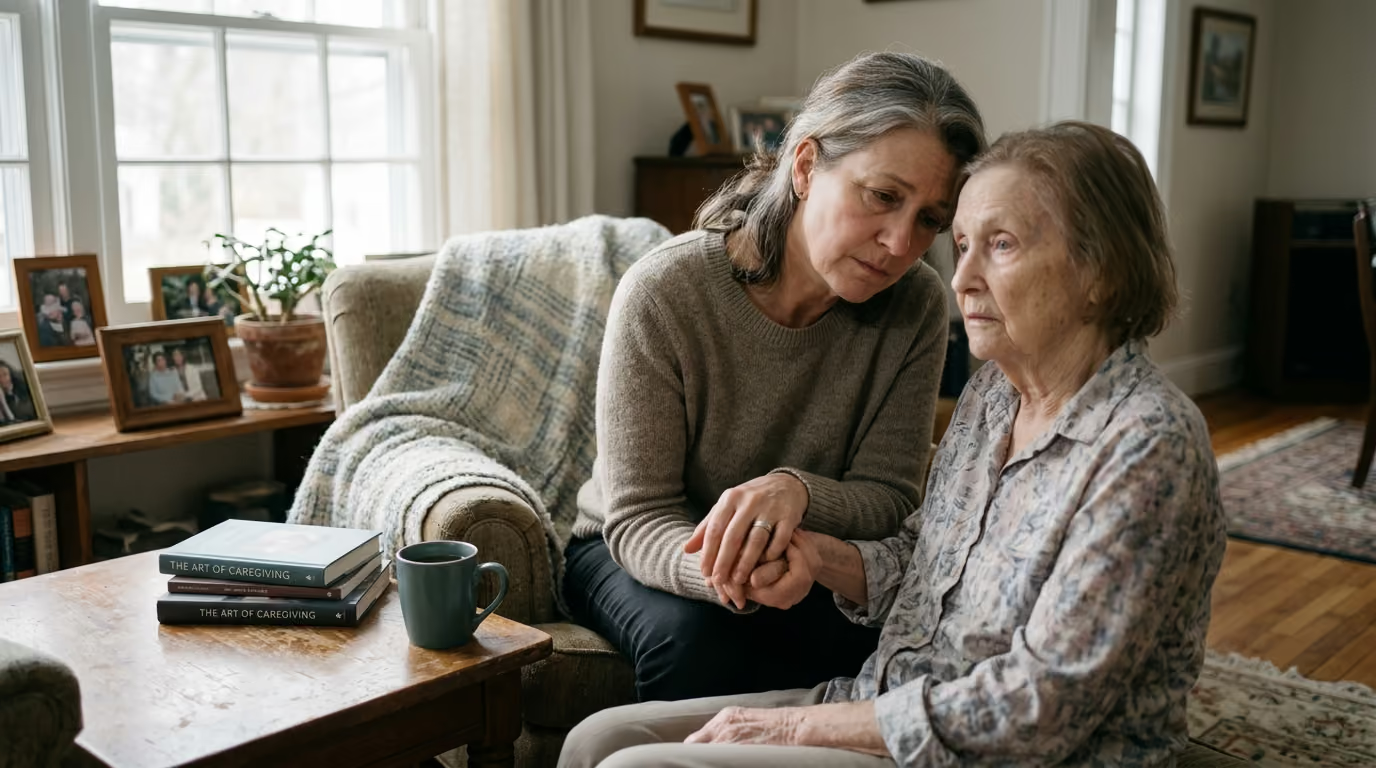

Lifelong mental engagement through complex work, hobbies, and social connections helps your brain build resilience against age-related cognitive decline and underlying structural changes.





Two people can have the exact same level of physical brain changes yet show completely different abilities in daily life. One person may experience noticeable memory loss, while another continues to solve complex problems, manage a household, and live independently. This difference reveals a central truth about brain aging: physical brain structure does not tell the whole story.
The concept of cognitive reserve explains why clinical symptoms do not always match the biological markers seen in brain scans. Mental engagement, education, occupational complexity, and social connection build a buffer that helps the brain withstand age-related changes. This buffer is not an impenetrable shield. It is a probabilistic influence that can delay the onset of symptoms and help maintain day-to-day independence.
Understanding how the brain adapts requires separating three related terms: cognitive reserve, brain reserve, and brain maintenance. While people often use these terms interchangeably, researchers treat them as distinct biological and functional processes.
Cognitive reserve refers to the brain's ability to optimize performance through efficient neural networks and alternative cognitive strategies. When a standard pathway faces disruption, a brain with high cognitive reserve finds another route to complete the task. This process relies on cognitive flexibility and accumulated knowledge rather than raw physical mass.
Brain reserve describes the physical hardware of the brain. This includes total brain volume, the number of intact neurons, and the density of synaptic connections. A person with a larger physical reserve can lose more brain cells before crossing the threshold into noticeable impairment.
Brain maintenance describes the active preservation of brain tissue over time. When you manage blood pressure, eat nutritious foods, and get quality sleep, you reduce the accumulation of vascular damage and toxic proteins. Brain maintenance keeps the physical structure healthy, while cognitive reserve helps you make the most of that structure.
Researchers divide cognitive reserve into two specific operational mechanisms: neural reserve and neural compensation. Neural reserve reflects the baseline efficiency of your existing brain networks. An individual with strong neural reserve can process information and solve problems with less mental effort. They use organized memory techniques, draw on extensive vocabulary, and apply well-practiced problem-solving routines.
Neural compensation occurs when primary brain networks suffer damage or age-related decline. The brain responds by recruiting alternative networks that do not normally perform that task. Functional neuroimaging shows that older adults with high cognitive reserve often activate both hemispheres of the brain during tasks where younger adults use only one. This recruitment allows older adults to maintain high performance levels despite underlying structural changes.
These models are research tools rather than standard clinical tests. A routine brain scan cannot assign a specific cognitive reserve score to an individual. Instead, clinicians evaluate reserve by looking at a person's life history, educational background, occupational demands, and everyday cognitive habits. Exploring brain aging and neuroplasticity materials provides useful context on how these adaptive processes develop over decades.
Long-term research shows that cognitive reserve is not built during childhood alone. Building resilience is a continuous process that spans early life, middle age, and older adulthood.
A 2024 systematic review and meta-analysis examined how cognitive reserve influences dementia risk across different life stages. The researchers found protective associations across every single era of life. Early-life reserve was associated with an 18% lower risk of dementia, midlife reserve with a 9% lower risk, and late-life reserve with a 19% lower risk. These findings prove that taking up intellectually demanding activities in your sixties, seventies, and beyond still offers meaningful benefits.
The 2024 Lancet Commission on dementia prevention, intervention, and care outlined 14 modifiable risk factors across the lifespan. The report calculated that addressing these 14 factors could prevent or delay up to 45% of dementia cases worldwide.
The 14 modifiable risk factors span several developmental phases:
The 45% figure represents a theoretical population estimate rather than a guarantee for any single individual. It assumes complete elimination of these risk factors across entire populations. You cannot eliminate personal risk entirely through healthy habits alone. However, addressing these factors provides the best statistical odds for maintaining cognitive function.
Clinical trials provide additional insight into how targeted mental engagement works in practice. The Advanced Cognitive Training for Independent and Vital Elderly (ACTIVE) study followed 2,802 healthy older adults over a decade. Participants completed training in memory strategies, deductive reasoning, or visual speed-of-processing.
The ten-year follow-up results showed clear differences across the training types:
The ACTIVE trial also measured daily functional ability. At approximately age 82, about 60% of trained participants reported maintaining their baseline capacity for daily tasks, compared with 50% of untrained controls. A secondary analysis found that participants who completed higher doses of speed training showed a lower rate of dementia diagnosis over time.
These clinical findings highlight the difference between near transfer and far transfer. Near transfer means getting better at the specific task you practice, such as remembering a list of words. Far transfer means that practicing a specific task improves unrelated cognitive functions or shields you from disease. The ACTIVE study demonstrated strong near transfer and durable skill retention, but it showed limited far transfer across general real-world tests. You can read more about these protective frameworks in our resources on dementia and Alzheimer's protection.
Formal education is one of the most widely studied markers of cognitive reserve. People with higher educational attainment consistently show a lower statistical risk of developing dementia. Schooling during early life builds strong neural connections, establishes literacy and numeracy, and teaches structured problem-solving habits.
Education is not a simple biological medicine. It is deeply connected to social determinants of health. Higher education frequently leads to higher income, safer working conditions, better healthcare access, and higher health literacy. It also influences where a person lives, their exposure to environmental toxins, and their ability to afford nutritious food.
Researchers cannot completely isolate the neurological benefits of education from these broader socioeconomic advantages. Having less formal schooling does not condemn a person to cognitive decline. Many life experiences outside the classroom demand intense mental effort and build exceptional resilience.
Occupational complexity serves as another major contributor to cognitive reserve. Jobs that require continuous problem-solving, strategic planning, clear communication, and adaptability provide decades of cognitive exercise.
Occupational complexity generally falls into three distinct categories:
Working with data involves analyzing complex information, synthesizing diverse inputs, managing financial systems, or solving technical problems. Occupations involving data require sustained working memory, logical deduction, and attention to detail.
Working with people involves negotiation, mentoring, conflict resolution, instruction, and emotional regulation. Navigating social dynamics at work demands high-level executive function, perspective-taking, and rapid communication skills.
Working with things involves craftsmanship, spatial navigation, precision mechanics, or complex physical coordination. Skilled trades, engineering, and artistic production require spatial reasoning, motor planning, and immediate troubleshooting.
Job titles alone do not accurately measure mental complexity. Two people with the exact same job title may experience completely different cognitive demands based on their autonomy and responsibility.
Consider an illustrative model of two different work environments. In one setting, an administrative assistant follows rigid, unchanging instructions under close supervision. In another setting, an administrative assistant manages unpredictable client emergencies, coordinates schedules, negotiates with vendors, and solves software problems independently. The second scenario provides far greater cognitive engagement despite having the identical job title.
Complex cognitive demands also occur outside formal employment. Raising a family, managing a household budget, coordinating community volunteer initiatives, and caring for an aging relative require high levels of executive function. Practical problem-solving in everyday life builds meaningful cognitive reserve regardless of whether you received a corporate paycheck for your efforts. Reviewing retirement mental fitness practices can help individuals replace workplace complexity with fulfilling post-career projects.
Participating in varied leisure activities throughout adulthood is strongly linked to healthy cognitive aging. Observational studies show that individuals who engage in mentally stimulating hobbies experience slower rates of cognitive decline as they grow older.
One systematic review noted that each additional leisure activity adopted by an older adult was associated with an approximate 12% reduction in the risk of dementia. This statistic represents an observational association rather than a rigid mathematical formula. People who maintain multiple hobbies often possess better baseline health, higher mobility, greater financial security, and stronger social support networks.
The primary value of a hobby lies in the cognitive demands it imposes rather than its specific category. Passive pastimes provide minimal challenge to neural networks. Active pastimes require learning, planning, motor coordination, and error correction.
Learning to play a musical instrument combines multiple brain systems simultaneously. It requires visual translation of sheet music, precise motor control of fingers, auditory feedback monitoring, and emotional expression. This multisensory integration forces distinct brain regions to communicate rapidly with one another.
Learning a foreign language challenges working memory, vocabulary retrieval, and executive control. Managing two languages forces the brain to suppress competing words while retrieving appropriate grammatical structures. Research indicates that lifelong bilingualism can delay the clinical onset of dementia symptoms by several years.
Strategic games like chess, bridge, and complex card games demand forward planning, pattern recognition, and working memory. Players must anticipate their opponent's actions, adjust strategies based on new information, and manage risk.
Creative activities like painting, sculpting, woodworking, and gardening combine physical dexterity with spatial planning. A gardener must understand soil composition, track seasonal weather patterns, prune plants correctly, and solve pest problems. These diverse demands stimulate sensory pathways and maintain motor planning networks.
The key to building reserve through hobbies is continuous challenge. Once an activity becomes effortless and automatic, its ability to stimulate new neural adaptations decreases. To keep building resilience, you must gradually increase the difficulty or introduce unfamiliar elements to your favorite pastimes.
Human brains evolved to navigate intricate social relationships. Interacting with other people is one of the most cognitively demanding tasks an individual can perform. A casual conversation requires rapid processing of spoken language, tone of voice, facial expressions, and body language. You must simultaneously retrieve relevant memories, formulate responses, and regulate emotional reactions.
Observational studies consistently show that persistent social isolation and loneliness correlate with higher risks of cognitive decline. Social isolation reduces overall mental stimulation, while chronic loneliness can elevate stress hormones that damage vulnerable brain structures like the hippocampus.
The World Health Organization (WHO) evaluated the evidence regarding social activities and brain health. In its guidelines on dementia risk reduction, the WHO conditionally recommends social activity interventions for older adults. The organization notes that while the specific certainty of evidence for dementia prevention is very low, social connection provides profound benefits for mental health, emotional well-being, and overall quality of life.
Social engagement also supports brain health through practical, real-world mechanisms:
Sensory health serves as the essential gateway for social and mental engagement. When sensory inputs fade, the brain must dedicate excessive cognitive effort simply to decode garbled signals. This diversion of mental resources leaves fewer reserves available for comprehension, memory storage, and higher-level reasoning.
Untreated hearing loss is one of the largest modifiable risk factors identified in the 2024 Lancet Commission report. When an older adult struggles to hear in noisy environments, social gatherings become exhausting and frustrating. Many individuals respond by withdrawing from conversations, clubs, and family dinners. This withdrawal leads directly to isolation and reduced cognitive stimulation.
Untreated vision loss creates similar hurdles. Failing eyesight makes reading, driving, navigating unfamiliar places, and crafting difficult or impossible. Correcting vision problems through updated prescriptions or cataract surgery restores access to stimulating hobbies and preserves independence.
Protecting your sensory systems directly preserves your cognitive reserve. Treating hearing loss with modern hearing aids and addressing visual changes promptly allows you to remain fully engaged with your community. Combining sensory care with active communication forms the cornerstone of lifestyle and brain resilience guides.
Discussions surrounding brain health often suffer from exaggerated promises, oversimplified wellness advice, and commercial hype. Separating proven scientific facts from popular misconceptions helps you invest your time and energy into habits that truly matter.
Digital brain-training applications claim that playing short computer games will sharpen your intellect and shield you from cognitive decline. While users frequently get better at playing those specific games, this progress rarely transfers to broader cognitive skills. Playing a computerized tile-matching game makes you better at tile matching, but it does not improve your ability to manage your finances or remember your medication schedule. Real-world activities that involve multifaceted challenges offer far superior mental engagement.
Higher educational attainment is associated with lower statistical risk, but it provides no guarantee against neurodegenerative conditions. Highly educated individuals, including scientists, physicians, and professors, can and do develop Alzheimer's disease. Education helps delay the clinical expression of symptoms, but it does not stop the underlying biology of the disease.
Cognitive reserve alters how symptoms appear rather than erasing underlying physical pathology. An individual with high reserve may harbor significant biological changes while continuing to perform well on standard cognitive tests. However, once the physical changes become extensive enough to overwhelm their compensatory networks, these individuals may experience a rapid functional decline. Compensating successfully for years does not mean the brain was free from disease.
Public health discussions about modifiable risk factors can unintentionally create the impression that dementia is a lifestyle choice. Dementia is a complex medical condition shaped by genetics, systemic inequalities, environmental exposures, and unpredictable biological processes. Lifestyle adjustments reduce statistical risk, but developing a cognitive disorder is never an individual's fault.
Marketing campaigns often promote one specific activity as the ultimate secret to brain health, whether it is learning a dead language, playing chess, or doing crossword puzzles. Neuroscience shows that no single activity holds unique magical properties. The best mental activities are those that present genuine novelty, require real effort, and keep you consistently engaged over long periods.
Understanding these distinctions allows you to view brain resilience through an objective lens. Applying this knowledge requires building balanced daily routines rather than chasing unproven quick fixes. For broader insights on maintaining sharp mental clarity, review our cognitive health protection strategies.
Building cognitive reserve does not require rigid daily schedules or expensive training programs. The most effective approach integrates mental challenge, social connection, physical movement, and health management into a cohesive lifestyle.
Incorporate tasks that demand active planning, focus, and skill acquisition:
Make interactive communication a regular priority in your weekly routine:
Physical activity supports brain maintenance by promoting vascular health, reducing inflammation, and stimulating neurotrophic growth factors. Combining physical movement with cognitive tasks delivers dual benefits.
Consider taking dance classes, which require memorizing choreography, keeping rhythm, and coordinating with a partner. Practice dual-task walking by naming items in specific categories or solving mental arithmetic while strolling through a park. Engaging in outdoor activities like hiking or pickleball demands rapid hand-eye coordination, balance adjustments, and immediate tactical decisions.
A resilient brain relies entirely on a healthy body. Support your cognitive reserve by protecting your physical systems:
By integrating these four pillars, you create an enriching environment that supports your brain over time. Additional evidence-based methods for maintaining mental sharpness are available throughout our brain health and memory publications.
Maintaining cognitive reserve works alongside professional healthcare rather than replacing it. If you or a family member notice progressive changes in memory, language, spatial orientation, or daily judgment, schedule a thorough clinical evaluation.
Take this checklist of focused questions to your next appointment:
Document specific examples of any cognitive changes you have experienced before your appointment. Note when the changes started, whether they occur under specific conditions, and how they affect your ability to manage finances, medications, driving, or household chores. Concrete observations give your healthcare provider the actionable data needed to evaluate your situation accurately.
Staying curious, connected, and physically active provides your brain with the adaptive tools it needs to support functional independence throughout your life.

Follow FitBrainLab for research-led insights on memory, focus, brain aging, nutrition and mental fitness after 60. Stay connected for new articles, practical guidance and ideas for a sharper, more engaged life.


Build habits that support memory, focus and a curious, connected life.
Read the Blog