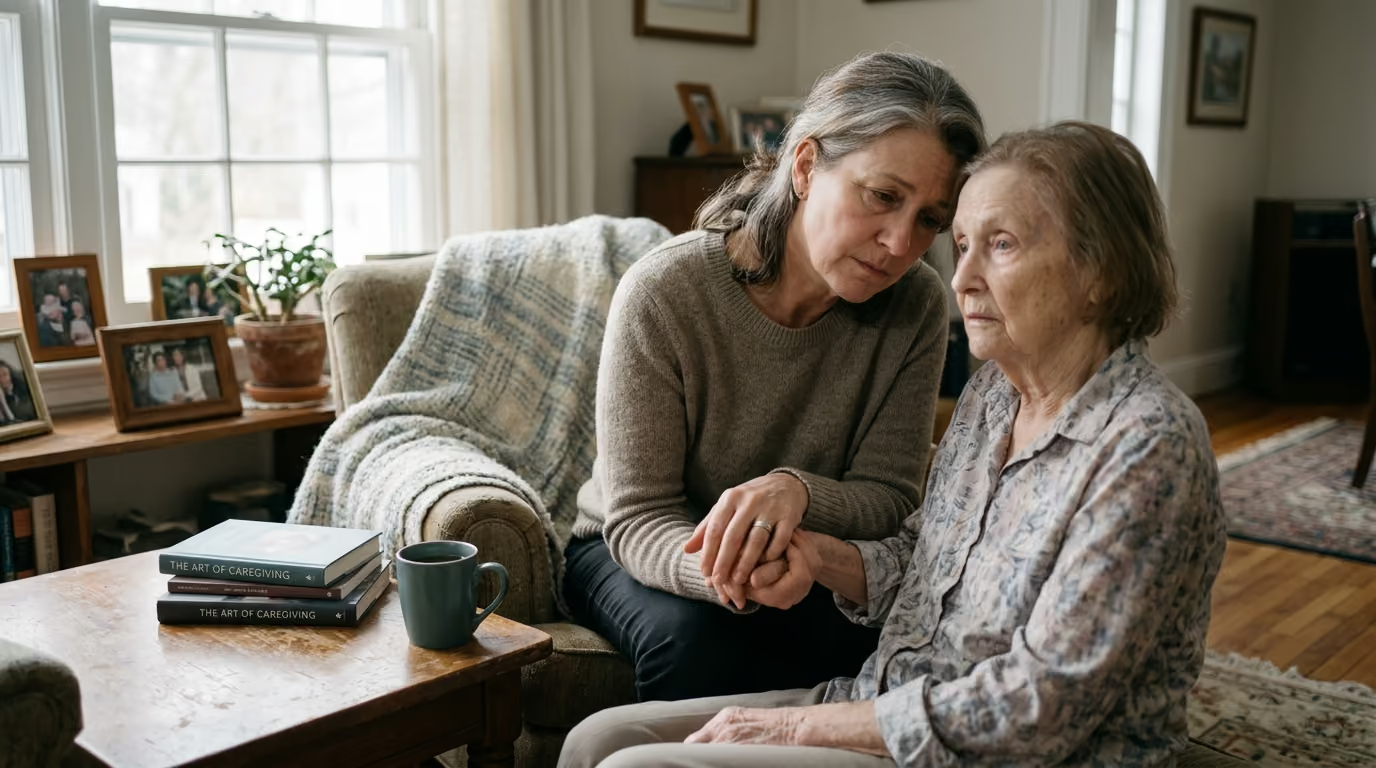

When daily care for a loved one with dementia becomes overwhelming, organizing family members and healthcare clinicians into a coordinated support team reduces caregiver burnout.





Dementia support is not a solitary task meant for a single caregiver. It is a collaborative system that connects medical care, daily living assistance, emotional support, and legal planning. Effective coordination does not mean taking over another person's life. Instead, it means building a structured network that protects the autonomy, dignity, and safety of the individual experiencing cognitive change.
Dementia is an umbrella term for cognitive decline that interferes with everyday functioning. It is not a single disease or a normal part of aging. Conditions such as Alzheimer's disease, vascular dementia, Lewy body dementia, and frontotemporal dementia cause different patterns of decline. These conditions affect memory, language, visual processing, executive function, and behavioral regulation in varied ways.
To understand why a team is necessary, we must distinguish between the different dimensions of cognitive change. Cognitive symptoms involve memory loss, difficulty following conversations, and impaired judgment. Functional changes involve difficulty managing finances, taking medications correctly, cooking, driving, and maintaining personal hygiene. Behavioral and psychological symptoms can include anxiety, apathy, sleep disruption, and distress.
No single person can manage all these areas alone over a long period. When care falls entirely on one spouse or adult child, exhaustion and health risks rise quickly. A structured support circle distributes responsibilities across defined concentric rings.
The innermost circle begins with the person living with cognitive change. The next circle includes trusted family, friends, and the primary day-to-day supporters. The outer rings bring in medical clinicians, allied health professionals, paid home aides, community services, and legal advisors. Understanding these layers helps families build resilience before sudden emergencies occur.
Global and national data highlight the vast scale of dementia care and the heavy reliance on family networks. The World Health Organization estimates that more than 55 million people worldwide live with dementia, with nearly 10 million new cases diagnosed each year. The global economic cost exceeds one trillion dollars annually, with roughly half of that value provided through unpaid informal care.
In the United States, data from the Centers for Disease Control and Prevention indicate that more than 11 million adults provide unpaid care for someone with dementia. These caregivers deliver billions of hours of assistance each year. Approximately two-thirds of these caregivers are women, nearly a third are aged 65 or older, and a quarter belong to the sandwich generation, caring for an aging parent while raising children.
Navigating this care environment carries a measurable toll. In reports published by the Alzheimer's Association, 70 percent of caregivers reported that coordinating care across doctors and services was a primary source of stress. Over half noted severe difficulty navigating the healthcare system, and two-thirds struggled to find resources for their own physical and mental wellbeing. Nearly all surveyed caregivers stated that structured care navigation services would significantly improve their quality of life.
Clinical research evaluating caregiver interventions provides clear direction on what methods actually help:
Systematic reviews demonstrate that structured caregiver education and behavioral skills training significantly improve caregiver confidence and coping strategies. Programs that teach communication adjustments and practical problem-solving help family members interpret behavioral changes as symptoms rather than deliberate defiance.
Studies show that having a dedicated care coordinator or structured case management model leads to better health outcomes for the person with dementia. These programs reduce unnecessary hospital visits, improve adherence to clinical treatments, and delay the need for long-term residential placement.
Systematic reviews of communication training show marked improvements in caregiver communication skills and factual knowledge. While communication training alone does not eliminate all behavioral challenges or completely resolve caregiver burden, it provides practical tools that make daily interactions less stressful.
Research consistently shows that multicomponent programs combining education, practical help, counseling, and scheduled respite are the most effective approach. Isolated interventions, such as providing occasional respite without any education or care planning, show much less consistent long-term benefit. Comprehensive strategies that address both the practical workload and the emotional needs of the support network deliver the best outcomes.
Exploring dementia and cognitive protection resources provides useful background for families navigating these complex care decisions.
A functional support team relies on distinct, clearly defined roles. When responsibilities remain vague, critical tasks are missed, and friction develops between family members. Every team should define who handles specific responsibilities.
The individual experiencing cognitive change should always be treated as an active participant rather than a passive subject. Their role involves expressing personal goals, identifying trusted allies, and completing advance directives while they have legal capacity. They should also participate in medical appointments, communicate preferences about routines, and continue meaningful daily activities.
The primary caregiver manages the central day-to-day responsibilities, such as hands-on personal care, meals, and immediate safety oversight. Because this role carries the highest risk of physical and mental fatigue, the primary caregiver must not be expected to manage every administrative and logistic task alone.
Family members who live at a distance can provide vital contributions. They can manage online bill payments, review insurance claims, research local services, coordinate medical appointments, and order groceries. Defining these tasks allows remote relatives to contribute meaningfully without feeling excluded or placing the entire administrative burden on the local caregiver.
Friends and neighbors provide valuable social connection that preserves the person's identity beyond their diagnosis. A neighbor might visit weekly for coffee, tend a garden together, or walk around the block. These interactions maintain community ties and give the primary caregiver regular, predictable breaks.
The primary care doctor manages chronic health conditions, reviews prescription regimens, and conducts baseline cognitive assessments. They identify reversible contributors to cognitive decline, such as urinary infections, vitamin deficiencies, thyroid abnormalities, medication side effects, or sensory impairment.
Specialists provide diagnostic clarity and targeted treatment planning. Geriatricians focus on multi-system health and functional longevity in older adults. Neurologists evaluate structural and neurological patterns. Neuropsychologists conduct detailed cognitive testing to measure specific memory, attention, and executive strengths and weaknesses. Old-age psychiatrists assist when severe mood changes, depression, or hallucinations occur.
In many healthcare systems, specialized nurses and navigators serve as the designated point of contact. They educate families on disease progression, help implement clinical advice at home, and coordinate referrals between different medical offices.
Social workers and professional care managers evaluate the home environment, assess caregiver stress, and identify community support programs. They assist with public benefits, adult day care placement, and legal referrals. Their involvement is especially valuable when family members disagree on the level of care required.
Allied health professionals provide practical strategies to maintain daily functioning:
Pharmacists conduct comprehensive medication reviews, identify drug interactions, and recommend simplified dosing schedules. Using a single pharmacy helps prevent conflicting prescriptions from different specialists.
Paid aides assist with bathing, dressing, meal preparation, and light housekeeping. They provide hands-on assistance and notice subtle daily changes in mood or mobility. A written daily plan should outline their tasks, personal boundaries, and emergency protocols.
Local senior centers, memory cafés, adult day programs, and volunteer organizations offer cognitive stimulation and social engagement. Adult day programs provide structured activities in a supervised setting, giving family caregivers essential time to rest or work.
Families can review broader guidance on cognitive health and protection strategies to see how lifestyle and clinical care work together.
Clear legal and ethical frameworks protect the rights of the person living with cognitive change while allowing the support team to act effectively.
A medical diagnosis does not automatically revoke an individual's right to medical privacy. Early in the care process, clinicians and families should establish formal consent regarding who may receive health information. The person may choose to allow a spouse full access to medical charts while granting an adult child access only to scheduling and transportation updates. This consent should be documented clearly in medical records and reviewed periodically.
Cognitive impairment is rarely an all-or-nothing condition. An individual may struggle to balance a checkbook while still being fully capable of expressing where they want to live and who they trust to help them. Supported decision-making involves giving the person the tools, time, and explanations they need to make their own choices.
Helpful techniques include presenting information in plain language, offering two distinct choices rather than open-ended questions, and holding discussions when the person is well-rested. Clinicians and families should focus on assessing capacity for each specific decision rather than making broad assumptions based on a diagnostic label.
Advance care planning should occur as early as possible following a diagnosis. Key legal instruments include:
Because legal requirements vary by jurisdiction, families should consult qualified legal professionals to ensure all documents meet local standards.
Family conflict is common during dementia care. Disagreements often stem from emotional exhaustion, unequal workloads, and unclear communication rather than a lack of caring.
All team members should communicate directly with the individual, avoiding the habit of talking about them as if they are not in the room. Practical communication strategies include:
When team members communicate about changes in the person's condition, structured updates prevent misunderstandings. Healthcare teams use the SBAR framework, which families can easily adapt:
For example, a message might read: "Situation: Dad seemed unsteady while walking this morning. Background: He started a new blood pressure medicine two days ago. Assessment: He missed breakfast and appears dizzy when standing. Request: Can my sister call his primary doctor today to report the dizziness while I make sure he drinks plenty of water?"
Ambiguity creates resentment. Creating a written responsibility matrix clarifies expectations for everyone involved:
A major driver of caregiver burnout is silent sacrifice. Primary caregivers often absorb increasing amounts of physical and emotional strain without asking for help, expecting others to notice their fatigue. Support teams must establish an environment where asking for assistance is viewed as responsible planning rather than failure. Clear statements such as "I can provide care on weekdays, but I need another plan for Saturdays" protect both the caregiver and the care recipient.
Readers can find additional evidence-based perspectives in our brain health and cognitive longevity guides.
Transitions between care settings represent the most vulnerable periods for people living with dementia. Moving between home, emergency departments, hospital wards, and rehabilitation facilities frequently leads to medication errors, heightened confusion, and severe emotional distress.
A concise care summary should accompany the person during any medical transition. This document should include:
Hospital discharge requires careful coordination before the person returns home:
Any sudden, dramatic change in cognition or alertness following a transition should be evaluated promptly by a physician. Acute confusion is often caused by delirium, infections, pain, or medication reactions rather than rapid progression of the underlying dementia.
Understanding fundamental concepts of brain aging and neuroplasticity helps caregivers interpret cognitive shifts with greater clarity and confidence.
Putting care coordination into practice requires simple, sustainable daily systems rather than complex administrative routines.
Work together to write a concise summary that can be shared with new aides, clinicians, and visiting relatives. This document should list:
Choose a single communication channel for everyone involved in daily care. This could be a shared notebook kept on the kitchen counter or a secure messaging group on a smartphone. Use this log to record:
Having a single, shared record prevents contradictory instructions, missed doses, and redundant phone calls.
Several widespread myths create unnecessary friction and delay effective planning.
Cognitive decline progresses gradually. Individuals often retain the ability to express values, choose daily routines, and participate in family discussions long after receiving a diagnosis. Assuming complete incapacity strips the person of dignity and overlooks their remaining strengths.
Many family members view hiring home care or utilizing adult day programs as an abandonment of their duty. In reality, introducing professional support early preserves family relationships and prevents sudden caregiver collapse, allowing the individual to remain safely at home for a longer period.
Dementia is an evolving condition. A support plan that works well in the early stages will inevitably require adjustments as functional abilities change. Teams should review their care strategies every six months or immediately following any major health event.
When a person with cognitive impairment resists care or becomes agitated, they are typically communicating an unmet physical or emotional need. Pain, constipation, fatigue, sensory overload, or confusion are common underlying causes that require investigation rather than reprimand.
Bringing focused questions to medical visits ensures the care team receives the guidance needed to manage daily challenges:
Remote family members can take ownership of essential administrative tasks that do not require physical presence. They can manage online banking, review medical bills, schedule telehealth appointments, coordinate grocery deliveries, and organize prescription refills. They can also schedule regular video calls to provide companionship, giving local caregivers predictable time to rest.
Denial often stems from fear, grief, or a lack of direct exposure to daily challenges. Rather than arguing over diagnostic terms, focus conversations on observable safety issues, such as missed medications, unpaid bills, or kitchen safety. Inviting the hesitant relative to attend a doctor's appointment or spend a full weekend providing hands-on care often provides helpful perspective.
Families should seek professional guidance as early as possible following a diagnosis, ideally before significant cognitive decline occurs. An elder law attorney ensures that powers of attorney and financial plans are properly executed according to state law. Social workers are invaluable when navigating government benefits, evaluating long-term care facilities, or resolving complex family disagreements regarding safety.
Caregivers without family networks should connect with local area agencies on aging, community senior centers, faith-based volunteer networks, and disease-specific support groups. Professional care managers can be hired to coordinate medical appointments and vet home-care agencies, creating a reliable professional support system.
For additional information on our mission and editorial approach, visit the FitBrainLab about page.

Follow FitBrainLab for research-led insights on memory, focus, brain aging, nutrition and mental fitness after 60. Stay connected for new articles, practical guidance and ideas for a sharper, more engaged life.


Build habits that support memory, focus and a curious, connected life.
Read the Blog