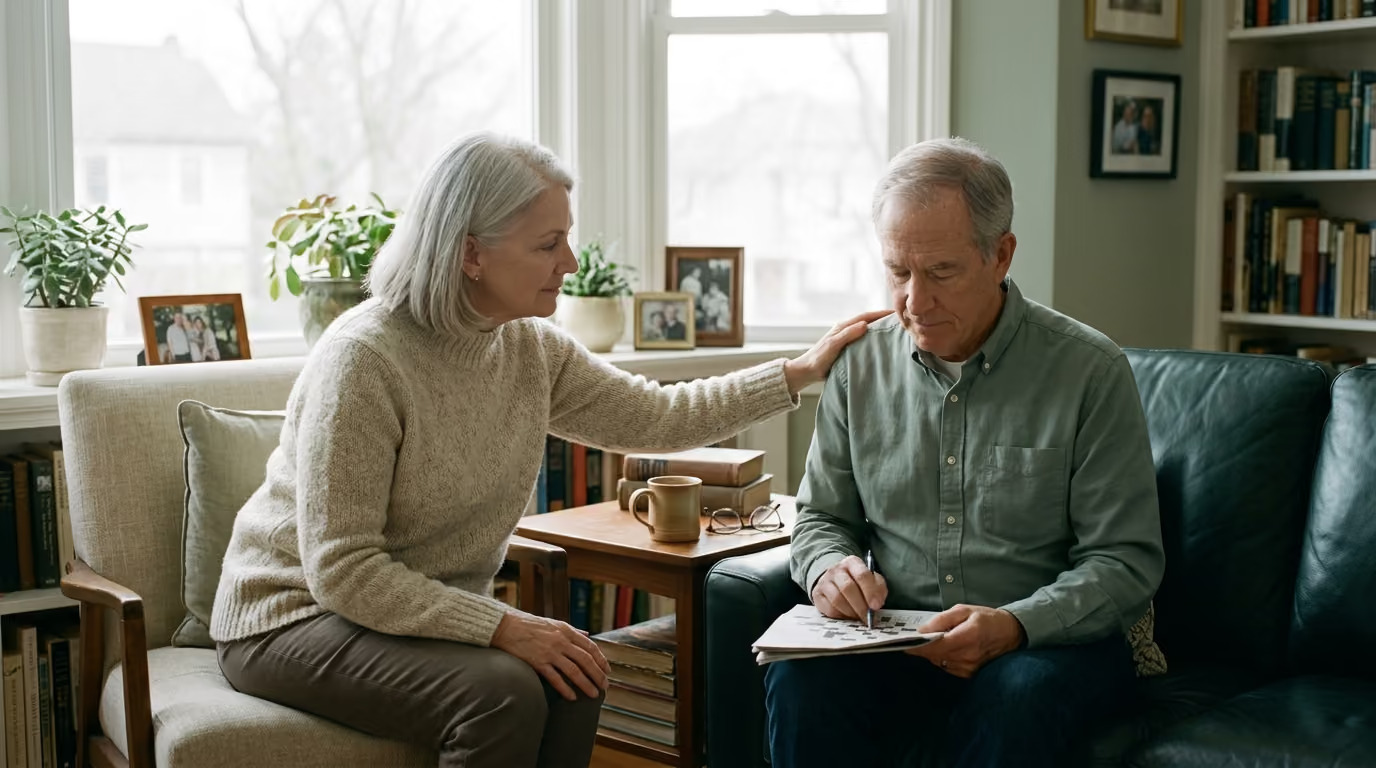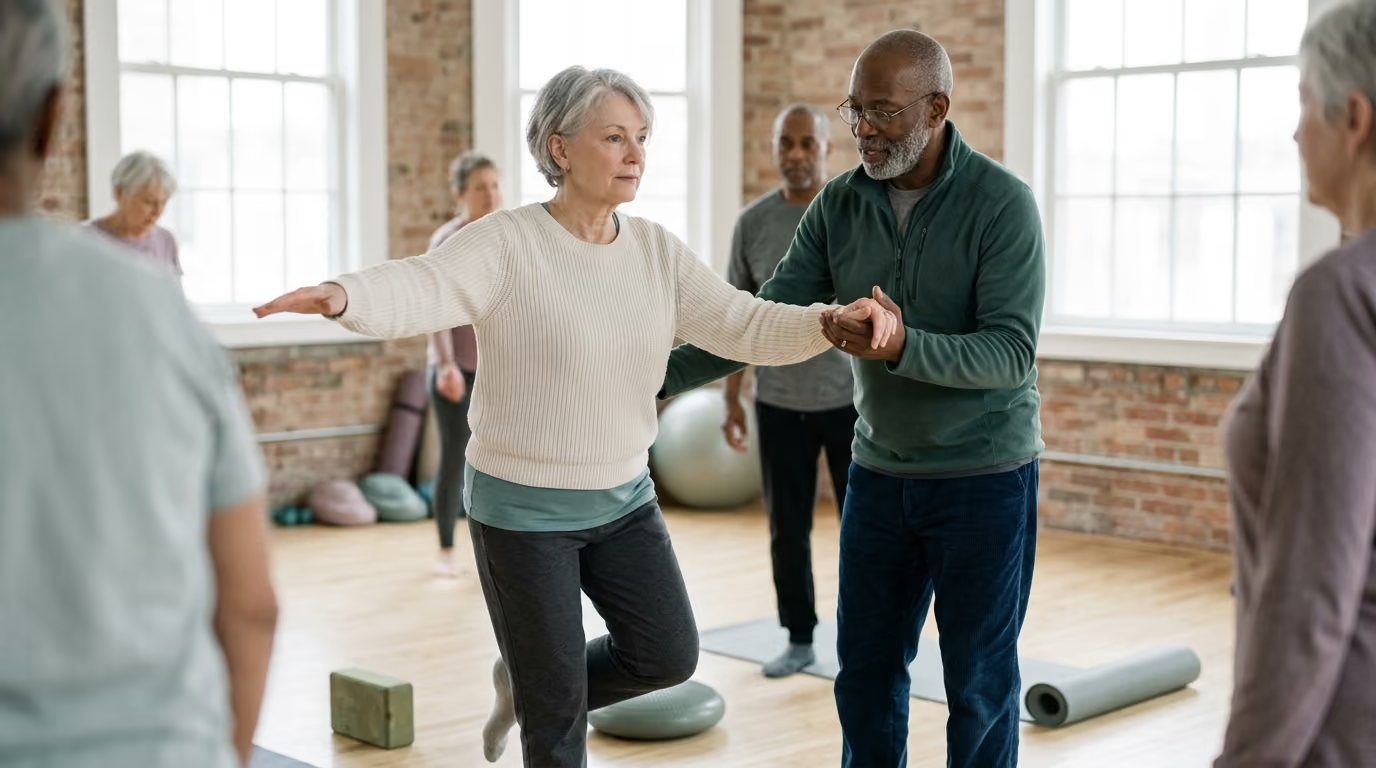

Targeted balance and coordination training after sixty strengthens vital neural connections to improve physical stability, mobility, and long-term cognitive health.





Many older adults search online for answers when they notice a subtle wobble while turning around in the kitchen, or when walking while talking suddenly feels clumsy. This is a common and understandable concern. As the nervous system ages, the complex pathways connecting sensory perception, balance, and cognitive processing require intentional practice. This field guide provides an evidence-based roadmap to help you train your body and brain together, improve physical stability, and maintain daily independence.
Balance is often viewed as a simple physical trait related to leg strength. In reality, maintaining stability is an active neurological calculation. Every time you stand, turn, or step across an uneven rug, your central nervous system collects information from three distinct sensory streams. These streams are your visual system, your vestibular system inside the inner ear, and your proprioceptive network of sensors located in muscles, tendons, and joints.
Your brain constantly combines these three streams to create an internal map of where your body exists in space. It then calculates the necessary muscle adjustments to keep your center of mass over your base of support. When you move through a dynamic environment, your brain relies heavily on anticipatory postural control. This means your nervous system adjusts muscle tension in your trunk and legs fractions of a second before you reach for a cup or take a step.
Coordination introduces the dimension of timing and sequencing. When you coordinate your limbs, your motor cortex, basal ganglia, and cerebellum organize multiple muscle groups into smooth actions. You use these neural circuits when you step sideways while carrying a basket or adjust your stride to match the tempo of background music. Training these movement patterns stimulates your brain's capacity for brain aging and neuroplasticity by requiring continuous sensory integration and motor planning.
Cognitive-motor interference explains why walking can become unstable when you are distracted. The brain has finite attentional resources. When a cognitive task, like recalling a shopping list or navigating a conversation, competes with the motor task of maintaining balance, performance in one or both areas can drop. Understanding this connection helps explain why stumbling in a crowded room is not simply bad luck. It is a sign that your brain is managing competing demands for attention.
Visuospatial processing works directly alongside motor control to keep you safe. Your brain must judge distances, estimate step heights, and calculate angles before your feet ever leave the floor. When you practice activities that challenge foot placement, direction changes, and rhythm, you strengthen the neural circuits supporting memory and focus as well as physical stability.
Public health data highlights the importance of maintaining mobility and balance as we age. The Centers for Disease Control and Prevention reports that the age-adjusted fall death rate among older adults increased by 21 percent between 2018 and 2024, rising from 64.7 to 78.4 deaths per 100,000 people. This rise underscores why balance and mobility deserve proactive, daily attention.
Clinical trials provide strong evidence that targeted exercise reduces fall risk. A major Cochrane review published in the British Journal of Sports Medicine examined 59 studies involving nearly 13,000 older adults living in the community. The researchers found that structured exercise programs reduced the overall rate of falls by 23 percent. When programs combined balance and functional exercises with strength training, the fall rate dropped by approximately 34 percent.
It is important to understand the scientific distinction between fall rate and the proportion of fallers. The fall rate measures the total number of falls across an entire group over time. The proportion of fallers refers to the percentage of individuals who experience at least one fall. Research shows that exercise programs often produce a substantial 20 to 30 percent reduction in the total number of falls, even if they do not completely prevent every single slip or trip.
Mind-body movement practices have received considerable research attention for their cognitive effects. Systematic reviews of tai chi in older adults with mild cognitive impairment report measurable benefits for executive function, episodic memory, and visuospatial performance. A review of 33 randomized controlled trials found that tai chi improved cognitive performance in older adults, likely because it demands continuous weight shifting, spatial sequencing, and focused attention. Studies on Chinese mind-body exercises also show small to moderate improvements in working memory and cognitive flexibility.
Dance interventions present another compelling model for combining movement with cognitive demand. Meta-analyses demonstrate that dance programs can improve global cognition, memory, language, and visuospatial function. However, evidence regarding dance and executive function remains mixed across different clinical trials. While dance offers significant social and cardiovascular benefits, it should be viewed as one valuable part of a broader lifestyle and brain resilience strategy rather than a guaranteed safeguard against cognitive decline.
Dual-task training research shows that practicing movement while performing a mental task can improve dynamic balance and lower fall incidence. Investigators note that attention naturally shifts between movement and thinking depending on how hard the task feels. The long-term maintenance of these benefits requires ongoing practice. Research in care facilities indicates that when structured exercise stops, the physical and cognitive benefits gradually fade, proving that regular movement must become a permanent lifestyle habit.
A balanced movement routine for cognitive and physical health rests on four distinct pillars. Each pillar addresses a different component of neuromuscular function. Relying exclusively on one type of exercise leaves critical gaps in your physical capability and cognitive engagement.
Aerobic movement supports cardiovascular health, promotes brain blood flow, and builds physical stamina. Activities such as brisk walking, stationary cycling, swimming, and water aerobics challenge the heart and lungs. The World Health Organization recommends that older adults accumulate at least 150 minutes of moderate-intensity aerobic exercise each week. This type of exercise provides the metabolic foundation that allows you to practice balance drills without becoming prematurely fatigued.
Muscle mass and power naturally decline with age if not actively maintained. Lower-body strength is vital for catching yourself during a trip and rising easily from low chairs. Exercises like squats, heel raises, seated leg extensions, and resistance band presses build strength in key postural muscles. Strengthening should take place on two or more non-consecutive days each week, targeting all major muscle groups.
Balance exercises train your nervous system to regulate your center of gravity. Agility and coordination drills introduce side-to-side stepping, changing directions, and precise foot placement. The World Health Organization advises older adults with reduced mobility to perform balance-focused exercises on three or more days per week. These activities teach your motor system to respond quickly to unexpected obstacles.
Joint stiffness can restrict your normal walking stride and limit your reaction speed. Gentle stretching and mobility routines for the ankles, hips, spine, and shoulders preserve a full range of motion. Flexible calves and mobile ankles allow your feet to clear the ground cleanly, which helps prevent tripping on uneven sidewalks or thick carpets.
Progressing your balance training requires a structured approach. Attempting exercises that are too difficult can cause anxiety or lead to an accidental fall. Conversely, exercises that are too easy fail to stimulate neuromuscular adaptation. The following frameworks will help you advance safely.
This framework systematically reduces your physical base of support and challenges your balance in controlled stages:
Once a physical movement feels safe and stable, you can add cognitive layers to stimulate executive function:
The fundamental safety rule is to adjust only one difficulty variable at a time. Never narrow your stance, close your eyes, and introduce a challenging mental math puzzle simultaneously.
Every movement drill should sit at the intersection of your physical capacity, the task challenge, and your self-confidence. If the challenge level far exceeds your current capacity, fear increases and movement quality breaks down. If the challenge remains permanently below your capacity, your nervous system will not build new connections. Building balance confidence through small, successful progressions encourages you to stay active and engaged.
Integrating balance and coordination training into your weekly routine does not require specialized gym equipment. You can choose from structured community classes, recreational arts, or simple home routines.
Tai chi is an exceptional mind-body exercise for older adults. Its movements emphasize slow, deliberate weight transfer from one leg to the other. Practicing these flowing forms trains your trunk rotation, aligns your posture, and demands focused mental sequencing. Beginners can start with seated tai chi forms or perform standing movements with a sturdy chair positioned nearby for light hand support.
Dance combines physical exertion with rhythm, spatial navigation, and short-term memory recall. Styles such as line dancing, folk dancing, and modified ballroom challenge your brain to remember multi-step sequences. Stepping to an external musical beat helps regulate your walking rhythm and improves step symmetry. You can easily modify dance steps by eliminating fast spins and keeping your movements grounded.
Walking can be transformed from an automatic physical motion into an engaging motor-cognitive workout. You can practice changing your walking speed on cue, alternating between a normal stride and a deliberate heel-to-toe pace. Set up visible markers along a hallway to practice smooth turns in both directions. You can also walk with a companion and practice conversational walking, which serves as a natural dual-task exercise.
Drills involving soft objects challenge hand-eye coordination, depth perception, and reaction speed. While seated comfortably or standing near a supportive wall, practice tossing a soft foam ball from one hand to the other. You can also touch numbered paper targets taped to a wall in an alternating sequence called out by a partner. These exercises train your visual system to track moving targets while maintaining stable posture.
You can perform targeted balance and strength drills in your own home using standard household furniture:
For additional ideas on structuring your weekly routine, consult our curated brain health resources to find movement programs suited to your needs.
Misunderstandings about mobility training can lead to ineffective habits or unnecessary risks. Reviewing common myths helps clarify what the evidence actually supports.
Walking is wonderful for cardiovascular health and endurance, but standard walking alone does not provide a complete fall-prevention stimulus. Daily walking rarely challenges your lateral balance, reactive stepping, or rotational control. Systematic reviews show that fall rates drop most significantly when routines include specific balance challenges, side stepping, and lower-body strength training alongside walking.
Some fitness trends encourage older adults to stand on soft foam pads, wobble boards, or balance on one foot with their eyes closed. For most older adults, extreme instability simply raises the risk of falling without providing additional cognitive benefit. Safe, progressive challenges on a stable floor with proper hand support are far more effective for building long-term coordination.
While tai chi and dance show encouraging benefits for memory, executive control, and visuospatial function, exercise is not a guaranteed cure for neurodegenerative disease. Scientific evidence supports these activities for improving daily functional ability and cognitive resilience. However, no single exercise routine can completely prevent dementia or replace comprehensive medical care.
Adding complex mental tasks to movement drills before a person has mastered basic physical stability can be hazardous. When attentional capacity is exceeded, postural control often deteriorates rapidly. You must establish reliable, safe balance during a single task before adding counting, word games, or carrying objects.
Neuromotor performance naturally fluctuates from day to day. A single afternoon of feeling uncoordinated is often caused by poor sleep, joint stiffness, mild dehydration, or medication side effects. Day-to-day variations are entirely normal and should not be interpreted as a sign of permanent cognitive or physical decline.
Fall prevention requires looking beyond exercise to address your overall health and living environment. The Centers for Disease Control and Prevention created the STEADI initiative, which stands for Stopping Elderly Accidents, Deaths, and Injuries, to help older adults and clinicians identify fall risks early.
Clinical screening begins by evaluating common risk factors that impair balance:
Safety during exercise is paramount. Always practice your balance exercises near a solid wall, sturdy countertop, or heavy chair that will not slide. Wear supportive, flat-soled shoes with good traction, and keep your practice space brightly lit and free of clutter. Never perform advanced, unsupported balance drills at home if you have a history of frequent falls or unsteadiness.
It is critical to know when to pause your exercises and consult a healthcare provider. Stop exercising immediately if you experience chest pain, shortness of breath, lightheadedness, sudden joint pain, or unexplained dizziness. Sudden changes in your walking ability, new numbness in your legs, or episodes of fainting require prompt medical evaluation.
Special considerations apply to specific health conditions:
Examining practical case patterns illustrates how to adapt balance, coordination, and cognitive training to different personal situations and fitness levels.
This pattern involves an adult in their late sixties who walks three miles every morning but feels unsteady when making quick turns in grocery aisles or stepping around furniture in the dark. Although their aerobic capacity is strong, their routine lacks lateral movement, rotational control, and dynamic balance training.
The intervention plan maintains their regular walking schedule but introduces ten minutes of targeted balance work four days per week. The routine adds kitchen counter side stepping, slow 360-degree turns while standing tall, and ten controlled chair stands to build lower-body power. A home check is conducted to add nightlights in hallways and eliminate loose rugs.
This pattern represents an individual who has been largely sedentary for several years. They want to start moving and love big band and folk music, but they feel nervous about their balance and worry about keeping up in a standard community dance class.
The plan begins with a seated rhythm and movement class that focuses on tapping feet, arm reaching, and clapping to music. After four weeks of building confidence and stamina, they progress to a standing line dance class held near a wall rail. Fast spins and rapid foot crossovers are eliminated in favor of predictable forward and sideways stepping patterns.
This pattern describes a retired teacher in their early seventies who exercises regularly and wants a workout that explicitly challenges their memory, reaction speed, and executive function.
Their program combines moderate-intensity aerobic walking with structured motor-cognitive challenges. They practice agility ladder stepping drills drawn with chalk on a patio, naming words in specific categories on every third step. They also attend an intermediate tai chi class twice a week, focusing on learning intricate movement forms that require sustained concentration and precise balance.
This pattern involves an older adult experiencing mild memory changes who becomes unsteady when trying to walk and carry on a conversation at the same time. Complex, multi-step exercise instructions cause frustration and confusion.
The strategy simplifies all exercises into clear, single-action movements. A family member or trainer exercises alongside them, offering quiet visual modeling rather than lengthy explanations. The routine uses familiar, soothing music, consistent daily timing, and marked stepping targets on the floor to provide clear visual cues.
This pattern features an individual who recently slipped in their garden. They have developed a strong fear of falling, which has led them to sit for most of the day, resulting in leg weakness and increased stiffness.
The approach starts with a comprehensive medical review of their medications, vision, and blood pressure. A physical therapist prescribes supported, seated leg-strengthening exercises alongside gentle standing balance drills performed at a sturdy countertop. As leg strength and stability return, the person gradually practices short, supported walks to rebuild physical capability and personal confidence.
Taking a proactive approach to your balance and brain health involves open communication with your healthcare team and a clear, manageable plan for your daily routine.
Take these specific questions to your next healthcare appointment:
Use this practical checklist to integrate balance and cognitive movement into your upcoming week:

Follow FitBrainLab for research-led insights on memory, focus, brain aging, nutrition and mental fitness after 60. Stay connected for new articles, practical guidance and ideas for a sharper, more engaged life.


Build habits that support memory, focus and a curious, connected life.
Read the Blog