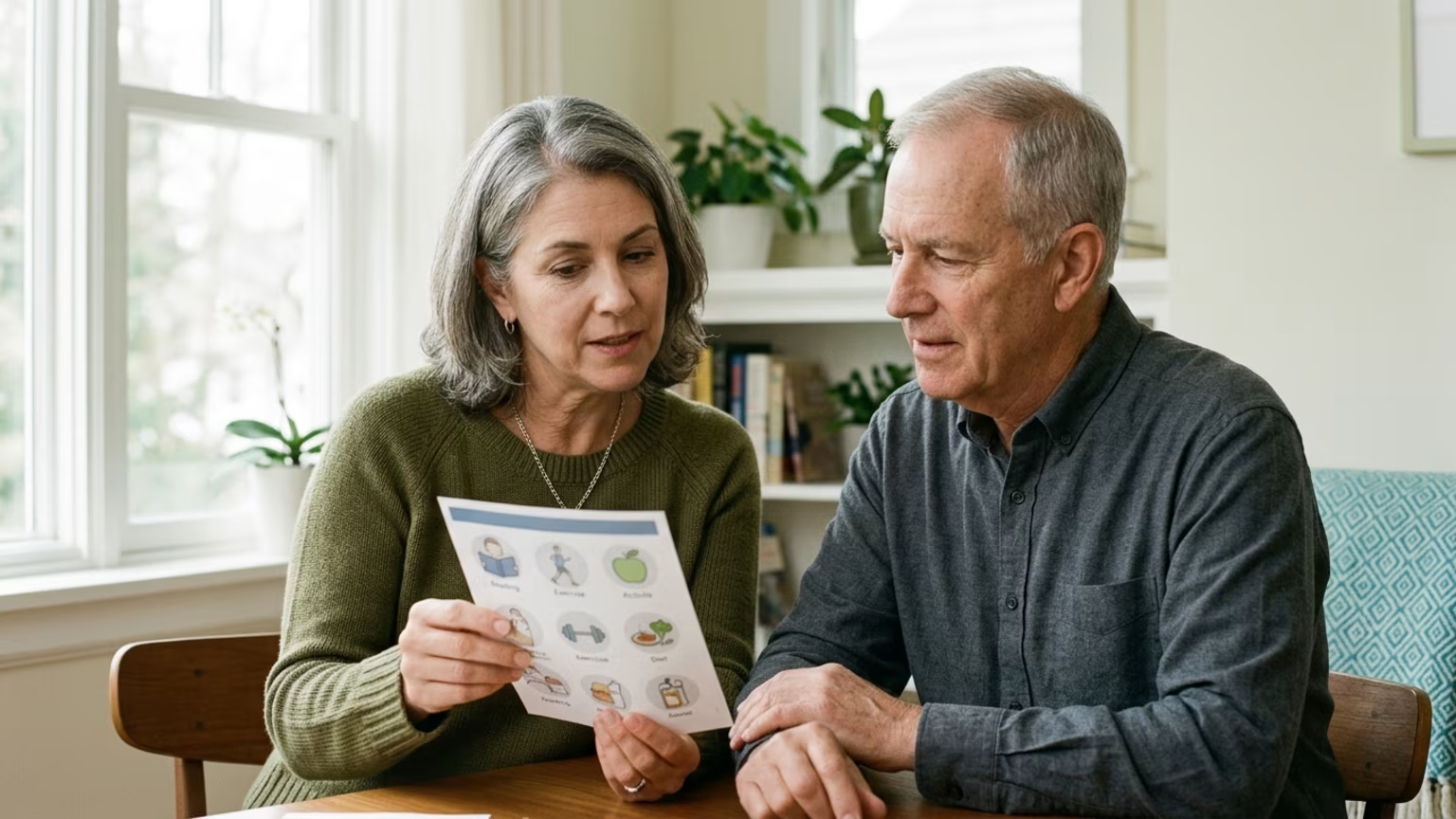

The updated World Health Organization guidelines highlight 14 modifiable risk factors for dementia. Learn how this framework supports cognitive health after 60.





In September 2026, the World Health Organization published the second edition of its guidelines on reducing the risk of cognitive decline and dementia. This updated framework provides adults without dementia and healthcare systems with an evidence-based roadmap for managing modifiable risk factors.
The World Health Organization update builds directly on the 2024 Lancet Commission report. This commission was led by Professor Gill Livingston of University College London. The commission concluded that addressing specific modifiable factors across the lifespan could prevent or delay a substantial share of dementia cases. Specifically, they identified 14 potentially modifiable risk factors associated with an estimated 45% of dementia cases at the population level.
The 2024 Lancet Commission report serves as the foundation for this broader perspective. The researchers gathered extensive data to understand how various health behaviors impact populations over decades. By looking at long-term trends, they provided a detailed picture of cognitive risk across different age groups. This life-course approach proves that early education and midlife habits matter just as much as late-life decisions.
The updated framework shifts the conversation away from a narrow focus on late-life memory symptoms. The guidelines illustrate that cognitive health begins long before retirement. High LDL cholesterol and untreated vision loss were the two newest factors added in the 2024 Lancet analysis. The complete list of 14 modifiable risk factors spans early life, midlife and later life:
The World Health Organization organizes its recommendations into four broad areas. These areas are healthy behaviors, management of medical conditions, reduction of environmental exposures and tailored multidomain interventions. The second edition broadens its attention to explicitly include air pollution, hearing loss and cardiometabolic health. It also formally addresses issues such as sleep, stroke, vision impairment, traumatic brain injury and HIV infection.
This multidomain approach reflects a move away from single interventions. The guidance focuses on how multiple overlapping variables influence long-term cognitive function. The guidelines apply to individuals, healthcare providers and policymakers integrating dementia risk reduction into health services. The organization highlights the need for integrated, multisectoral action to overcome structural and sociocultural barriers.
A 2026 commentary in the International Health journal notes that the major challenge moving forward is implementation. Many dementia-related risks overlap heavily with established noncommunicable-disease risks. Overcoming this gap requires a coordinated effort across healthcare systems, public health programs and community services. This broad perspective shows that true progress requires collective action rather than individual willpower alone.
Physical activity serves as a central component of the updated guidance. A summary of the recommendations notes that adults should aim for 150 to 300 minutes of moderate-intensity aerobic activity per week. Alternatively, adults can aim for 75 to 150 minutes of vigorous-intensity activity weekly. The guidelines also recommend engaging in muscle-strengthening activity on at least two days per week.
These targets encourage movement that is safe, accessible and sustainable over time. Moderate aerobic activity does not strictly require intensive gym training. Brisk walking, cycling, swimming and dancing are excellent ways to reach the aerobic target while supporting cardiovascular health. Muscle strengthening can involve simple tools like resistance bands, body-weight exercises or supervised strength training sessions.
Vascular and metabolic health require equal attention from older adults. The overlapping risks include hypertension, diabetes, smoking and physical inactivity. Adults should work with a clinician to confirm their blood pressure, diabetes and cholesterol are being properly monitored and treated. Finding resources on brain aging and neuroplasticity can clarify how these clinical steps benefit long-term wellness.
Sensory health is another prominent feature of the latest guidelines. The framework includes both hearing loss and untreated vision loss as modifiable risks. The World Health Organization summary supports considering hearing aids for people with hearing loss. Older adults should proactively manage their hearing and vision to maintain cognitive engagement over the years.
Nutrition is another practical element addressed in the summarized guidance. The World Health Organization summary recommends considering a healthy balanced dietary pattern for overall wellness. A good diet supports heart health, blood sugar management and healthy body weight in midlife. These nutritional habits align seamlessly with the broader goal of reducing cardiometabolic risks.
Reviewing tobacco and alcohol use without shame or alarmism is another practical takeaway. The summary includes offering tobacco-cessation support and addressing hazardous or harmful drinking. Older adults can evaluate their habits objectively and seek professional guidance if they want to make adjustments. Building consistent habits for mental fitness can be a sensible part of an overall routine.
Social and cognitive habits also play a supportive role in this framework. The summary supports encouraging social activity and cognitive stimulation. Cognitive training may be offered to older adults, but the recommendation is conditional and the certainty of evidence is low. Reading clear cognitive health articles helps readers separate proven routines from unproven commercial claims.
When evaluating products, the guidance draws a firm line on supplements. The summary states that vitamin B, vitamin E, omega-3 supplements, multivitamins and minerals are not recommended specifically to reduce dementia risk. The evidence does not support substituting these items for clinical care. Relying on established nutrition and brain performance principles is a more reliable strategy for older adults.
Managing expectations regarding the estimated 45% risk reduction figure is crucial. This number is a population-level estimate, not a guarantee that an individual can reduce their personal risk by exactly 45%. It refers to the share of cases statistically associated with the 14 factors under population-level assumptions. It does not predict a single individual outcome for any specific person.
The estimate assumes that these risk factors can be fully removed from a population. In reality, the complete elimination of all 14 factors is highly unlikely. The presence of a modifiable risk factor does not mean that a person caused their own cognitive decline. Likewise, the absence of these factors cannot guarantee that dementia will never occur.
The strength of the recommendations varies significantly across different interventions. Physical activity recommendations are summarized as strong with moderate certainty for adults with normal cognition. Recommendations concerning hypertension, diabetes and hearing aids are conditional. Cognitive training and social activity recommendations are also conditional.
This varying evidence means the 14 factors should not be treated as equally important or equally easy to change. The risk-factor list operates as a broad population framework rather than a rigid personal checklist. Individual decisions must account for a person's age, medical history and disability. Medications and access to care also play a major role in keeping plans safe and medically appropriate.
The guidance explicitly applies to adults without dementia, including people with mild cognitive impairment. It is not a treatment protocol for established dementia. It should never serve as a substitute for professional medical assessment of new or worsening cognitive symptoms. Anyone experiencing significant memory changes should seek formal clinical evaluation right away.
This updated guidance redefines what practical brain health looks like for older adults. The overlap between cardiovascular health and dementia prevention represents a massive shift in how we understand cognitive aging. Protecting the brain involves managing blood pressure, remaining physically active, supporting sensory function and minimizing environmental risks like air pollution.
The transition away from single isolated tactics toward a life-course approach offers a grounded view of aging. There are no promised cures or simple dietary tricks that grant immunity from cognitive decline. Instead, there is a clear, evidence-based roadmap of steady daily choices that support long-term resilience.
For adults navigating retirement, this framework removes the pressure of achieving perfection. A person can meaningfully address selected health risks without feeling overwhelmed by an extensive checklist. Making gradual improvements in movement, seeking proper medical care and maintaining social ties are highly valuable steps. Focusing on lifestyle and brain resilience empowers older adults to take charge of their health with clarity.
Understanding the World Health Organization guidelines on modifiable dementia risk factors establishes a reliable foundation for long-term cognitive protection. Feeling patronised by conventional senior wellness content makes evaluating lifestyle interventions difficult, but FitBrainLab translates complex evidence into clear summaries to help older adults manage their brain health objectively.

Follow FitBrainLab for research-led insights on memory, focus, brain aging, nutrition and mental fitness after 60. Stay connected for new articles, practical guidance and ideas for a sharper, more engaged life.





Build habits that support memory, focus and a curious, connected life.
Read the Blog