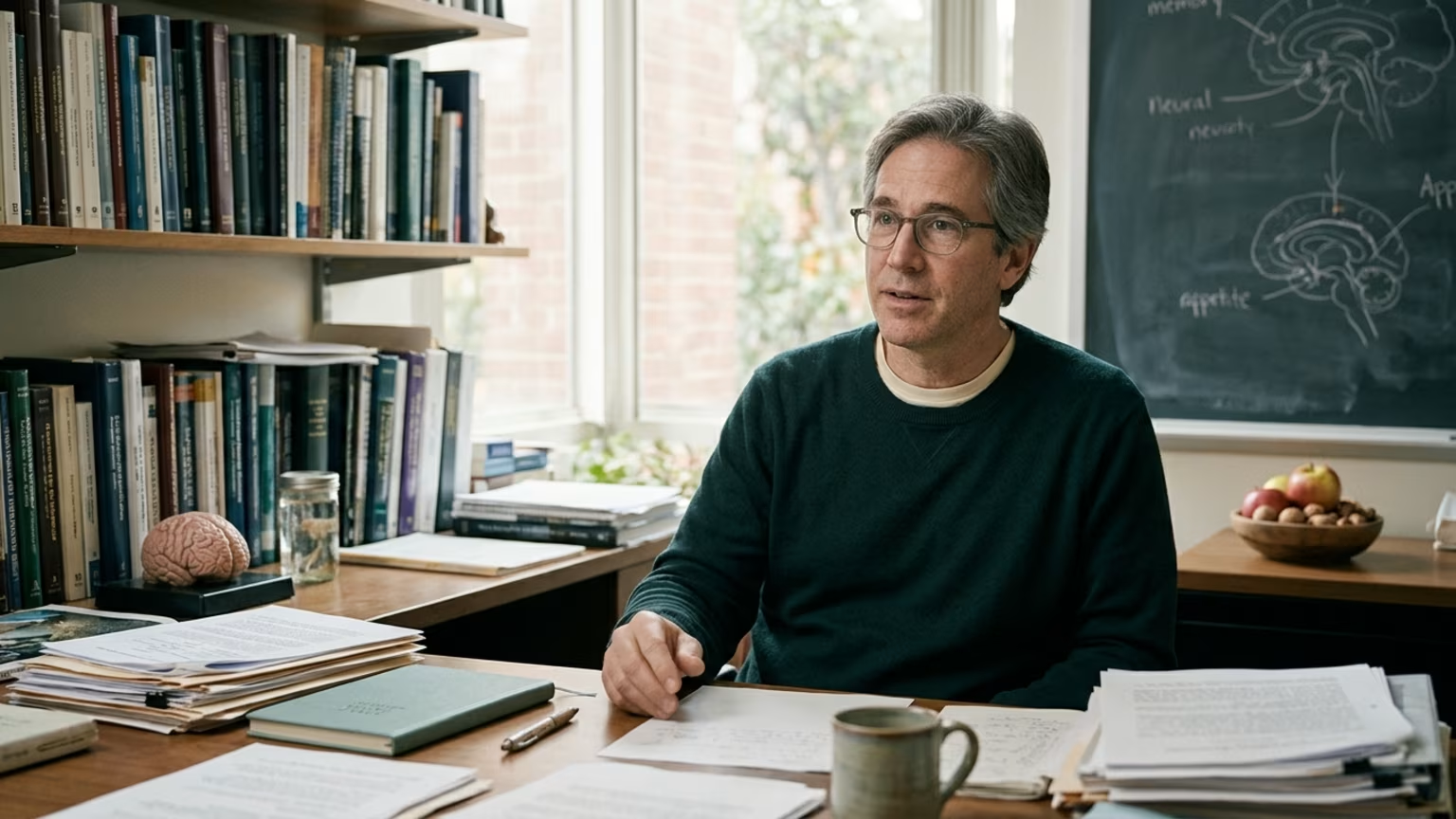

USC highlights Scott Kanoski's discussion of food, memory and appetite. A closer look at the evidence and its relevance after 60.





On October 28, 2026, USC Dornsife at the University of Southern California reported that professor Scott Kanoski had appeared on the Huberman Lab podcast. The episode was dated October 12, 2026.
USC identifies Kanoski as a professor of Human and Evolutionary Biology and Neurobiology. The podcast describes his research as examining how dietary choices relate to memory, appetite and brain health, with particular attention to highly processed foods.
USC frames the conversation as a two-way relationship. Nutrition may affect brain health and the capacity to learn, while memory may influence food choices. That second direction shifts the question from only what food does to the brain toward how remembered experiences may relate to eating.
This framing puts memory on both sides of the conversation. Memory is not only an outcome that nutrition researchers may measure. It is also part of the explanation they are investigating for food choices and appetite. That distinction helps explain why an episode about diet also spends time on remembering meals.
The episode description and chapter listings cover several connected subjects:
These topics give the conversation a broad scope. Its focus is the relationship between eating and brain function, rather than a single food presented as the answer to memory concerns. For readers interested in cognition after 60, that is a useful way to organize the questions.
For adults over 60, the immediate value is a clearer way to read nutrition advice. A claim about memory is not the same as a claim about hunger or cravings. Keeping those outcomes separate makes the discussion easier to judge.
USC's two-way framing suggests two questions worth keeping in view. How do food choices relate to learning and memory? How might memory influence later eating? These are questions about relationships, not reasons to label every food as helpful or harmful to the brain.
When assessing coverage of the episode, a few distinctions help:
These checks are about clarity, not about becoming a researcher. Readers should be able to tell what a claim means and where it comes from. That standard applies whether the topic is a single ingredient, a dietary pattern or an appetite-regulating medicine.
This is a useful lens for reading about overall eating patterns and brain health. It keeps attention on what the evidence supports before turning a headline into a personal food rule.
The episode's chapter information includes GLP-1 drugs and hunger. For an older adult considering an appetite-regulating medicine, the practical next conversation is with a clinician about appetite, food intake and side effects.
A separate report from U.S. News & World Report provides older-adult safety context. It notes that nausea, vomiting or bowel symptoms can be consequential when they contribute to inadequate nutrition or dehydration. Marked appetite reduction can also matter when it interferes with adequate eating.
That safety discussion comes from the separate news report, not from Kanoski's interview. Its relevance is the place of food and fluid intake in conversations about appetite-regulating medication.
A useful clinical discussion can focus on whether appetite or eating has changed and whether side effects are affecting food or fluid intake. The question is how the medicine fits the person's health needs, rather than treating reduced hunger as the only outcome that matters.
Neither the USC notice nor the episode description reports a new intervention or clinical outcome specifically in adults over 60. This is an expert discussion, not evidence that its topics prevent or treat cognitive decline in that age group.
A third-party transcript recap of the episode describes an experiment in which people prompted to remember a recent meal ate fewer cookies afterward. The recap does not provide enough detail about how the experiment was done to treat this as a proven memory or appetite strategy for older adults.
The same recap describes animal research involving a Western-style diet, gut bacteria and memory-related findings. These preclinical observations are not demonstrated effects in older people. Keep the species studied visible when deciding how to interpret a diet headline. That preserves the finding's scientific interest while keeping the advice relevant to the people who are expected to follow it.
The podcast's GLP-1 chapters do not establish cognitive benefits from those medicines. Its chapters on sweeteners and the microbiome identify further subjects for discussion, not proof that a specific choice will preserve memory.
The practical rule is to match each claim to its evidence. For older readers, that means checking who was studied and what was measured before accepting an age-specific recommendation.
The long-term value of USC's announcement lies in bringing related questions into one conversation. Food choices, appetite and memory are presented as connected subjects for research rather than separate pieces of health advice.
For readers after 60, thoughtful interest is a sound response. There is room to take nutrition seriously without turning each interview into a demand to change what is on the plate.
The same evidence-first approach helps when reading coverage of highly processed foods and brain aging. Ask which outcome a source actually assessed and whether the people studied match the population named in the advice.
The lasting contribution is a clearer research agenda: understanding how eating and memory interact, then building guidance from evidence that answers those questions. That is a more useful direction for cognitive health than asking one discussion to provide a complete eating plan.
Before a food-and-memory interview becomes a reason to change meals, FitBrainLab brings the claims back to their evidence. Its articles translate complex findings for adults 60+ facing conflicting nutrition and brain-performance advice, making the scientific context easier to understand without fear-based messaging or overstated claims.

Follow FitBrainLab for research-led insights on memory, focus, brain aging, nutrition and mental fitness after 60. Stay connected for new articles, practical guidance and ideas for a sharper, more engaged life.



Build habits that support memory, focus and a curious, connected life.
Read the Blog