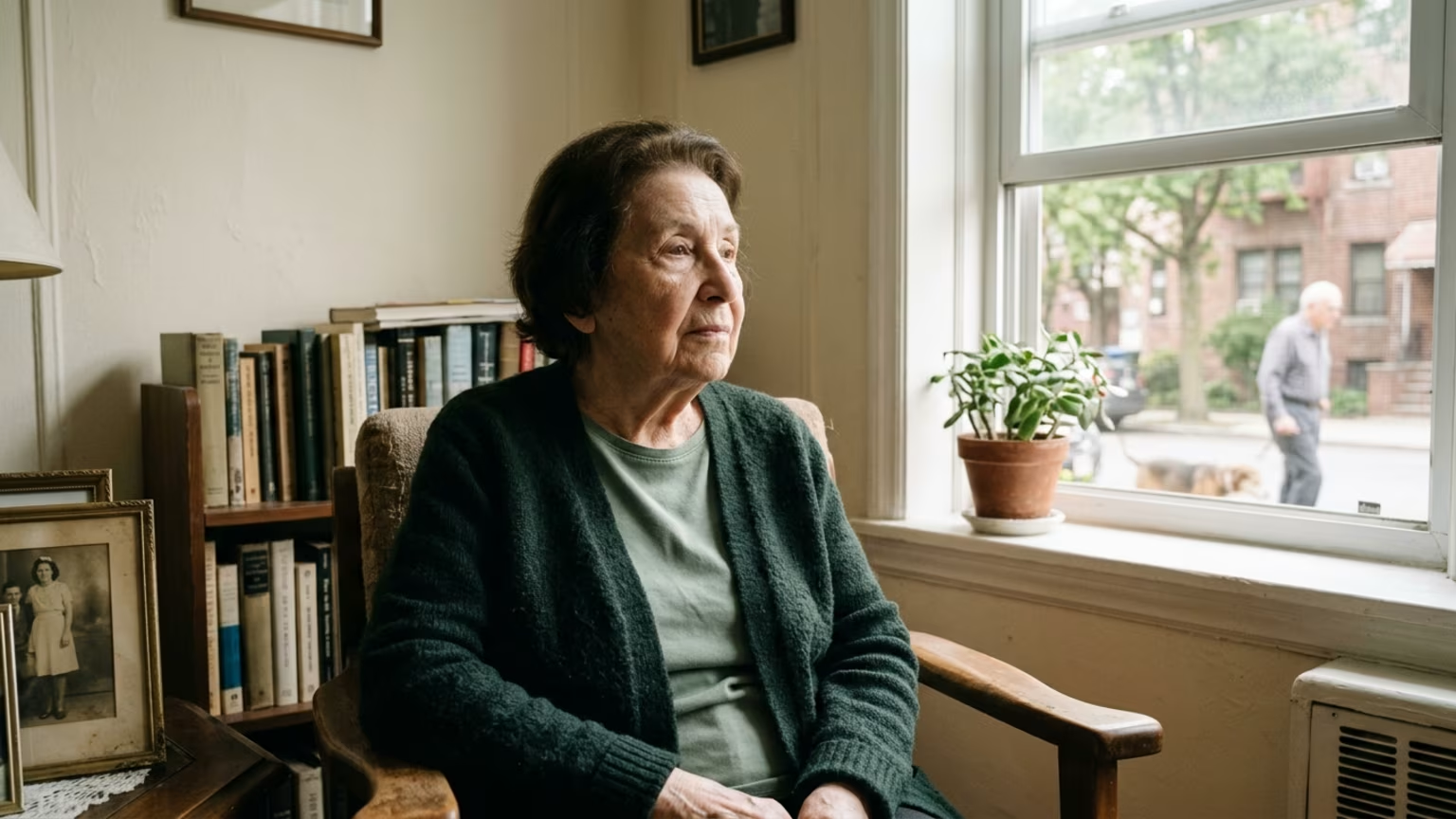

A new Curtin University-led study maps 61 modifiable dementia risk factors, showing how housing, education, and air quality shape long-term brain health.





In September 2026, a Curtin University-led research team published a major study in The Lancet Public Health mapping 61 modifiable dementia risk and protective factors. The researchers established that current prevention advice places too much focus on personal behavior while under-addressing the structural conditions that shape brain health.
The new paper is titled "Beyond individual-level approaches to dementia prevention: a socioecological reappraisal." It builds upon an earlier systematic review associated with Professor Blossom Stephan. That earlier work successfully identified 61 different dementia risk factors. This represents a significant expansion compared with the 14 factors commonly associated with the 2024 Lancet Commission framework.
The researchers mapped these 61 factors using a comprehensive socioecological framework. This structural model highlights environmental influences like housing, healthcare access, and air quality. Lead author Dr Jennifer Dunne noted that prevention advice typically focuses heavily on exercise, healthy eating, and social connection. She argued that many influences on dementia risk are not solely within a single person's direct control.
Dr Dunne explained that where people live heavily influences their long-term brain health. She pointed out that the education people receive, the air they breathe, and their access to health care all play major roles. The paper challenges the traditional assumption that cognitive protection begins only during midlife. It stresses that the foundation for brain health is built continuously throughout a person's entire life.
This life course perspective illustrates how early experiences shape long-term cognitive outcomes. The researchers note that factors like early education play a foundational role in building cognitive resilience. While older adults cannot change their early education retrospectively, governments can improve these conditions for future generations. The study clarifies that everyday routines that support the brain are simply easier to maintain in supportive environments.
This socioecological framework creates a much wider definition of brain health infrastructure. Professor Stephan, Dementia Chair at Curtin University, stated that true prevention requires a combined approach. She recommended supporting healthy choices while simultaneously improving education, neighborhoods, and healthcare access. This broader strategy helps shift the burden away from just the individual patient.
The World Health Organization recently updated its own dementia risk reduction guidance to reflect similar concepts. This guidance applies directly to adults without dementia, including those with normal cognition or mild cognitive impairment. The WHO recommendations combine behavioral health measures, clinical risk management, environmental risk reduction, and tailored interventions. It deliberately treats risk reduction as a multisectoral issue rather than just a narrow medical problem.
The WHO guidance also highlights integrated approaches that address entrenched sociocultural barriers. Equity remains a central consideration in these updated public health recommendations. The guideline is intended not only for clinicians but also for policymakers designing new public health programs. This means local health services should actively strive to remove the barriers that make healthy living difficult.
Experts are urging a complete move away from blame-based prevention messaging. Dr Dunne cautioned that asking people to make healthier choices without addressing their surrounding conditions is an incomplete strategy. Professor Tanya Buchanan, chief executive of Dementia Australia, called for organizations to make supportive services more widely accessible. She officially described dementia risk reduction as a collective societal responsibility.
The research also clearly shows how different risks are interconnected rather than entirely isolated. Untreated hearing loss or vision loss can make social participation much more difficult for older adults. This sensory decline can then interact negatively with social isolation, depression, and physical inactivity. Addressing these interconnected issues early is a key part of cognitive protection strategies.
This important shift toward environmental factors does not mean personal choices are unimportant. The researchers continue to identify physical activity, healthy eating, smoking cessation, and social connection as highly relevant. Older adults should absolutely continue working with healthcare professionals to manage conditions like high blood pressure and diabetes. Personal lifestyle habits remain a central pillar of cognitive aging.
It is also highly helpful to understand the limitations of this 61-factor framework. Mapping these factors is not the same as proving that every single one directly causes cognitive decline. The study does not claim that changing each factor will prevent a specific number of dementia cases. Social and environmental factors often operate indirectly or in combination with one another.
The framework should serve strictly as a broad map of potential influences rather than a personalized risk calculator. The study does not imply that all 61 factors are equally modifiable or equally important at every age. Risk reduction is a population-level concept and is not the exact same as guaranteed prevention for every individual. Age, genetics, and existing health conditions also play significant roles in personal risk.
The strongest practical interpretation for adults over 60 is an additive approach. People can maintain their evidence-based personal health routines while actively recognizing practical community barriers. If sticking to a healthy routine becomes difficult, individuals should look at structural issues like transport or safe streets. Recognizing these external barriers can help relieve the personal stress associated with understanding how the brain ages over time.
This research highlights a major global transition toward a population health model of cognitive longevity. Dementia currently affects an estimated 57 million people worldwide. That global figure is officially projected to reach 139 million by the year 2050. These numbers highlight the urgent need for comprehensive strategies that address both personal and community-level risks.
In Australia, reporting on the study cited estimates of 439,000 people living with dementia in 2025. That specific Australian estimate is projected to exceed one million individuals by 2065. Managing this growing impact requires acknowledging that clinical care and urban planning are deeply connected. Safe housing, good lighting, and reliable local transportation can make healthy routines far more sustainable.
The Curtin University study reinforces that communities and local policies matter deeply for an aging population. Using community resources like public libraries, organized walking groups, or social clubs can provide accessible opportunities for mental engagement. Supporting local policies that improve public transport and neighborhood safety can ultimately help more people maintain their cognitive health. This balanced approach makes cognitive protection a shared goal.
After recognizing that long-term brain health involves structural conditions alongside personal choices, older adults must determine how to manage their physical routines. Conflicting advice about nutrition, exercise, sleep, supplements and brain performance creates unnecessary confusion, but FitBrainLab separates established findings from early research so you can confidently adopt safe habits. Explore Resources

Follow FitBrainLab for research-led insights on memory, focus, brain aging, nutrition and mental fitness after 60. Stay connected for new articles, practical guidance and ideas for a sharper, more engaged life.






Build habits that support memory, focus and a curious, connected life.
Read the Blog