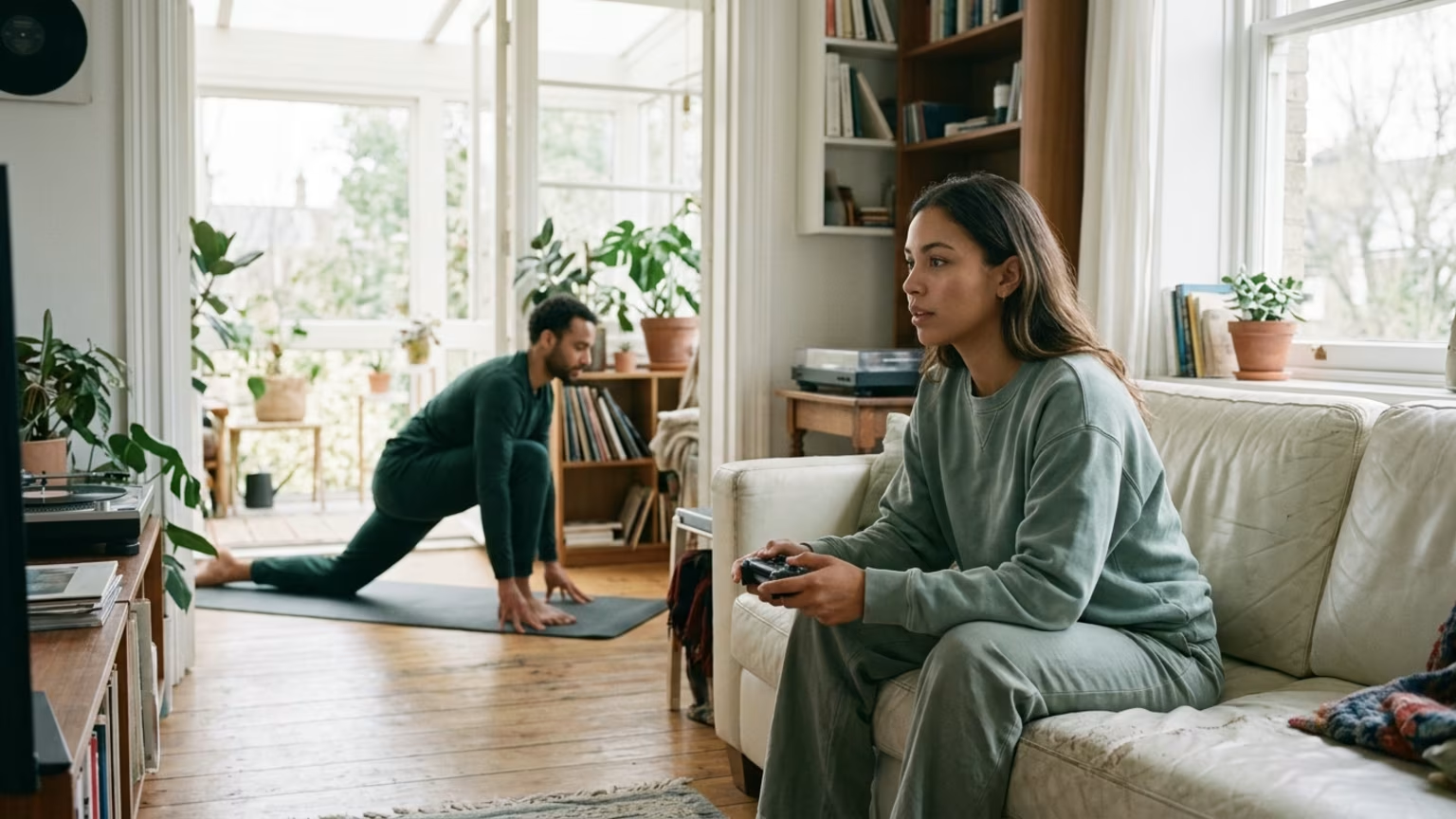

Recent PLOS ONE research suggests frequent video gaming is linked to better cognitive test performance while regular physical exercise supports mental wellbeing.





In September 2026, researchers published a study in PLOS ONE examining how video games and physical activity relate to different aspects of brain health. According to reporting from India Today, the observational research found that frequent gaming was associated with specific cognitive outcomes, while regular exercise was linked to better mental wellbeing.
The findings present a nuanced picture of how distinct daily habits might support cognitive and emotional health. India Today reported that the research was published in PLOS ONE and found that gaming and exercise were associated with different aspects of brain health. The researchers examined adults to see how their chosen lifestyle habits related to their performance on various assessments. The outcomes revealed clear divisions between the potential benefits of mental challenges and physical movement.
Researchers measured how much time participants spent playing video games each week to establish different exposure levels. India Today reported that participants who played a particular type of game for at least five hours per week performed remarkably well. On average, these frequent gamers scored similarly to non-gamers who were approximately 13.7 years younger. This significant age-equivalent difference highlights the potential cognitive demands required by consistent gameplay over time.
Even those who played video games less frequently demonstrated measurable performance differences when compared to strict non-gamers. Infrequent gamers showed a smaller apparent age-equivalent difference of approximately 5.2 years. These figures suggest a possible relationship between the volume of mental engagement and final cognitive test scores. The exact mechanics of how these specific digital environments challenge the older brain require further clinical investigation.
Physical activity demonstrated a completely different pattern of physiological and psychological benefits in the PLOS ONE analysis. Adults meeting the World Health Organization recommendation of at least 150 minutes of moderate-to-vigorous physical activity per week did not show significantly better performance on the study's cognitive measures. This specific lack of cognitive association surprised some readers who view aerobic exercise as a universal brain intervention. The data indicates a need to refine our understanding of movement.
Even without a cognitive score boost, regular movement proved highly beneficial for emotional stability and mood. The active participants who met the weekly 150-minute threshold were much more likely to report better overall mental wellbeing. This active group experienced fewer symptoms of depression and anxiety compared to their less active peers. These distinct results suggest that we should view brain health as a complex combination of multiple independent biological functions.
For older adults evaluating their daily routines, this research suggests that cognitive and physical activities serve different but complementary purposes. The PLOS ONE findings imply that mentally demanding leisure tasks can provide meaningful cognitive stimulation during retirement. Older adults might add engaging games to their schedule for highly specific mental challenges and problem-solving practice. Meanwhile, consistent physical movement remains vital for maintaining a stable mood and robust emotional health.
Understanding this strict separation of benefits can help individuals build a more comprehensive and realistic lifestyle plan. People often feel pressured to find one perfect wellness activity that solves every single aging concern at once. The current evidence points toward building a diverse weekly schedule that includes both mental problem-solving and physical exertion. Readers can review practical strategies for building this balanced approach at Brain Aging & Neuroplasticity Articles | FitBrainLab.
A separate 2026 systematic review and Bayesian network meta-analysis offers further context for these technology and exercise choices. The review examined digital physical-exercise interventions in adults aged 60 and older across global cognition, executive function and memory. The findings indicated that different digital exercise formats showed different patterns of cognitive benefits for older populations. This reinforces the concept that specific types of digital engagement yield highly specific biological and psychological outcomes.
Older adults can view these research insights as an opportunity to build a varied weekly schedule without unnecessary stress. A balanced approach could easily pair a few hours of problem-solving video games with regular neighborhood walks. This smart combination allows individuals to support their active reasoning skills while simultaneously protecting their emotional resilience. Recognizing the unique value of each distinct activity helps maintain long-term motivation and consistency.
Public reactions to these scientific findings have sometimes exaggerated the actual clinical evidence available to readers. According to India Today, Elon Musk promoted the findings on social media with the statement, "Play video games or be dumb!" This type of reaction is a personal comment rather than an accurate medical interpretation of the underlying data. Oversimplified conclusions completely ignore the careful scientific boundaries that researchers placed around their own findings.
The most critical limitation of the PLOS ONE study is its purely observational and cross-sectional design. These observational methods mean the researchers only measured associations at one specific point in time among the participants. The study cannot prove that playing video games directly causes better cognitive performance in older adults. It simply shows that the two factors exist together in the specific group of people analyzed.
Reverse causation remains a very real possibility in this type of cross-sectional study design. Adults who already possess strong memory and reasoning skills might naturally prefer complex video games that challenge them. Those who are already cognitively sharp might also have the mental energy to dedicate five hours a week to gaming. The results do not guarantee that starting a new gaming habit will automatically improve your baseline cognitive scores.
The "13.7 years younger" figure represents an age-equivalent comparison on a very specific set of tests. It absolutely does not mean that video games biologically reverse brain aging by a decade or more. Presenting the data as a miraculous fountain of youth creates unrealistic expectations for older adults seeking reliable health strategies. The research also does not prove that any form of gaming prevents clinical conditions like dementia or Alzheimer's disease.
Readers reviewing Dementia, Alzheimer's & Cognitive Protection Resources | FitBrainLab will note that maintaining cognitive independence involves comprehensive care. Playing a digital game is not a recognized medical treatment for memory loss or clinical cognitive decline. If older adults experience persistent memory issues or sudden cognitive changes, they should consult a medical professional immediately. Digital games and puzzles are strictly recreational tools, not validated clinical interventions.
It is critical to understand that playing video games should never replace dedicated physical exercise. While meeting the 150-minute activity threshold did not boost cognitive test scores here, it clearly supported mental wellbeing. Excessive gaming that displaces movement, sleep or social contact could actually harm overall health over time. Balance and moderation remain the most sensible and scientifically supported approaches for any significant lifestyle adjustment.
The recent PLOS ONE data provides a helpful reminder that brain health involves several distinct and independent dimensions. Activities that require intense focus and active problem-solving can help keep specific thinking skills sharp as we age. At the same time, regular physical movement plays an entirely different role by supporting baseline mood and emotional stability. Recognizing these completely separate benefits allows older adults to build more effective routines.
Rather than searching endlessly for one perfect wellness activity, older adults should focus on a complementary mix of habits. Combining mentally engaging digital games with consistent weekly exercise creates a well-rounded approach to healthy aging. You can read more about designing a balanced routine by visiting the Lifestyle & Brain Resilience Articles | FitBrainLab. By participating in both mental challenges and physical movement, individuals can confidently support their long-term cognitive and emotional health.
Exaggerated media reactions about reversing brain age often leave older adults feeling patronised by conventional senior wellness content. Navigating conflicting advice about whether to prioritize mental games or physical movement can easily stall healthy decisions. FitBrainLab provides objective analysis to help you build balanced routines that confidently support memory and emotional health without the hype. Explore Resources

Follow FitBrainLab for research-led insights on memory, focus, brain aging, nutrition and mental fitness after 60. Stay connected for new articles, practical guidance and ideas for a sharper, more engaged life.




Build habits that support memory, focus and a curious, connected life.
Read the Blog

