
First-year findings from the BRAIN-FIT mobile clinics show how community screening for cognitive risk factors can prompt healthier habits and doctor visits.





On October 1, 2026, Washington State University reported first-year findings from its mobile cognitive screening project in the journal Innovation in Aging. The program offers community-based risk assessments and personalized counseling to adults in rural eastern Washington and north Idaho.
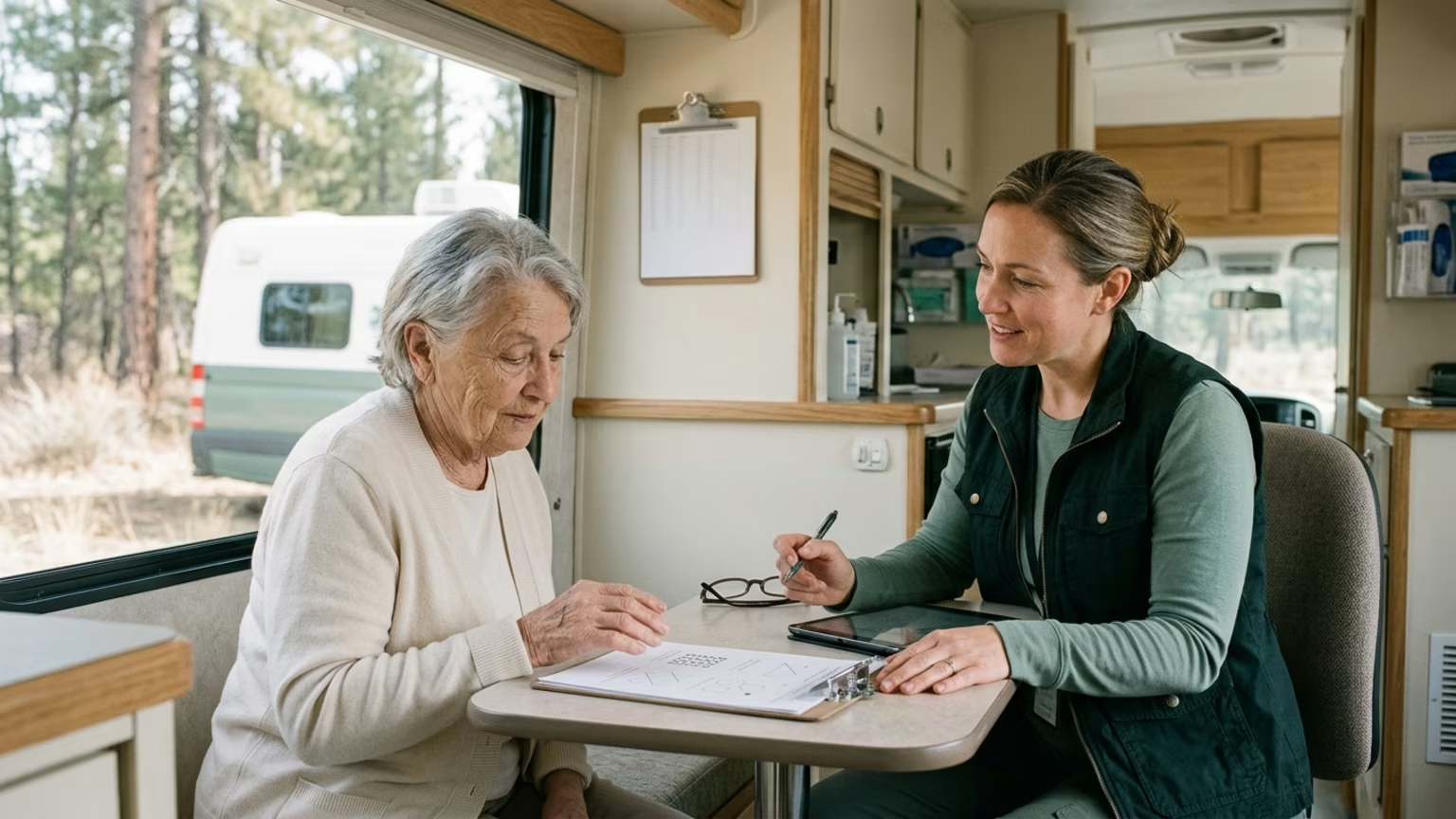
The initiative is called Building a Rural Aging and Intervention Network: Factors that Impact Trajectories, or BRAIN-FIT for short. It relies on mobile clinics to reach medically underserved populations who might otherwise lack access to specialized health services. According to Washington State University, this community-based approach combines outreach, education, and research. Participants do not need to visit multiple specialists to receive a comprehensive evaluation. Instead, they complete the entire screening process in roughly 45 minutes to an hour.
Project lead Amy Kemp, an assistant professor in the university's Department of Speech and Hearing Sciences, described this assessment as a broad snapshot of cognitive health. The screening is available to adults aged 45 and older in the target regions. It evaluates 14 modifiable risk factors that are linked to cognitive decline over time. These factors include heart health, vision, hearing, and various lifestyle choices. After the assessment, the clinic provides personalized counseling to help participants understand possible behavior changes.
The first-year research group consisted of 119 individuals who agreed to take part in the research component of the program. Washington State University noted an interesting pattern among these initial attendees. Many participants presented with elevated risk factors while still scoring within normal limits on standard cognitive testing. This baseline data helped researchers track how the personalized counseling influenced short-term habits.
One month after the initial screening, researchers conducted follow-up interviews with the study participants. During these conversations, 43 percent of the individuals said they had made at least one behavior change. The university report highlighted increased physical activity and improved sleep as specific examples of these adjustments. Kemp also pointed out that participants paid more attention to their hearing health following the evaluations.
To build on the first year, the project team subsequently hosted another mobile clinic event in the region. This follow-up session attracted nearly 80 repeat attendees, along with more than 75 new participants seeking their first assessment. The organizers used this opportunity to measure longer-term responses among returning individuals.
According to the university, about 25 percent of the repeat attendees had made sustained lifestyle changes in the year since their first screening. Additionally, 15 percent of these returning participants had successfully improved their cholesterol levels. The program also evolved based on direct participant feedback from the earlier sessions. For the second clinic, organizers improved their hearing-test equipment and added a brand new assessment of foot health.
The BRAIN-FIT model highlights the practical benefits of making health education more accessible to remote populations. Kemp explained that identifying individuals with risk factors but normal cognitive-test results is a specific strategy. She interprets this timing as reaching people during a preventive window. Finding these risks early gives patients an opportunity to make adjustments before measurable cognitive decline begins.
The first-year data reveals just how common these underlying health issues are within rural communities. The screening project found that nearly one-quarter of the participants had untreated hearing loss. The researchers also identified vision impairment, high cholesterol, and sleep disturbances as frequent health challenges among the group. Identifying these specific issues allows individuals to target their daily routines more effectively.
For older adults, this initiative serves as a strong reminder to schedule regular evaluations with a primary care doctor. A screening should act as a prompt for discussing personal health factors with a medical professional. Addressing issues like poor sleep or high cholesterol can have broad benefits for overall aging. Readers interested in how daily habits support physical and mental resilience can review our Lifestyle & Brain Resilience Articles.
While the community response appears positive, readers must understand the strict limitations of these first-year findings. The 43 percent behavior change result is based entirely on self-reported information collected just one month after the screening. Short-term self-reported data does not prove that these behavioral adjustments lasted over time. Also, Washington State University does not specify how it defined the concept of sustained change for the repeat attendees.
The project's research design also lacks several elements required to prove medical effectiveness. The report does not include a comparison group, detailed follow-up retention numbers, or standard confidence intervals. Additionally, the underlying journal article and its full study methods were not fully available for independent review on the publication's landing page. Without this information, the data cannot establish that the screening itself caused the reported lifestyle improvements.
Most notably, these findings do not prove that changing any single factor will prevent dementia. Improving physical activity or lowering cholesterol is beneficial, but the university report does not guarantee a specific cognitive benefit for an individual. The BRAIN-FIT project is an observational community program, not a controlled clinical trial designed to measure dementia incidence. Finally, the inclusion of adults as young as 45 means these results are not exclusively about individuals over 60. Readers should interpret these reports carefully to avoid drawing exaggerated conclusions about disease prevention. For more measured insights on cognitive protection, visit our Cognitive Health & Protection Articles.
The BRAIN-FIT team hopes that participants will return to the mobile clinics annually. This steady follow-up will allow researchers to track both behavior changes and actual cognitive trajectories over a longer period. This stated goal clearly signals that longer-term outcome evidence remains pending. Researchers will need several years of continuous data to understand if the program provides measurable cognitive protection.
While long-term data remains pending, the early community engagement has sparked conversations about expanding the program. Washington State University says the team is evaluating expansion to other western states in the future. This potential growth would likely involve collaboration with local universities to support the logistical demands of rural mobile clinics.
Currently, this expansion is only a possibility under consideration, not a confirmed rollout with set dates. Until community-based screening becomes more mainstream, individuals can still take a proactive approach to their own cognitive health. Requesting routine checks for hearing, vision, and cholesterol during standard medical visits can replicate many benefits of the mobile clinics.
The initial reports from the BRAIN-FIT project demonstrate a practical way to raise health awareness in underserved regions. By bringing comprehensive risk evaluations directly to rural neighborhoods, the program removes major barriers to specialized medical care. The early results indicate that providing personalized counseling alongside a health snapshot can motivate people to reevaluate their habits.
However, the transition from temporary motivation to permanent lifestyle change remains a complex challenge. The current data does not provide conclusive proof that mobile screening prevents future cognitive decline. Instead, the real value of this project lies in its ability to prompt thoughtful conversations between older adults and their healthcare providers.
Addressing modifiable risks like hearing loss, poor sleep, and high cholesterol is a sensible approach to healthy aging. Programs like BRAIN-FIT help clarify these connections, making the science of brain health more approachable for the general public. Those looking for more information on adapting to age-related changes can review our Brain Aging, Neuroplasticity & Cognitive Longevity Resources.
After identifying personal risk factors through community screening, the next step involves selecting evidence-led lifestyle adjustments that suit a daily routine. Seeking reliable information can be frustrating when older adults end up feeling patronised by conventional senior wellness content. FitBrainLab translates complex brain aging research into clear, objective analysis that respects the reader. We provide practical guidance on cognitive longevity without relying on fear or hype. Explore Resources

Follow FitBrainLab for research-led insights on memory, focus, brain aging, nutrition and mental fitness after 60. Stay connected for new articles, practical guidance and ideas for a sharper, more engaged life.




Build habits that support memory, focus and a curious, connected life.
Read the Blog