

Strength and balance deserve attention beyond memory claims. Learn what WHO guidance supports and how to connect movement with everyday participation.





Strength and balance activities do not need a promise about memory to be worth doing. Better physical function is a worthwhile goal in its own right. Treating every movement session as a defense against cognitive decline sets the wrong standard for judging its value.
The more useful question is not whether an activity will keep your brain young. It is whether that activity suits your abilities and supports the everyday life you want to lead. That leaves room for both sound evidence and personal preference.
You do not have to turn movement into another performance test. Nor do you have to dismiss physical activity because a particular brain-health claim sounds overstated. There is a sensible middle ground between those positions.
The World Health Organization identifies reduced falls risk and improved mental and cognitive health among the benefits associated with physical activity in adults and older adults. It also states that any amount of activity is better than none and that muscle strengthening benefits everyone.
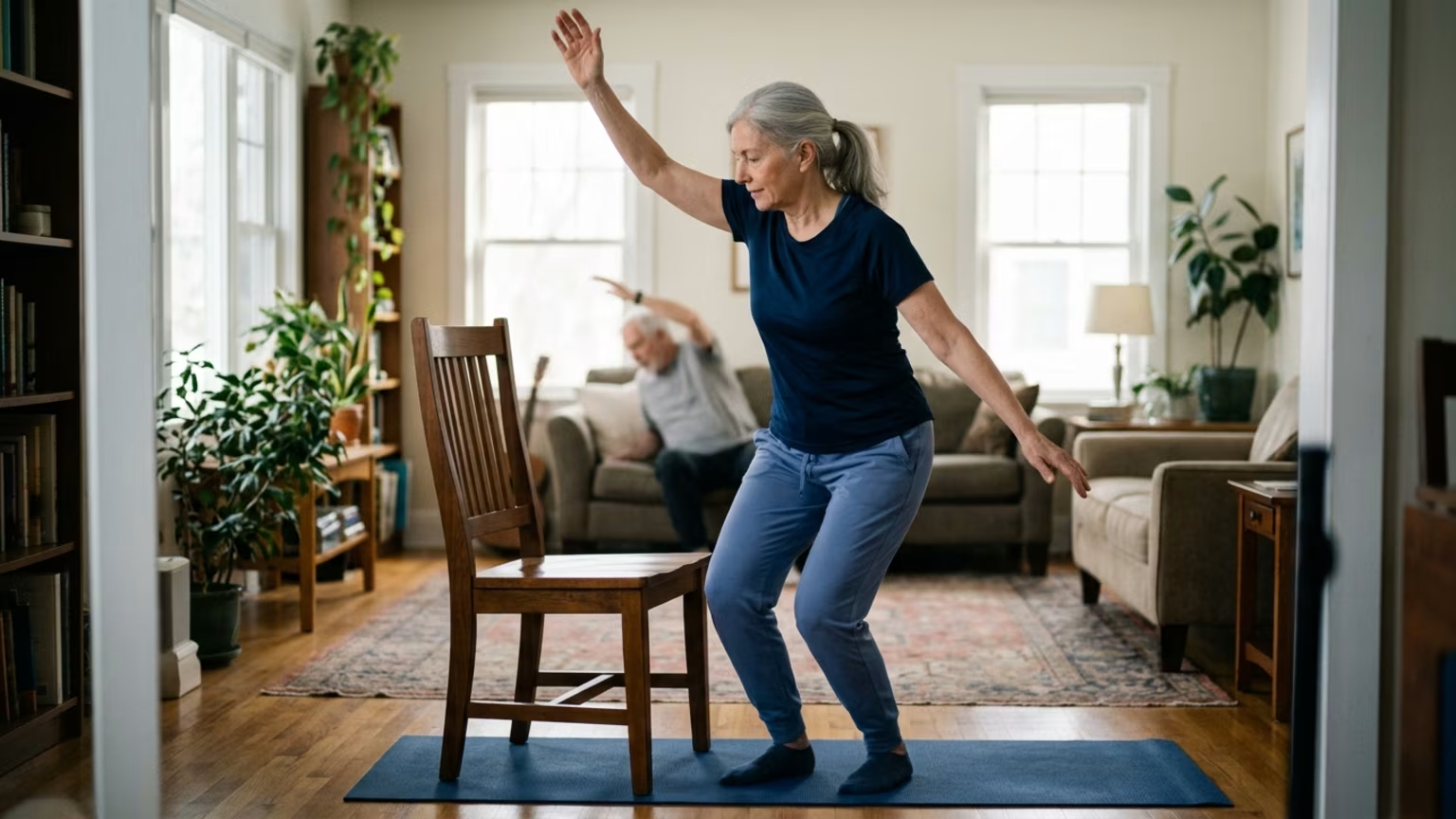
For falls prevention, WHO gives more specific guidance. It recommends tailored exercise that challenges balance and improves functional strength for older people living in the community. That exercise should progress over time and continue for sufficient duration. WHO also identifies Tai Chi as a useful option.
These recommendations put physical capability at the center. The goal is not simply to complete a demanding workout. The activity should address balance and strength in a way that fits the person doing it.
In its falls fact sheet, WHO reports that a Cochrane review found an approximately 23% reduction in the overall rate of falls in trial populations. That is a meaningful physical outcome without attaching a memory claim to it.
The falls figure describes the overall rate in studied populations. It is not a prediction that any individual's fall risk will drop by that amount. WHO's general recognition of cognitive-health benefits also does not establish that a particular strength, balance or coordination routine improves memory or prevents dementia.
The evidence assembled here does not establish that better balance automatically produces greater confidence, independence or social engagement. Those are reasonable personal goals and a practical reason to value movement. They are not guaranteed results of an exercise program.
Keeping these boundaries clear allows a straightforward conclusion: physical outcomes deserve attention without being presented as proof of cognitive protection. A routine can have a valid purpose without answering every question about brain aging.
A problem arises when movement advice turns into a demand to protect memory through the perfect routine. Under that framing, ordinary choices become high-stakes decisions. Enjoyment and suitability can seem less valuable than finding the activity with the most impressive promise.
That is an unreasonable burden to place on an older adult. There is no need to make every walk or class carry responsibility for future cognitive health. An activity should not have to pass an imagined brain-protection test before it counts as worthwhile.
The same framing can distort spending decisions. A class or product does not deserve extra money simply because its marketing mentions memory. The relevant questions concern what it offers and whether its claims match the evidence. A more elaborate promise is not a better reason to buy.
Conflicting advice about exercise already competes with advice about food, sleep and supplements. Adding another rule about the ideal brain routine can make the whole subject harder to navigate. The calmer response is to ask what each claim actually concerns rather than treating all health outcomes as interchangeable.
This is part of taking a less all-or-nothing view of brain aging. Rejecting an exaggerated claim does not require rejecting the activity attached to it. It means choosing a more honest reason for doing it.
A sustainable goal starts with the life you value rather than an impossible standard of perfect physical and cognitive performance. Strength and balance can belong in that picture without becoming its only focus. Participation is the purpose of the plan, not a reward that must wait until every ability improves.
Begin with an everyday priority rather than a claim about future brain performance. That might be attending a regular gathering or continuing an outdoor interest. These are examples of goals to discuss, not predictions about what an exercise program will deliver.
Useful questions include:
These questions give physical activity a personal purpose. They also make it easier to explain priorities when seeking guidance. “I want to keep taking part in this activity” is a clearer starting point than “I need the best exercise for my brain.”
For readers whose routines have changed after leaving work, this connects with making space for purpose without pressure to stay productive. The goal is a life worth participating in, not a replacement set of performance demands.
WHO's guidance supports a gradual and ability-matched approach. Its principle that any activity is better than none offers a reasonable starting point. Its falls advice adds that balance and functional-strength exercise should be tailored and progress over time.
This is not a reason to copy the most challenging version of an activity. A useful discussion with a qualified professional concerns what fits now and how the activity might change as abilities change. Progression belongs within that tailored plan rather than being a test of determination.
People who feel unsteady or have fallen should seek individualized guidance. The same applies when a health condition affects movement. A general article is not a personal exercise prescription.
For those readers, the next step is a conversation with a qualified health professional about suitable activity and support. There is no need to invent a routine from scattered online advice or treat someone else's starting point as a standard to meet.
WHO identifies Tai Chi as one useful option in its falls guidance. It also recommends tailored balance-challenging and functional-strength exercise. These give readers concrete features to ask about when discussing a class or program.
A useful question is: “How is this activity adapted to the abilities of the people taking part?” Another is: “Does the program address balance and functional strength?” These questions keep attention on the physical purpose of the activity rather than on a broad brain-health slogan.
The label alone should not make the decision. A program's explanation should help clarify what participants will do and how the activity is tailored. That is more useful information than an ambitious promise about staying mentally young.
A practical review can focus on fit: whether the activity remains manageable and whether it still serves a valued goal. Physical progress can be discussed within an individualized plan. Personal priorities can also change without making the earlier choice a mistake.
There is room for strength and balance within a broader life that includes interests and relationships. They do not need to dominate the calendar. FitBrainLab's wider coverage of movement and everyday engagement keeps those subjects within the same conversation rather than treating one habit as the whole answer.
The standard is not flawless performance. It is a workable approach that respects present abilities and leaves room for participation. That gives movement a clear purpose without asking it to settle every concern about aging.
You can make an informed choice about movement without making every session a verdict on your brain.
Turning strength and balance into another brain-performance obligation adds pressure that FitBrainLab's research-led approach avoids. For adults 60+ facing conflicting advice about exercise and brain performance, the publication explains cognitive aging in accessible language so that everyday choices can rest on clearer evidence rather than exaggerated claims.

Follow FitBrainLab for research-led insights on memory, focus, brain aging, nutrition and mental fitness after 60. Stay connected for new articles, practical guidance and ideas for a sharper, more engaged life.




Build habits that support memory, focus and a curious, connected life.
Read the Blog

