A practical guide to Cleveland Clinic's 2026 recommendations on manageable, engaging social routines for adults living with mild cognitive impairment.





On September 15, 2026, Cleveland Clinic published practical guidance on social connection for people living with mild cognitive impairment or early Alzheimer's disease. The article features comments from neuroscientist Andrew Bender, PhD, and focuses on repeatable ways to maintain engaging relationships.
The central message of the Cleveland Clinic publication is that social interaction combines companionship with significant mental engagement. Everyday conversations require a complex mix of cognitive skills. They naturally call on language, memory and emotional processing. Participants also use active planning and strategic thinking during these exchanges. This multi-layered demand is why researchers view socialization as an active process for the brain.
Andrew Bender suggests that relationships provide much more than basic emotional support after a neurodegenerative diagnosis. He notes that these interactions help keep the brain active and engaged. The recommended starting point is choosing an enjoyable activity that easily fits into a regular routine. Examples include attending a support group, participating in a faith community or joining a hobby group.
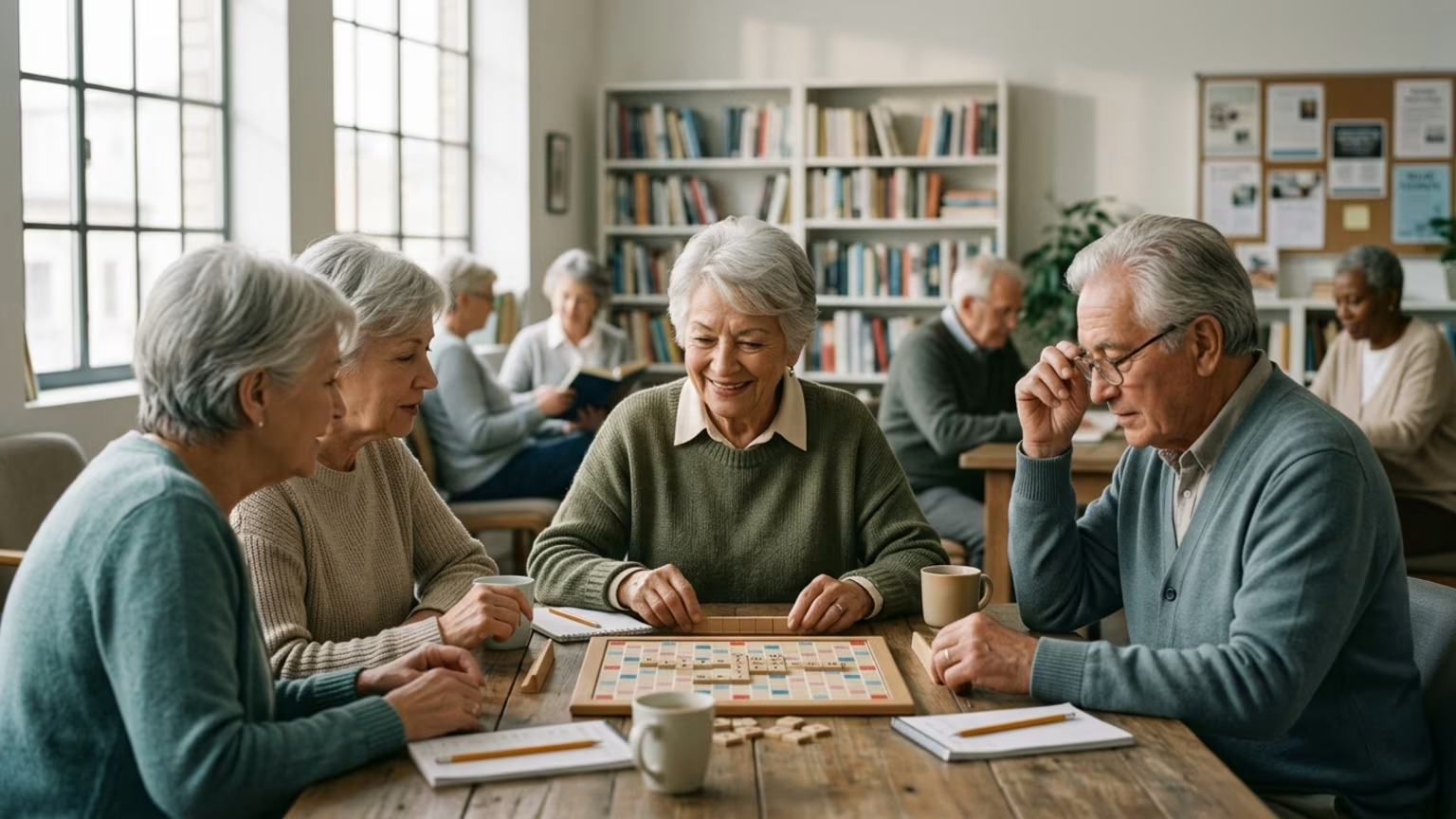
Cleveland Clinic specifically advises combining social interaction with a structured mental activity. Taking a class such as drawing or pottery offers a shared focal point for conversation. Joining a book club, participating in a discussion group or engaging in music programs can provide clear expectations for participants. The guidance also recommends learning a new skill with a loved one.
The physical setting plays a massive role in how accessible an activity feels. The recommendations focus on adapting the environment to reduce unnecessary sensory strain. Smaller groups or one-to-one meetings are often easier to manage than large gatherings. Quiet settings can help reduce sensory overload when background noise or conversation tracking becomes difficult.
Online contact offers a helpful but limited alternative to physical gatherings. Video calls can help people maintain contact with distant friends and relatives. The Cleveland Clinic guidance notes that these digital interactions are a useful tool. The publication clarifies that video calls are not identical to face-to-face conversation.
Hearing preservation is presented as a highly practical consideration for social longevity. The guidance advises people who struggle to follow conversations to discuss hearing difficulties with a healthcare provider immediately. Difficulty hearing can make social participation exhausting and intimidating, leading individuals to withdraw from interactions prematurely.
The Cleveland Clinic article describes untreated hearing loss as the single largest modifiable risk factor for dementia. This specific wording reflects the article's strong focus on addressing physical barriers to communication. Hearing and communication problems should never be interpreted as a lack of interest or motivation in socializing. Addressing these barriers is a key part of maintaining lifestyle and brain resilience strategies.
The new guidance extends beyond the patient to include family members and caregivers. Caregivers can easily become isolated and stressed while navigating a neurodegenerative diagnosis. The article states that maintaining caregivers' own social connections may help them remain healthy.
This personal support network leaves caregivers better equipped to assist a person living with mild cognitive impairment. Caregivers who take breaks to nurture their own connections often find it easier to manage daily routines. Supportive friendships provide a necessary outlet for stress relief.
Adults over 60 can use this guidance to make immediate, low-pressure adjustments to their daily schedules. The priority shifts from an ambitious social calendar to a single, repeatable activity. A modest commitment like a weekly phone call with a relative works perfectly for those who find heavy socializing overwhelming. Success is measured entirely by comfort, enjoyment and repeatability.
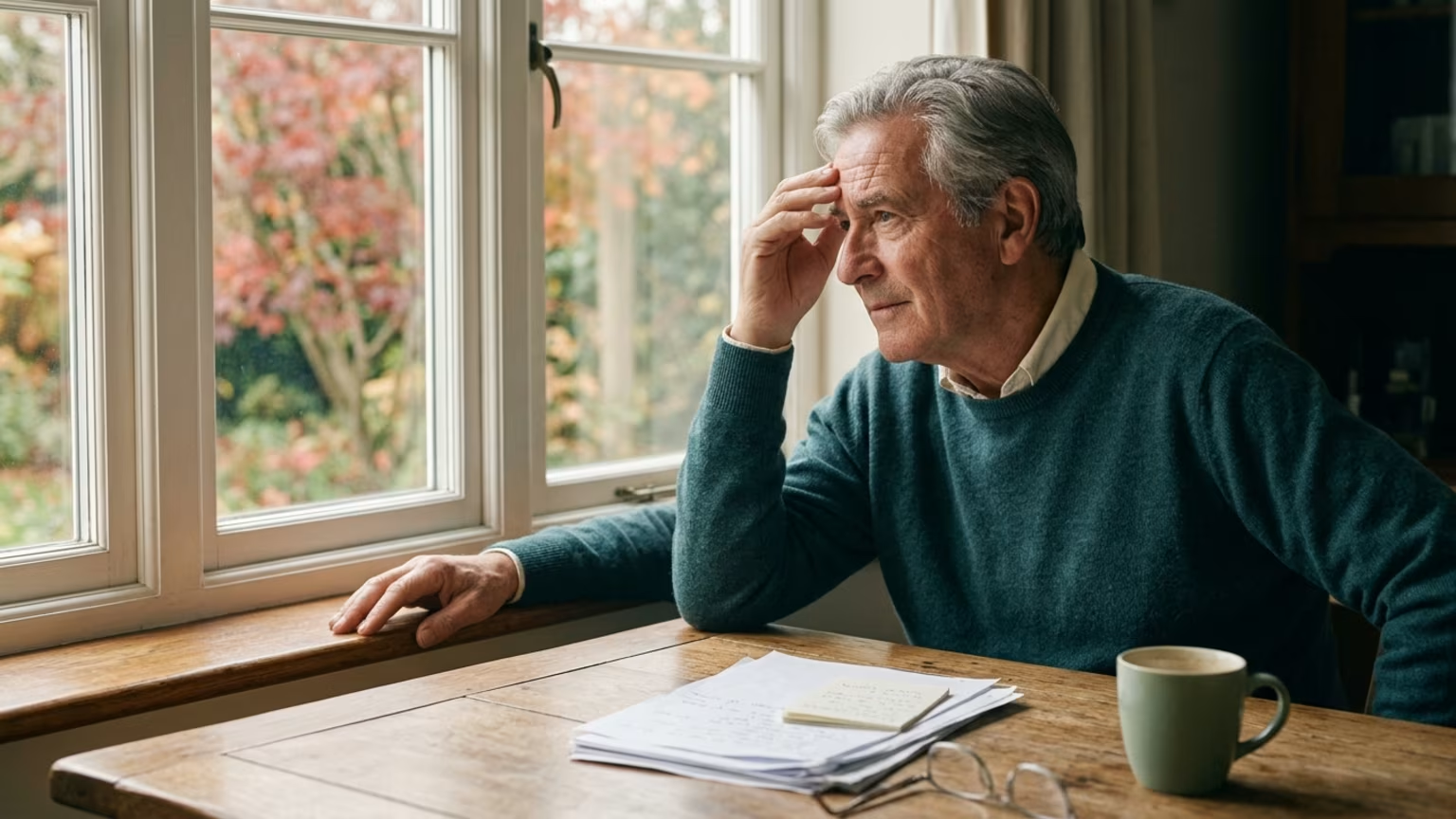
Individuals can adapt their existing hobbies to fit their current cognitive energy levels. People concerned about their memory can take notes while reading to make book club discussions feel less intimidating. Short meetings with one trusted person in a quiet location can replace noisy community gatherings. These sensible modifications allow individuals to maintain routines that support mental fitness without feeling overwhelmed.
Medical and lifestyle choices must work together to support social capacity. Treating hearing care as a standard part of staying socially engaged is a vital first step. Using video calls helps maintain long-distance relationships, provided individuals keep realistic expectations about their limits. Every person's ideal level of social activity depends heavily on their personality, physical health and daily energy levels. Finding the right balance is central to supporting memory and focus as we age.
Social engagement is associated with better health outcomes in observational research, but it is not a medical treatment. Cleveland Clinic explicitly says socializing cannot cure mild cognitive impairment or early Alzheimer's disease. Social routines should be framed as potentially supportive of wellbeing and quality of life. They do not reverse the disease, and they do not guarantee slower cognitive decline.
The guidance cautions against forcing uncomfortable social interactions. People should not push themselves to become highly social if that does not suit their personality. Observational research on socializing also carries built-in confounding factors. People with better overall health naturally find it easier to remain socially active, making reverse causation a strong possibility.
The specific statistics surrounding loneliness require careful reading and context. The Cleveland Clinic article states that chronic loneliness raises dementia risk by about 50. The page summary does not specify the study population, effect estimate or confidence interval. It also does not clarify whether the figure refers to relative risk, odds or hazard risk.
Broader evidence from the 2024 Lancet Commission provides a more comprehensive view of risk factors. The Commission estimated that 14 modifiable risk factors collectively accounted for about 45 percent of dementia cases in its population-attributable-fraction model. Social isolation was identified as one of those 14 factors. Other factors include hearing loss, physical inactivity and depression. The Commission also listed alcohol use, smoking, air pollution and vision loss.
Scientific research does not consistently treat loneliness and social isolation as identical exposures. One analysis reported a 26 percent higher later-dementia risk associated with social isolation after adjustment for loneliness and depression. Another review found loneliness consistently associated with elevated cognitive-impairment risk. Social isolation was not consistently associated with cognitive impairment across all analyses in that review.
These differences highlight why the quality of relationships matters more than the sheer volume of contacts. An individual who lives alone is not automatically lonely. Forcing a high number of social contacts does not automatically improve cognition. The Cleveland Clinic cautions that social media scrolling may actually be associated with greater feelings of isolation.
Social activity is increasingly discussed within a broader, multidomain approach to cognitive health. It is not viewed merely as a stand-alone brain exercise. The World Health Organization includes social activity in its guidance for adults with normal cognition or mild cognitive impairment. This guidance addresses social and cognitive activity alongside the management of health conditions associated with dementia risk.
The Lancet Commission framework places social isolation alongside several other critical factors. These include physical inactivity, depression, cardiovascular risks and metabolic risks. This supports a highly practical message for adults over 60. Social connection is one component of an overall brain health strategy, not a substitute for proper medical care or the management of blood pressure.
This recent guidance frames social connection as an accessible and highly individualized habit. The goal is to combine mental engagement with companionship in a way that feels rewarding. Small adjustments to the environment and a proactive approach to hearing care make these activities sustainable. A measured and enjoyable social routine remains a valuable part of aging well.
Families and adults managing a cognitive diagnosis face the daily work of adapting social routines, and planning becomes much clearer when FitBrainLab translates these practical guidelines. Navigating conflicting advice about nutrition, exercise, sleep, supplements and brain performance becomes easier when our research separates established evidence from early claims.

Follow FitBrainLab for research-led insights on memory, focus, brain aging, nutrition and mental fitness after 60. Stay connected for new articles, practical guidance and ideas for a sharper, more engaged life.




Build habits that support memory, focus and a curious, connected life.
Read the Blog