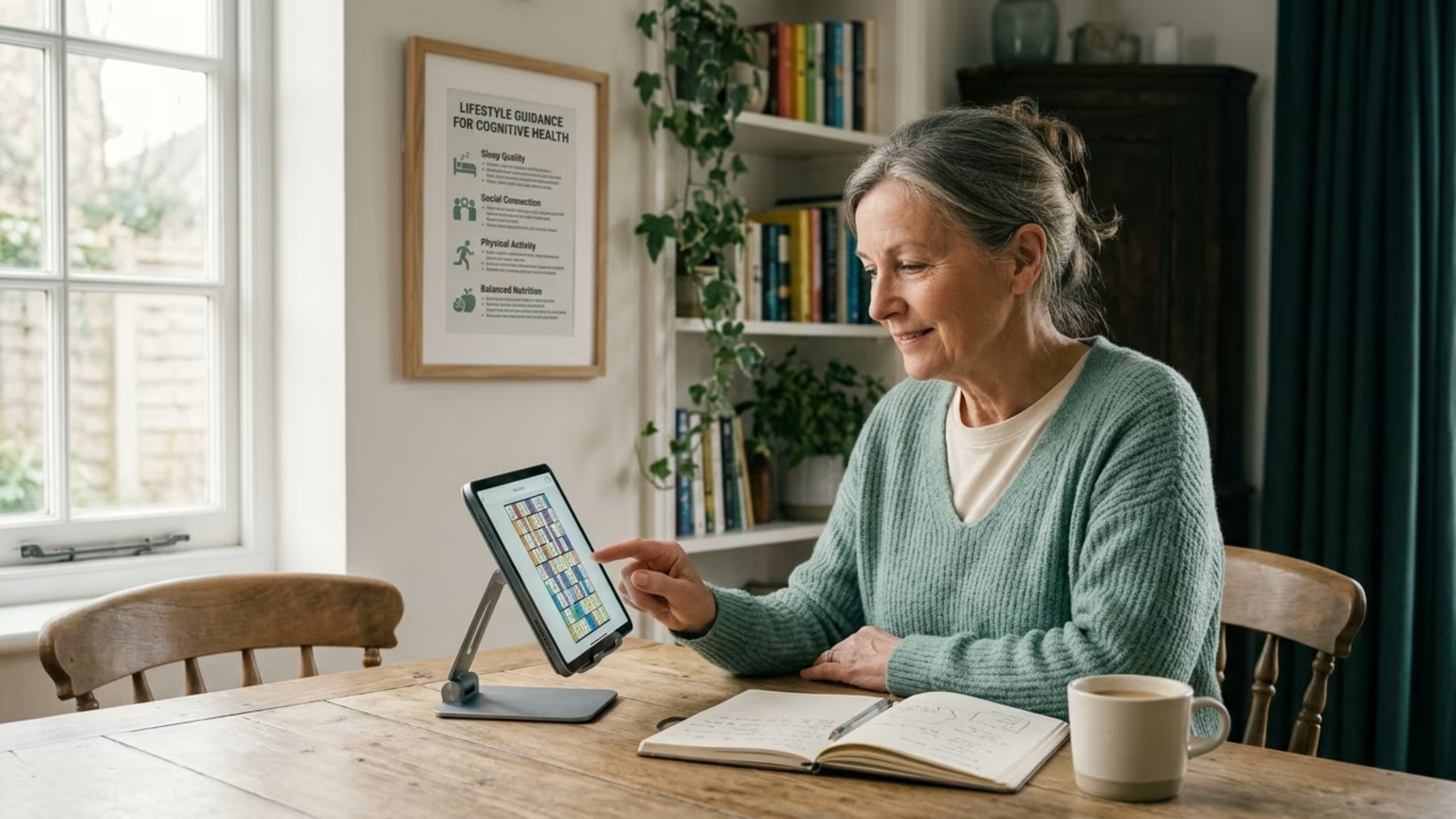

A University of Southampton study examines how an online lifestyle and puzzle program affected cognitive scores in 11,563 older adults over one year.





A recent University of Southampton study reported by The Telegraph examined 11,563 British adults aged 60 to 85 and found that access to a lifestyle and puzzle website was associated with higher cognitive scores after one year. The participants initially had low cognitive scores suggesting early memory or thinking difficulties.
The study divided participants into three distinct intervention groups to test different approaches to cognitive support. One group received standard lifestyle advice focused on diet, exercise and mentally stimulating activities. A second group was directed to the Active Brains website. This platform provided physical activity guidance, Mediterranean-style diet information and puzzle-based cognitive exercises.
The third group received access to the Active Brains website alongside three brief nurse-support contacts. These support sessions happened by email or telephone over the course of the study. All three groups were then reassessed after a full year to measure changes in their cognitive performance. The results showed that participants in all three categories experienced measurable improvements at the one-year assessment.
The researchers tracked the percentage of participants who no longer met the study’s criteria for age-related cognitive decline. In the group receiving advice alone, 28.4 percent of participants fell into this improved category. That number rose to 32.8 percent in the website-only group. The website-plus-support group saw a 31.6 percent improvement rate at the end of the year.
The newspaper reported that participants directed to the website had higher overall cognitive scores than those who received lifestyle advice alone. The report outlined an 8 percent reduction in mild cognitive impairment for the website group compared with the advice-only group. It also noted an 18 percent reduction in severe cognitive impairment when comparing those same two groups.
University of Southampton professor and study co-lead Paul Little discussed the specific types of support provided to participants. He explained that the nurse support was not highly technical in nature. He argued that relatively simple support could be useful for people dealing with cognitive impairment. Little also mentioned that researchers were surprised by the unexpected improvement among participants who received lifestyle advice alone.
The World Health Organization published its second-edition guidance on reducing cognitive decline and dementia in 2026. This comprehensive document addresses older adults who do not have a dementia diagnosis. It specifically covers individuals with normal cognition and those experiencing mild cognitive impairment. The WHO guidance focuses heavily on healthy behaviours, lifestyles and the management of underlying health conditions associated with dementia risk.
The WHO summary page highlights the importance of tailored multidomain interventions and managing environmental exposures to support brain health. The Southampton study’s reliance on a multicomponent website aligns well with this established multidomain approach. The Active Brains platform combined physical health guidance with mental exercises rather than testing puzzles in isolation. The WHO guidelines provide a trusted framework that helps contextualize the value of these comprehensive digital programs.
These findings suggest that combining mental stimulation with physical health guidance can be an accessible way to stay engaged. Older adults noticing early memory changes can take practical steps to integrate these elements into their daily schedules. The research indicates that structured platforms offering diet, exercise and cognitive challenges provide measurable benefits over time. Readers can review our lifestyle and brain resilience articles for practical ideas on building these multidomain habits.
You can view puzzles as one sensible part of a broader health strategy rather than a standalone cure. Mental engagement works best when paired with a nutritious diet and regular physical activity. The study reported that most participants already had good diets and exercised regularly before starting the program. Researchers thought puzzles likely accounted for much of the observed difference between the groups because of these existing healthy habits.
Engaging in daily cognitive exercises requires consistency and a clear understanding of your personal goals. You do not need highly technical medical support to benefit from structured lifestyle interventions. Brief check-ins with healthcare providers can keep you on track if you choose to adopt a new digital health program. Anyone looking to refine their approach to daily engagement can browse our memory and cognitive performance resources for evidence-led guidance.
Finding a program that addresses multiple aspects of aging simplifies the process of maintaining cognitive health. Platforms like the Active Brains website demonstrate the value of consolidating exercise advice and mental challenges in one single place. Incorporating these comprehensive routines into your week can add valuable structure to your retirement years. Our brain aging and neuroplasticity articles outline how consistent learning supports long-term mental clarity.
Readers should interpret these findings as an encouraging reminder that daily habits play a role in cognitive longevity. You can safely incorporate online reasoning games into your week without expecting them to replace proper medical advice. Taking a multidomain approach allows you to address both physical wellness and mental sharpness simultaneously. Focusing on a broad spectrum of healthy habits remains the most evidence-based strategy for older adults.
It is crucial to understand the clear boundaries and limitations of this specific research report. The study focused on people with early memory and thinking problems rather than individuals with confirmed dementia diagnoses. The findings do not establish that puzzles prevent dementia or cure existing neurological conditions. Readers should view the results as an encouraging sign for early intervention rather than a definitive medical treatment.
Alzheimer’s Research UK representative Honorine Lebraud cautioned that it would be premature to claim lifestyle changes reverse cognitive impairment. She noted that the verbal-reasoning improvement seen in the study was modest overall. She stated that longer follow-up research is needed to determine whether these benefits last over time. Further study will clarify if these early improvements actually correspond to a lower long-term dementia risk.
Richard Oakley of the Alzheimer’s Society offered similar caveats regarding the interpretation of these specific results. He cautioned that the findings should not be taken to mean puzzles reverse dementia for everyone with memory problems. The reported one-year improvements reflect a change in test scores and should not be equated with a clinical reversal of disease. We maintain a firm stance against exaggerated health claims across our dementia and cognitive protection resources.
The intervention itself was a comprehensive package rather than a strict test of puzzles alone. The Active Brains website included detailed physical activity instructions and Mediterranean-style diet guidance alongside the cognitive exercises. The newspaper report indicated that researchers believed puzzles drove the difference. This interpretation remains the researchers’ perspective rather than definitive clinical proof that puzzles alone caused the outcome.
The data regarding the nurse-support group also presents some unresolved questions for researchers to analyze. The share of people no longer classified with age-related cognitive decline was lower in the support group than in the website-only group. The published report does not provide enough detail to conclude why the extra support did not yield a higher percentage. It is also unclear from the available reporting whether this small statistical difference is meaningful in a clinical setting.
People concerned about changes in memory or thinking should not interpret this newspaper report as a personal diagnosis. You should not assume that self-directed puzzles will completely resolve underlying cognitive symptoms. Relying entirely on brain games to address serious memory changes can delay a proper medical evaluation. You should consult a healthcare provider for personalized assessment if you experience noticeable shifts in your mental clarity.
Maintaining cognitive health relies on realistic, steady habits rather than searching for isolated medical miracles. This research reinforces the idea that engaging your mind and managing your physical health can yield modest, measurable benefits. Structured activities like puzzles offer an accessible way to challenge your brain when combined with proper nutrition and exercise. Accepting the limitations of these tools allows you to build a sustainable routine without falling for exaggerated marketing claims.
Selecting digital puzzle platforms for your personal routine demands a clear understanding of what these tools can realistically achieve, and FitBrainLab assesses these emerging programs to frame their true value. Difficulty separating established evidence from early or exaggerated health claims frequently complicates your healthy aging strategy, but our straightforward explanations help you focus on routines that are supported by data.

Follow FitBrainLab for research-led insights on memory, focus, brain aging, nutrition and mental fitness after 60. Stay connected for new articles, practical guidance and ideas for a sharper, more engaged life.





Build habits that support memory, focus and a curious, connected life.
Read the Blog