
HMRI and the WHO highlight a life-course approach to cognitive health. Learn how managing sensory care, physical activity, and social ties impacts dementia risk.





On September 22, 2026, HMRI published updated guidance on cognitive longevity, establishing that dementia risk reduction is an active and lifelong process. The organization framed brain health as an ongoing priority for older adults rather than a reactive measure meant only for those with emerging symptoms.
HMRI reports that more than 433,000 Australians are currently living with dementia. That number is projected to exceed 812,000 by 2054 without a medical breakthrough. The publication also notes that approximately 29,000 Australians were living with early-onset dementia in 2025. This specific figure is projected to reach 41,000 by 2054. HMRI describes age as the strongest risk factor for most dementia cases. The article stresses that dementia is not an inevitable part of aging.
The recent guidance draws heavily on the 2024 Lancet Commission on dementia prevention, intervention and care. The Commission identified 14 modifiable risk factors that could collectively account for up to 45% of dementia cases worldwide. These factors span across different life stages and environmental conditions. The 2024 Lancet Commission’s inclusion of hearing loss, social isolation, high LDL cholesterol, and untreated vision loss alongside more familiar risks reflects a broader definition of brain health. The more familiar risks include hypertension, smoking, and physical inactivity.
These early factors include lower educational attainment in early life, hypertension, and obesity. Hearing loss, smoking, diabetes, and high LDL cholesterol are also highlighted. The remaining factors include excessive alcohol use, depression, and traumatic brain injury. Air pollution, social isolation, and untreated vision loss complete the list of 14 modifiable risks.
The publication of the World Health Organization’s second-edition dementia risk reduction guidelines on September 2, 2026, provides critical context for these recommendations. WHO’s updated guidance takes a life-course approach to cognitive decline. The WHO document applies specifically to adults without dementia, covering people with normal cognition and mild cognitive impairment. It expands the focus beyond personal lifestyle habits to include healthcare systems, environmental risks, tailored multidomain interventions, and equity. WHO stresses that dementia risk reduction should not be reduced to personal willpower alone. The guidance calls for integrated, multisectoral approaches that address structural and sociocultural barriers.
Australia’s Department of Health takes a comparable approach by placing dementia prevention within a broader healthy aging framework. The department states that actions that reduce cardiovascular and metabolic risk also support brain health. These actions include physical activity, a balanced diet, smoking cessation, and blood-pressure management. Hearing care, vision care, and social connection are also heavily featured in their framework.
The updated research translates these clinical guidelines into actionable routines for older adults. The focus shifts toward maintaining sensory health, staying socially active, and protecting cardiovascular function. Readers can find more guidance on building these habits in our Lifestyle & Brain Resilience Resources.
HMRI recommends aiming for at least 150 minutes of moderate exercise per week. The guidance provides walking, swimming, cycling, and strength training as practical examples. Exercise can be adapted to fit different mobility levels, fitness baselines, and medical circumstances. Consistent movement supports vascular health while offering protective benefits for the brain. The relationship between activity and brain health can run in both directions. Lower activity may contribute to risk, while illness or early cognitive decline may also reduce physical activity.
Hearing loss is now recognized as a significant factor in cognitive decline. HMRI recommends regular hearing checks and the early use of hearing aids when they are needed. Untreated hearing loss can contribute to reduced brain stimulation, social isolation, and depression. Alzheimer’s Society research highlights a gap in sensory care, finding that 40% of survey respondents reported worsening hearing over five years. Only 33% of those individuals had received a hearing check during that same period.
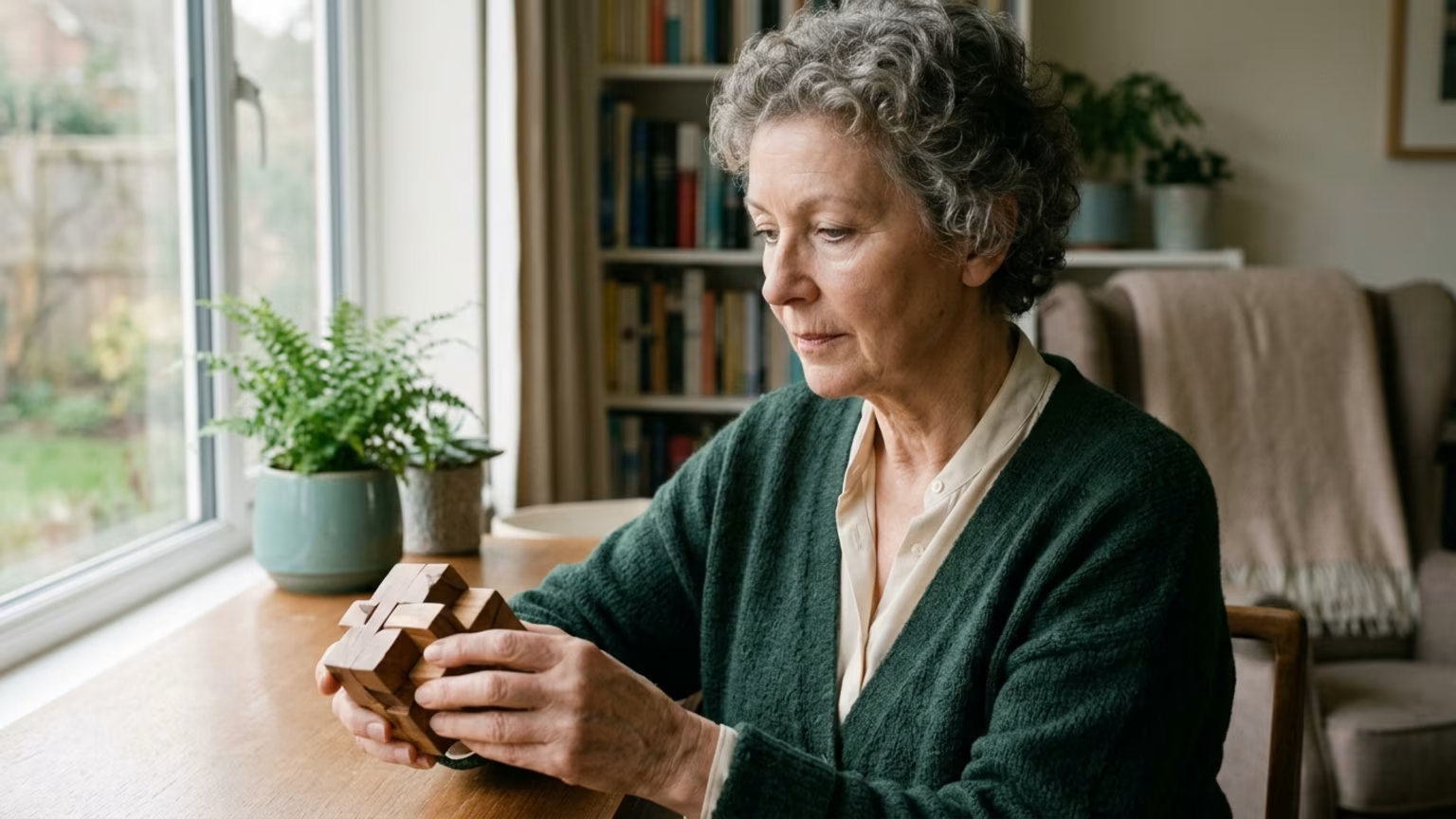
Cognitive stimulation also comes from active mental engagement. The HMRI guidance links lifelong learning, acquiring new skills, puzzles, and hobbies with the development of cognitive reserve. Engaging in challenging new tasks provides sustained attention practice rather than passive consumption. You can read more about active mental routines on our Brain Aging & Neuroplasticity Articles page.
Social isolation is a clear risk factor that requires proactive management. HMRI recommends staying socially engaged through friends, family, volunteering, and community activities. Online connections may also offer helpful social benefits for those with limited mobility. Alzheimer’s Society survey results showed that 18% of respondents spoke to somebody outside their household once a week or less. This highlights the practical relevance of social connection to dementia risk communication.
Vascular and metabolic health remain central to cognitive longevity. HMRI recommends regular blood-pressure checks, reduced salt intake, exercise, and stress management to protect vascular health. Patients should also focus on adherence to prescribed treatments for cholesterol and diabetes. Public awareness of these connections remains incomplete. The Alzheimer’s Society reports that only 32% of people over 40 in its cited research recognized high blood pressure as a dementia risk factor. Discussing these metrics with a healthcare provider is a practical way to support brain health.
Translating global health statistics into personal advice requires careful interpretation. The estimate that up to 45% of dementia cases could be delayed or prevented is a worldwide, population-level observation based on modifiable risk factors. This figure should not be presented as a personal guarantee that an individual can entirely avoid dementia.
Risk reduction does not eliminate dementia risk. Age is the strongest risk factor for most dementia cases. HMRI explicitly states that age, genetics, and family history cannot be controlled. Risk reduction strategies support healthy aging, but they do not completely remove the risk of cognitive decline.
The timing of risk factors matters significantly. Making healthy changes later in life may still be worthwhile, but the 14-factor framework does not mean all risk factors are equally easy to modify.
The evidence regarding specific risk factors also contains important nuances. HMRI cautions that studies on mild traumatic brain injury remain mixed. The article also notes that late-life diabetes is less clearly linked with dementia than midlife diabetes. Furthermore, while studies have found lower cognitive decline risk among people with hearing loss who use hearing aids, this does not prove that hearing aids alone prevent dementia in every user.
Discussions around depression and alcohol also require precise framing. HMRI reports an association between depression and dementia. Late-life depression can sometimes be an early manifestation of dementia rather than a direct cause. The mechanisms connecting depression and dementia are not fully clear. The guidance on alcohol notes an association between heavier consumption and dementia risk, but it does not suggest that light drinking is medically recommended. Our Cognitive Health & Protection Articles examine how to interpret these nuanced health associations.
The latest guidance from HMRI, WHO, and the 2024 Lancet Commission changes how older adults should view brain health. For adults over 60, cognitive longevity is increasingly presented as a combination of mental stimulation and physical activity. Meaningful participation, sensory health, and routine medical care also form a key part of this strategy. It is not reduced to a single supplement or isolated brain exercise.
Protecting cognitive function means building a sustainable routine. Social engagement is valuable, but the evidence does not justify promising that volunteering or hobbies will completely prevent dementia. Instead, these activities should be presented as ways to support cognitive stimulation, wellbeing, purpose, and connection. Viewing brain health as a broad, lifelong commitment allows adults over 60 to build practical, engaging lives while actively managing their cognitive risk.
Active seniors and their families take on the daily work of organizing stimulating schedules, and using FitBrainLab to analyze the latest public health guidance shifts how you approach cognitive longevity. Experiencing a loss of structure, learning opportunities or purpose after retirement creates immediate barriers to mental sharpness, yet relying on our calm assessment of these medical recommendations makes building a protective routine much easier. Explore Resources

Follow FitBrainLab for research-led insights on memory, focus, brain aging, nutrition and mental fitness after 60. Stay connected for new articles, practical guidance and ideas for a sharper, more engaged life.






Build habits that support memory, focus and a curious, connected life.
Read the Blog