
A physician’s observations and a large cohort study put social connection in focus, with practical options and clear limits on claims about healthy aging.





On November 2, 2026, Yahoo Health republished a Parade article in which Dr. Dung Trinh described meaningful social connection as a recurring feature among his patients who lived past 100. Trinh is an internist at MemorialCare Medical Group and Chief Medical Officer of Healthy Brain Clinic.
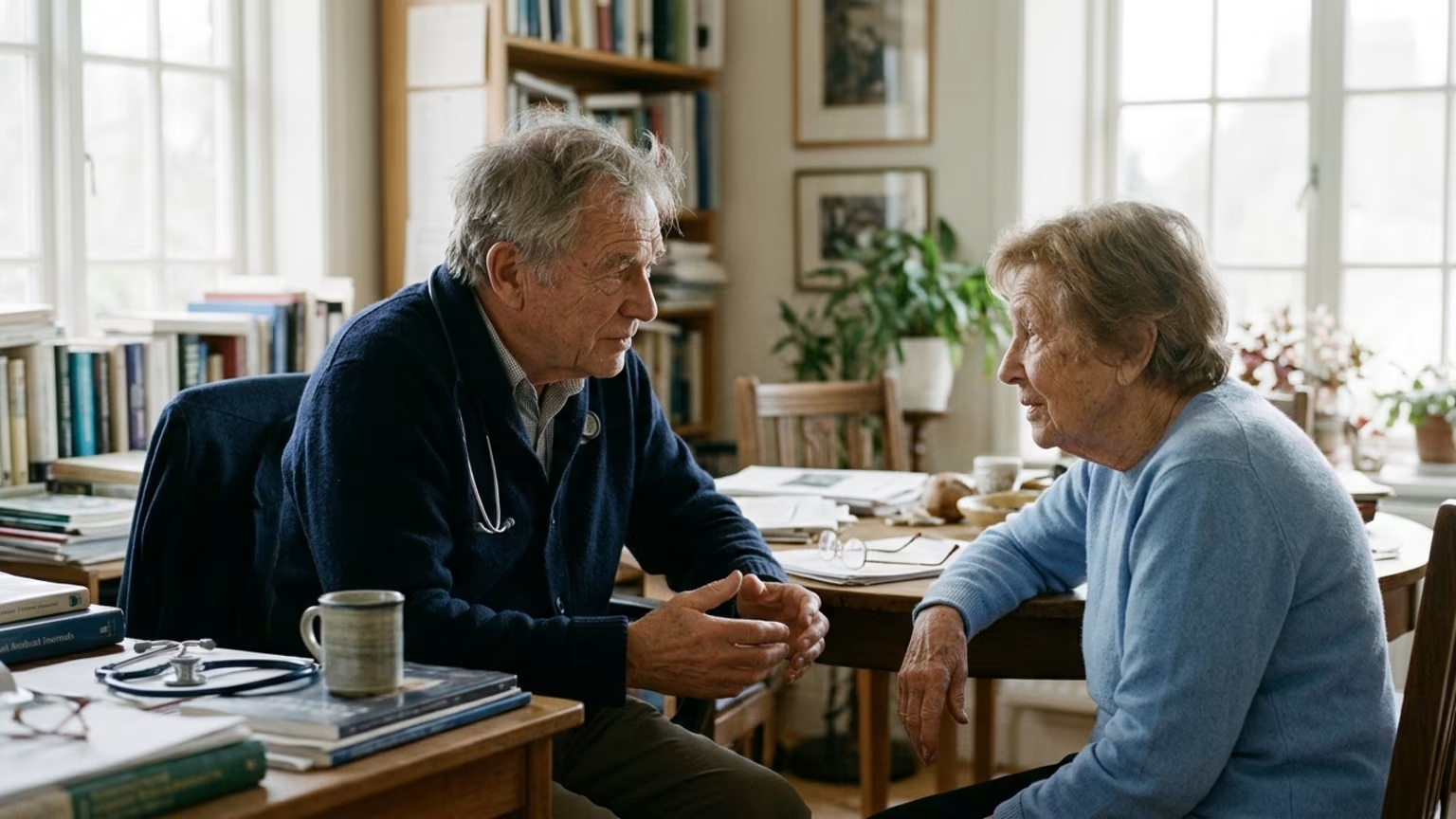
Trinh’s central point is about the meaning of relationships rather than the size of a contact list. He says many of his patients who reach 100 or beyond maintain connections that give their lives a sense of purpose. Those connections can involve family or community participation. They can also take the form of regular conversation with someone familiar.
The article describes healthy aging through the idea of healthspan: time spent healthy, independent and enjoying life. In that framing, the goal is not simply to reach a particular birthday. It is to remain involved in a life that feels worthwhile.
Trinh’s examples are ordinary rather than elaborate. They include volunteering and mentoring younger people. Helping grandchildren with homework or taking part in a community organization can also provide connection and a reason to participate.
He describes conversation as engaging memory, emotional processing and problem-solving. He also suggests that relationships can encourage physical activity and healthier routines. His practical emphasis is on making interaction a regular part of life through manageable activities such as calling a friend or sharing a meal.
That changes the tone of the discussion. Rather than treating a long life as a personal achievement to reproduce, the article directs attention toward belonging and participation. Its examples leave room for different personalities and circumstances.
A separate 2026 analysis in the Journal of Epidemiology and Community Health examined social activity across five population-based surveys. These covered the United States and England along with China, Mexico and European countries. The analysis included 57,793 participants and a median follow-up of six years.
The researchers found that participation in social activities was associated with higher cognitive scores. They also reported associations with better memory and executive-function scores during follow-up. Executive function refers to skills involved in planning and managing tasks.
People participating in more activities tended to have higher cognitive scores. The study also reported associations between volunteer work and sports clubs and a lower risk of cognitive decline.
The physician’s article and the study address related but different questions. Trinh discusses what he has observed in people with exceptionally long lives. The cohort analysis examines social participation and measured cognition across older populations. Keeping those outcomes separate helps readers understand why a story about reaching 100 belongs alongside cognitive research without treating them as the same finding.
For adults 60+, the useful decision is less about building the busiest calendar and more about finding a form of participation that feels worthwhile. Trinh’s recommendations offer several starting points. None requires treating social life as a performance target.
A practical way to read his advice is to ask which existing interest or relationship could support a repeatable routine. The article’s examples fit several different preferences.
Calling a friend, having coffee with a neighbor or sharing a meal all appear in Trinh’s recommendations. These are modest forms of contact. They do not require joining a large organization or taking on a formal role.
For someone who prefers quieter interaction, the value of this framing is that conversation counts. Meaningful contact does not have to look like a crowded social calendar. FitBrainLab’s discussion of social ties that suit quieter personalities offers another perspective on matching connection with personal preferences.
Volunteering and mentoring are among the article’s examples. So is helping grandchildren with homework. Each gives people something to do together rather than making social contact an activity without a focus.
The practical appeal is the role itself: sharing knowledge or contributing to a task that matters to someone else. These examples present purpose as participation rather than productivity. They leave room for involvement outside paid work without turning retirement into another obligation to achieve.
That distinction fits a broader discussion of meaningful retirement without pressure to remain employed. The relevant question is whether a role feels worthwhile, not whether it resembles a job.
Trinh also recommends combining social contact with movement or mental stimulation. A walking group or class is one way to bring those elements together. The shared activity supplies a reason to meet and something to discuss.
The immediate implication is choice rather than a new rule. A regular conversation may fit one person’s preferences. A community activity may fit another’s. The article also allows for balancing social time with needed solitude.
The approved reporting on loneliness and social isolation distinguishes the two concepts. Social isolation concerns a lack of social contact. Loneliness is the subjective feeling of being alone or disconnected.
That distinction makes a head count an incomplete guide to social experience. Trinh’s focus on meaningful relationships offers a more useful question: does the interaction provide a sense of belonging? It also keeps the practical message respectful of people who enjoy solitude and do not want a large social circle.
The main limit belongs in clear view: neither the physician’s observations nor the cohort study proves that social activity prevents dementia or extends life. Trinh’s comments are clinical observations rather than findings from a controlled test. His explanations about conversation and healthier routines were not quantified effects demonstrated in the article.
The cohort study is observational. Its authors acknowledge that stronger cognition at the start could make people more likely to participate in social activities. This is reverse causation: the apparent direction of an association may run partly the other way.
The authors also identify residual confounding. Other differences between participants may help explain the results. Social activity was measured differently across cohorts, and some pooled findings varied substantially between them.
The study counted activities more directly than it assessed their quality or emotional meaning. The authors identify those dimensions as priorities for future research. This matters when interpreting a pattern involving the number of activities: a higher count is not automatically a measure of deeper belonging.
The participants were also not exclusively adults 60 and older. Median ages across the cohorts ranged from 57 to 73. The findings therefore describe a broader population than this article’s intended readership.
For readers, the practical response is to keep the decision proportionate to the evidence. A satisfying conversation or useful community role can be worthwhile as part of daily life. Personal concerns about memory or cognitive change belong with qualified health professionals rather than being answered by adding social activities alone.
This development matters because it brings an everyday part of life into a more careful discussion of cognitive aging. The physician’s account directs attention toward belonging and purpose. The cohort research adds evidence about the relationship between social participation and measured cognition.
The long-term research task is to understand which aspects of participation matter and how those relationships work over time. The everyday task is more modest: finding forms of connection that fit a person’s interests and circumstances.
For adults thinking about life after work, that is a useful shift in focus. Cognitive health need not be discussed only through test scores or exceptional birthdays. It also belongs in conversations about participation and how people want to spend their time.
Putting a regular conversation or shared activity into everyday life involves choosing a workable habit, and FitBrainLab supplies the research context for that choice. Its editorial guidance for adults 60+ addresses uncertainty about social connection and purposeful living, helping readers distinguish worthwhile ways to stay engaged from claims about lasting memory benefits.

Follow FitBrainLab for research-led insights on memory, focus, brain aging, nutrition and mental fitness after 60. Stay connected for new articles, practical guidance and ideas for a sharper, more engaged life.



Build habits that support memory, focus and a curious, connected life.
Read the Blog
