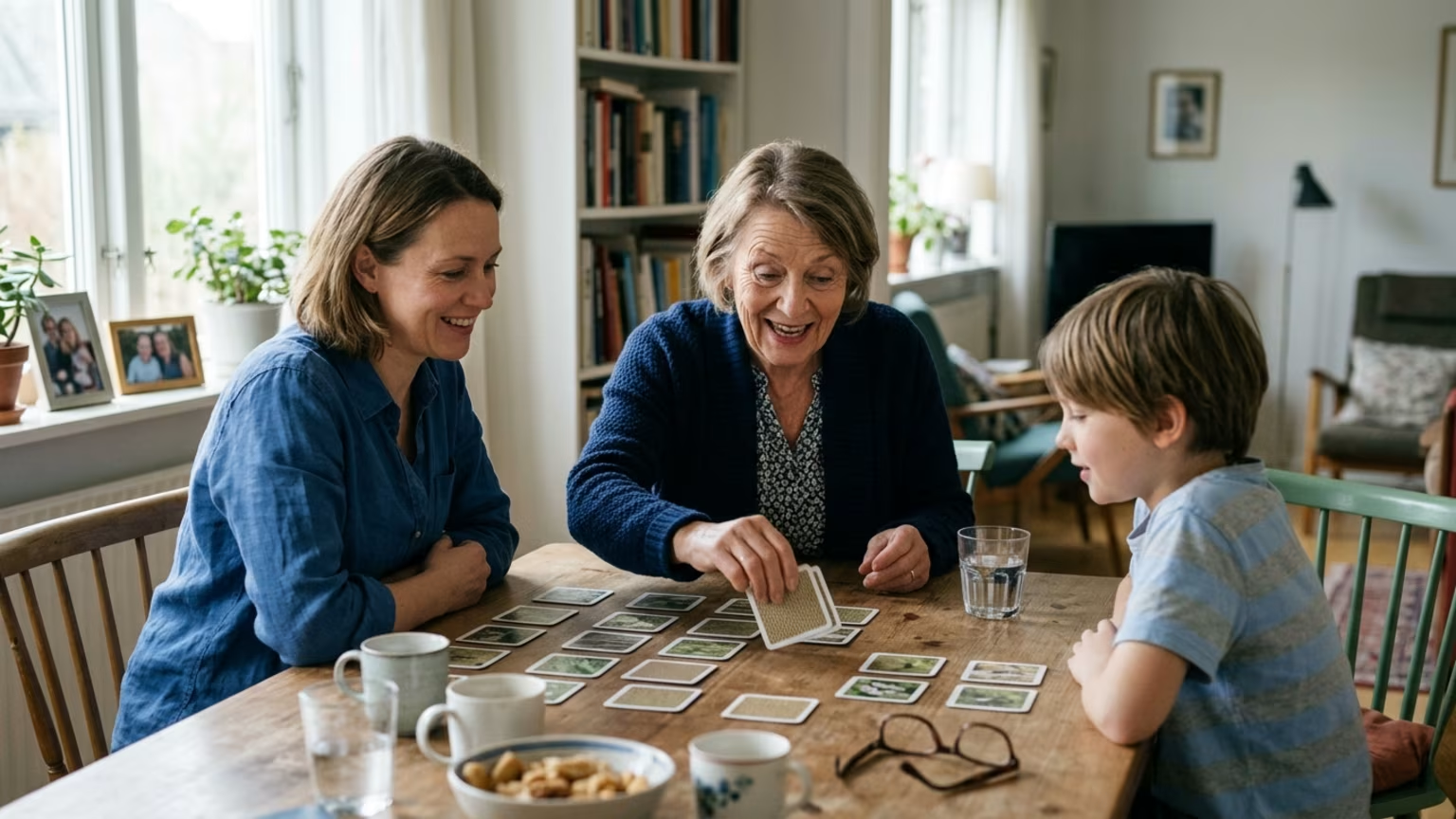
National Seniors Australia encourages learning and social participation after 60. We examine its advice and a specific study finding on memory.





On 16 October 2026, National Seniors Australia published Brett Debritz’s “Growing older, but not slowing down”, offering practical ideas for learning and social participation in later life.
National Seniors Australia describes neuroplasticity as the brain’s capacity to change and develop throughout life. It says new experiences and mental challenges can help create and strengthen brain connections. Its suggestions include learning a language or musical instrument and staying mentally engaged through puzzles or new technology.
The article’s central message leaves room for both age-related change and continued development. According to National Seniors Australia, some physical and mental abilities can improve later in life under suitable circumstances. Getting older does not mean every ability follows the same path.
The publication also connects mental activity with participation in the wider world. It points to clubs and volunteering as ways to bring learning together with social contact and purpose. Community participation is presented as another route to remaining involved.
This places cognitive engagement within a broader view of ageing. The article discusses movement and social connection alongside mental activity. Nutrition, hydration and sleep also form part of that picture. Learning is one part of an engaged life rather than the whole subject of healthy ageing.
A review of brain-ageing research offers a specific example through its account of the Synapse Project. This randomized intervention study involved 221 adults aged 60 to 90. The review reports an improvement in episodic memory following sustained learning of demanding skills.
That finding gives the discussion a measurable focus: a particular aspect of memory following a challenging learning experience. National Seniors Australia supplies the broad invitation to keep participating. The review adds a research example that helps explain why sustained skill learning deserves attention.
For readers thinking about mental engagement after retirement, the immediate value is a wider view of what learning might involve. The article’s examples reach beyond formal brain-training programs. They include skills and activities that can have a purpose within ordinary life.
A useful starting point is the distinction between doing something familiar and learning something genuinely new or challenging. The practical message supported by the research is to look for an activity that asks something of the learner. Personal interest can help guide that choice without turning it into a medical decision.
National Seniors Australia’s examples offer several directions:
These choices serve different interests. A useful question is not simply which activity carries the strongest brain-health label. It is what the person would actually be learning and why that learning feels worthwhile. That keeps the focus on engagement rather than on buying into a claim.
The article also offers a reason to think beyond achievement alone. Learning a skill can be a goal in itself. Joining an activity can be about participation. Contributing through a volunteer role can give the activity a purpose beyond personal performance.
There is no need to treat those motives as competing priorities. The publication’s practical appeal lies in bringing them together: something to learn and a reason to take part. For readers deciding how to use time after paid work, that is a constructive way to frame the choice.
National Seniors Australia describes social engagement as linked to mental wellbeing and better cognitive health. Its examples of clubs and community participation put that broad message into everyday terms. Volunteering adds the possibility of contributing while remaining mentally active.
The practical question is how an activity brings learning and participation together. A language or instrument puts skill development near the centre. A club or volunteer role puts shared involvement or contribution near the centre. The article offers both routes without asking readers to choose a single model of an active later life.
Questions that follow directly from its suggestions include:
These are questions about fit and meaning rather than a scoring system. They help translate a broad recommendation into a clear reason for choosing an activity. The point is to identify an opportunity for real engagement instead of selecting something solely because it has been described as good for the brain.
For doctors and researchers, the same distinction keeps the discussion focused. The publication offers examples for conversations about participation. The research example concerns a defined memory outcome after demanding learning. Keeping the activity and its purpose clear makes the advice easier to discuss without changing its meaning.
This publication was a practical overview rather than a new clinical trial or policy change. National Seniors Australia did not provide a specific study or measured outcome for its learning recommendations. It also supplied no effect size or dementia-risk estimate. Its suggestions should be read in that context.
Neuroplasticity describes a capacity for change. It is not a guarantee that a chosen activity will stop age-related cognitive change. Neither the article nor the study example establishes that the suggested activities prevent dementia or function as treatments. That is the main boundary around the encouraging message.
The Synapse Project finding also needs to stay attached to what was studied. The review describes sustained learning of demanding skills and an episodic-memory outcome. It does not establish that every hobby produces the same result. A brief or unstructured version of an activity cannot simply be assigned the study’s finding.
The social claims have a separate limit. National Seniors Australia says social engagement “has been linked” to better cognitive health. A link does not establish that volunteering or community participation by itself causes improved cognition. Purpose and social involvement remain reasons to participate without requiring that stronger claim.
The practical interpretation is therefore straightforward: choose opportunities for genuine mental challenge and social involvement because they offer meaningful engagement. Decisions about personal memory symptoms or treatment belong with qualified healthcare professionals rather than with a list of suggested activities.
The value of this update is its attention to continued development. National Seniors Australia places older adults in the role of learners and contributors. The research example gives that discussion a specific memory finding to examine. Together, they support a more useful conversation about the place of challenging activities in later life.
For readers following evidence about brain ageing, the editorial lesson is to keep the activity and the outcome clearly defined. Learning a skill is a concrete goal. Taking part in a community is another. Both deserve attention within discussions of cognitive health.
Over the longer term, this shifts the focus toward opportunities rather than assumptions about what age rules out. The worthwhile question is what there is still to learn and where a person wants to contribute. Learning and participation have a place in later life on their own terms.
An improvement in episodic memory is a specific study outcome, and FitBrainLab explains its place in research on learning and later-life brain health. For adults 60+ facing uncertainty about everyday habits, its articles turn complex evidence into practical context for judging options for mental engagement.

Follow FitBrainLab for research-led insights on memory, focus, brain aging, nutrition and mental fitness after 60. Stay connected for new articles, practical guidance and ideas for a sharper, more engaged life.



Build habits that support memory, focus and a curious, connected life.
Read the Blog