

Learning a new skill after 60 will not prevent cognitive aging, but demanding hobbies offer real benefits. Learn how to choose the right mental challenge.





Starting a new hobby after 60 will not prevent normal cognitive aging. Commercial marketing often frames language classes or digital brain games as a guaranteed shield against dementia. This exaggerated promise sets an impossible standard for older adults who feel pressured to fix their brains. The actual research suggests that taking up a demanding skill is simply a structured way to practice attention and maintain intellectual independence.
The most compelling evidence for later-life learning focuses on effort rather than pure entertainment. In 2014, researchers published the Synapse Project to test how different activities affect older adults. The study examined healthy adults aged 60 to 90 over a three-month period by assigning them to demanding skills like digital photography or quilting. Participants who practiced these demanding skills showed measurable gains in episodic memory, while the comparison groups did not show this same specific improvement.
This research supports a crucial distinction between actively acquiring an unfamiliar skill and just spending time on pleasant habits. The cognitive benefit comes from the friction of deliberate practice. The Synapse Project involved a substantial commitment of about 15 hours per week for three months, meaning occasional or low-effort activities are unlikely to produce identical results. When we look at consistent mental stimulation, the objective is to challenge the brain just enough to force adaptation in a sustainable stretch zone.
Other specific fields of study show similar patterns of effort and adaptation. Preliminary research on second-language learning suggests that structured courses may lead to measurable cognitive changes in some older adults with room for improvement at baseline. One report notes that older adults with long-term musicianship performed better on measures of understanding speech in noisy environments. However, this is an association based on years of practice rather than a quick fix from starting late in life, proving that sustained effort matters deeply.
Treating every crossword puzzle or app as a medical intervention creates unnecessary anxiety. Many people spend significant time and money on commercial brain games because they fear cognitive decline. A recent synthesis of brain-training evidence reports that improvements are usually limited to the practiced game itself, a limitation known as near transfer. People often get better at the specific digital task without showing durable improvements in everyday reasoning or memory.
Broader guidance from the World Health Organization places cognitive activity within a much larger risk-reduction framework. This multidomain context includes physical activity, social engagement, and proper diet. It also includes tobacco cessation, alcohol reduction, and the management of health conditions like hypertension and diabetes. The WHO recommendations note that the evidence supporting cognitive training is less certain than the evidence supporting physical activity.
Believing that a daily puzzle app replaces proper hearing care or physical movement is a serious mistake. Older adults waste resources when they chase unproven digital cures instead of enjoying practical hobbies. Technology is a useful delivery channel for learning, but it should create usable skills rather than just awarding digital points. Pushing too hard for a miracle cure often leads to frustration and abandoned projects.
A difficult activity that produces constant failure can reduce confidence and ruin adherence. When an activity is entirely comfortable, it fails to provide enough attention-demanding practice to matter. Results from healthy older adults cannot automatically be generalized to people with significant vision loss, neurological disease, or severe depression. Learning should never be positioned as a substitute for professional medical assessment when new memory problems disrupt functional independence.
Instead of searching for a medical cure, you can choose a skill based on curiosity and practical value. The research does not rank language learning, music, or technology from best to worst. You just need an activity that is unfamiliar enough to require attention but concrete enough to practice. Finding the right balance of mental engagement keeps the process enjoyable and sustainable.
Active production is always preferable to passive exposure. You should speak rather than only listen, write rather than only read, and make something rather than merely watch tutorials. You should select a format that fits your personal motivations and lifestyle. Language learning may suit someone motivated by travel, while hands-on crafts connect learning with immediate real-world results.
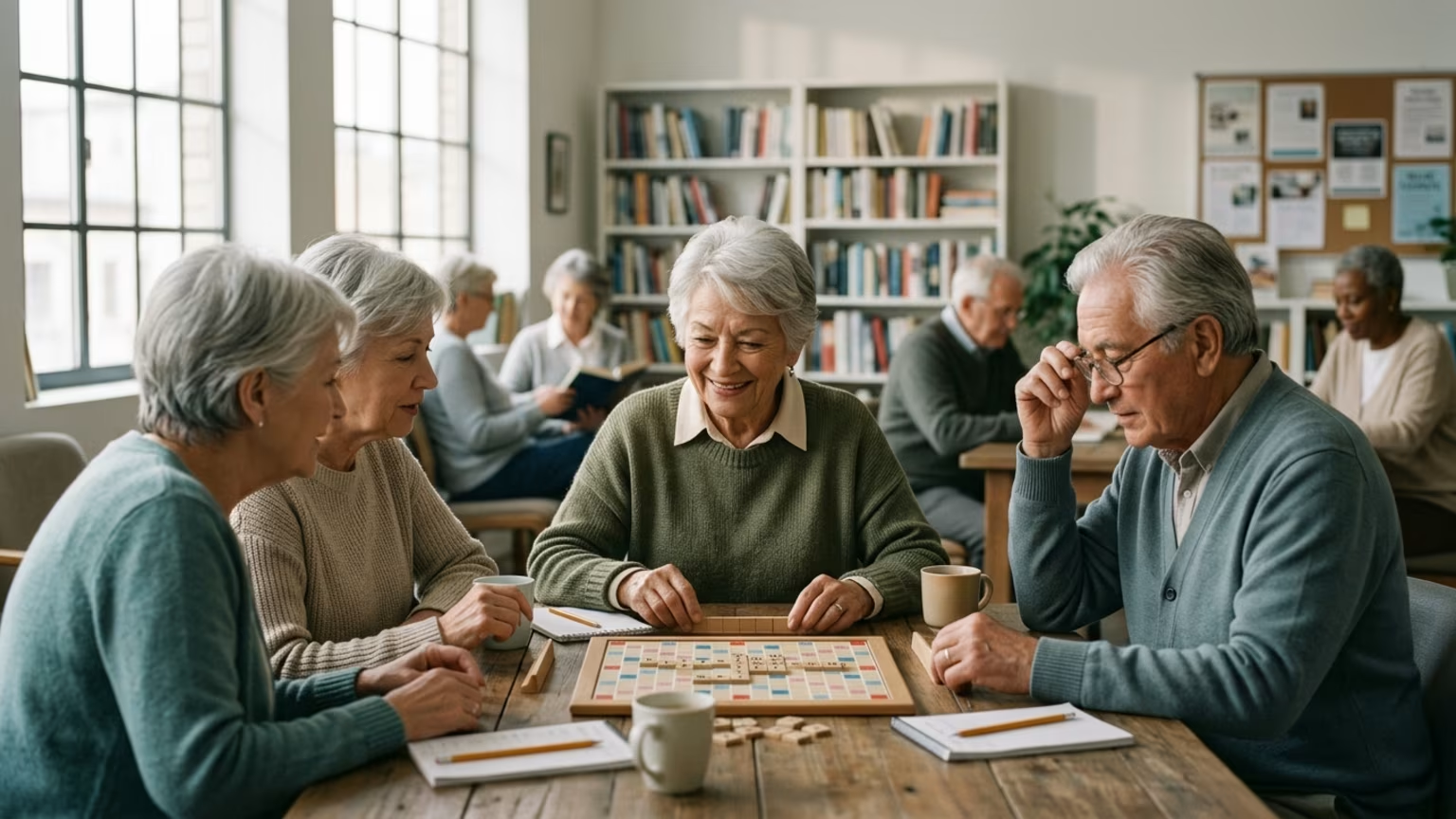
You can use a simple three-part test to evaluate your chosen activity. The task must require your full concentration, allow you to make recoverable mistakes, and show visible progress after practice. If a project causes constant frustration, you can break it into smaller units or slow your pace. You can use social contact as support through classes or clubs, but pleasant socializing alone is not equivalent to demanding skill acquisition.
Difficulty must be adjustable to keep you engaged over time. You might begin by learning to order a short conversation in a new language or verifying a single neighborhood fact for a history project. When the task becomes automatic, you can increase the complexity to maintain the cognitive stretch. Building feedback into the activity through a teacher or a checklist helps you build confidence and provides a reliable structure for your daily routine.
Experts agree that the benefits of adult learning depend heavily on persistence. Reviews of the available evidence caution that observed cognitive effects are modest and should not be translated into promises to stop aging. Sustained learning simply makes life more stimulating while potentially improving selected cognitive skills in some older adults. Furthermore, cognitive-test gains are not the same as improved everyday memory, safer driving, or delayed dementia.
Interestingly, your mindset about aging also plays a role in your long-term capability. One observational study found that having more positive views of aging was associated with a greater likelihood of later cognitive or physical improvement. Framing older adults as capable learners encourages the kind of sustained effort that leads to real competence. When you view learning as a natural part of maintaining cognitive health, you are more likely to stick with it.
Choosing to learn a challenging new skill is a powerful way to stay engaged, curious, and intellectually independent on your own terms.
Conflicting advice about nutrition, exercise, sleep, supplements, and brain performance can make choosing a new hobby feel overwhelming. FitBrainLab helps you separate established evidence from exaggerated marketing so you can select genuinely engaging challenges. By translating complex cognitive research into clear guidance, we empower you to build practical learning routines that support your long-term independence without relying on false promises. Explore Resources

Follow FitBrainLab for research-led insights on memory, focus, brain aging, nutrition and mental fitness after 60. Stay connected for new articles, practical guidance and ideas for a sharper, more engaged life.




Build habits that support memory, focus and a curious, connected life.
Read the Blog