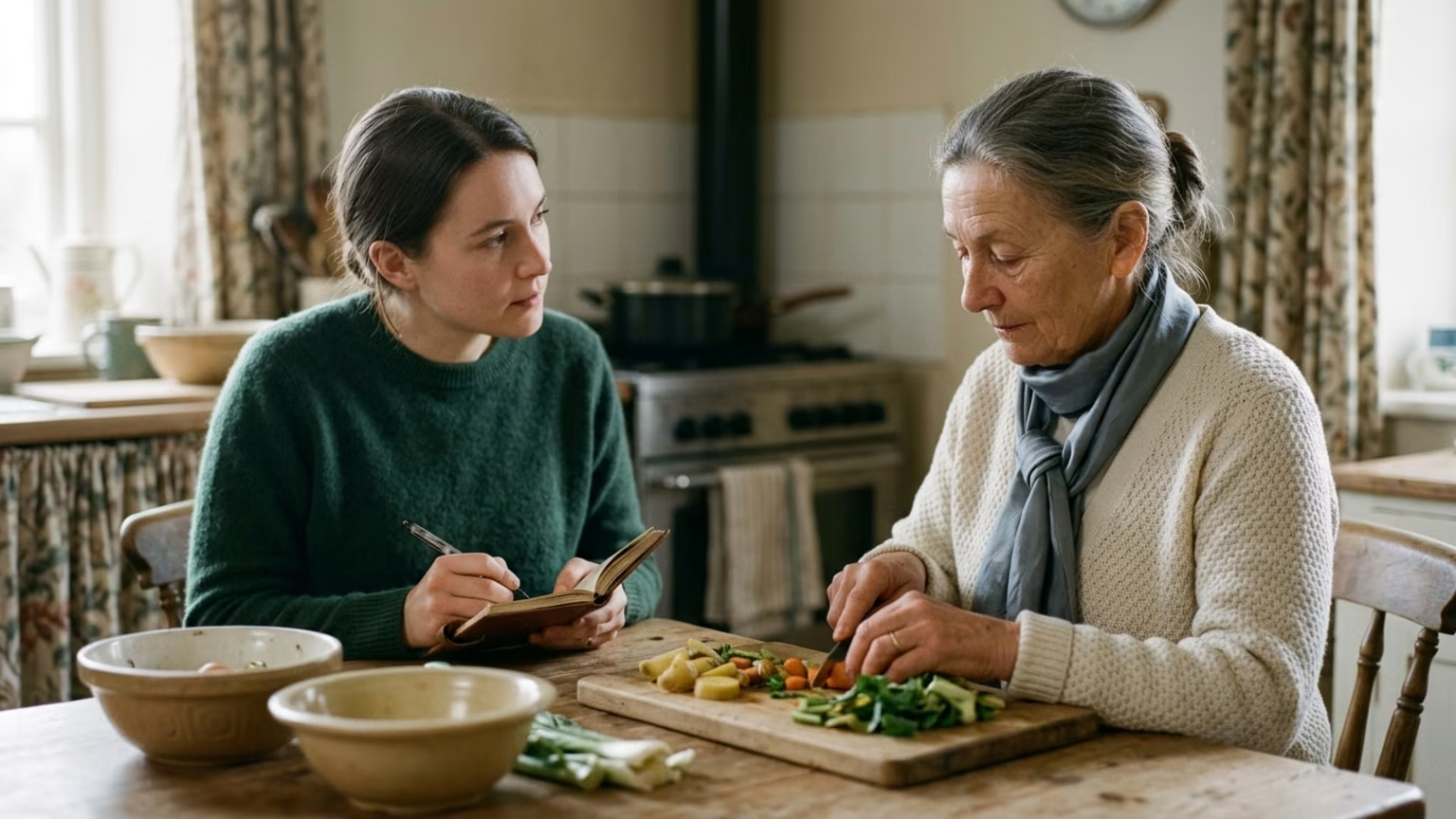

A six-year Japanese cohort study associates weekly home cooking with a lower risk of care-needing dementia in older adults. Read the objective evidence analysis.





The research indicates a clear association between regular food preparation and cognitive outcomes. Participants who prepared meals at home at least once a week demonstrated a lower risk of developing dementia requiring care. The findings showed a 23% lower risk among men who cooked weekly. The data for women revealed a 27% lower risk under the same weekly frequency.
These specific figures emerged after researchers adjusted for demographic, socioeconomic, and health-related factors. The comparison simply evaluated people who cooked at least weekly against those who cooked less often. The data does not establish that cooking every single day provides superior protection compared to cooking just once a week. Analysts noted the absence of a clear dose-response pattern in the research.
Cooking more than five times a week was not necessarily shown to produce a progressively greater reduction in risk. Setting a manageable goal like preparing one meal a week is a practical takeaway from these findings. A notable subgroup finding emerged regarding people with limited cooking skills. In this specific group, preparing meals more frequently was associated with an approximately 67% lower dementia risk.
This statistic applies only to that particular subgroup and is not a guaranteed benefit for all older beginners. The impressive number might reflect differences in social support rather than a direct result of the kitchen activity. People should view weekly cooking as a reasonable habit rather than a rigid medical protocol. Discussing daily habits and brain health often involves evaluating these ordinary routines calmly.
The findings originate from a Japanese population-based cohort study observing 10,978 adults aged 65 and older. Researchers followed this group over a six-year period to assess their lifestyle habits. The primary focus was to determine if home-cooking frequency was connected to future cognitive status. Dementia outcomes were identified using Japan's public long-term-care insurance records.
During the follow-up period, 1,195 participants developed dementia that required long-term care. The researchers assessed cooking habits and abilities at the very beginning of the study. They then tracked the group to see who required care for cognitive decline later on. This method provided a large dataset based on real clinical tracking systems.
The study relied on comprehensive data from the Japan Gerontological Evaluation Study. The detailed findings were subsequently published in the Journal of Epidemiology and Community Health. The research is specifically attributed to Yukako Tani and colleagues. The study focused strictly on dementia severe enough to require long-term care assistance.
Tracking long-term care needs is a practical way to measure serious cognitive shifts in a large population. The outcome measured in this cohort does not represent every case of mild cognitive impairment. It specifically highlights cases where individuals needed sustained daily assistance. Understanding these study parameters helps clarify what the research actually measures regarding age-related decline.
This research presents an observational association rather than direct proof of a medical cause. The results do not prove that the physical act of cooking itself prevents dementia. People who prepare their own meals might differ from non-cooks in several important ways. These baseline differences could include income, mobility, education levels, and overall health status.
Reverse causation is a highly plausible alternative explanation for the reported statistics. Subtle physical or cognitive decline might reduce a person's ability to safely use kitchen equipment. This decline could also make shopping and meal planning unusually difficult. A lower cooking frequency might therefore serve as an early marker of cognitive changes rather than the root cause.
Another possibility is that regular cooks maintain healthier diets or more active overall lifestyles. A 2026 systematic review reported that developing cooking skills might be connected to selected dietary improvements. The review noted a particular association with fruit and vegetable intake and culinary confidence. However, the review judged the certainty of this evidence to be low or very low.
Reliable conclusions about nutritional status directly reducing dementia risk cannot be drawn from these current datasets. Cooking remains a multi-part activity involving careful planning, hand coordination, and sensory monitoring. The available research does not establish which of these specific components might explain the observed lower risk. Evaluating nutrition and brain performance requires looking at comprehensive evidence rather than a single habit.
The study relies entirely on data collected from older adults living in Japan. The results may not transfer directly to older populations in other countries. Different regions have unique food cultures, healthcare systems, and long-term-care criteria. Assuming the exact same percentages apply universally would be an overinterpretation of the regional data.
The published percentages represent relative-risk estimates for the study participants. The available research coverage does not provide the absolute dementia risk for each cooking-frequency group. Readers should not convert these relative percentages into a personal probability of avoiding dementia. The statistics describe broad population trends rather than individual clinical forecasts.
The 67% risk reduction figure for inexperienced cooks is particularly vulnerable to misinterpretation. Subgroup estimates are often less stable than overall cohort findings. This specific number may simply reflect underlying differences in social support, living arrangements, or baseline function. Treating this subgroup statistic as a guaranteed outcome for all novice cooks ignores standard statistical limitations.
Safety is another critical factor that this observational model cannot fully address. Older adults experiencing vision changes, physical weakness, or medication-related drowsiness must prioritize safe practices. Cooking is not a test of independence, and forcing unsafe activities is a dangerous approach. Anyone experiencing unusual confusion while cooking should review their memory and focus concerns with a qualified doctor.
Future clinical research must prioritize randomized intervention trials to test these observational findings. Medical professionals need studies that actively assign cooking routines to assess direct cognitive outcomes over time. Researchers must measure executive function and memory directly to confirm if kitchen activities actively preserve cognitive health. Studies should also isolate the physical tasks of food preparation from the nutritional benefits to identify the true underlying mechanism.
Observational studies on household habits often show interesting correlations without proving direct medical causes, and FitBrainLab helps you navigate these findings objectively. Fear created by alarmist memory loss and dementia coverage can push older adults to misinterpret simple activities as guaranteed treatments, but we provide clear analysis so you can maintain engaging routines with confidence.

Follow FitBrainLab for research-led insights on memory, focus, brain aging, nutrition and mental fitness after 60. Stay connected for new articles, practical guidance and ideas for a sharper, more engaged life.





Build habits that support memory, focus and a curious, connected life.
Read the Blog