

New research from SISSA shows how lifelong learning, demanding work, and cognitive reserve influence language and memory performance in adults over 65.





In late 2026, researchers from the International School for Advanced Studies (SISSA) in Italy published two studies showing that accumulated cognitive reserve and emotional processing influence language and working memory performance in adults over 65.
The recent news stems from two separate papers produced by researchers at the International School for Advanced Studies (SISSA) in Trieste, Italy. These studies formed part of Age-It, a larger project focused on the challenges and opportunities associated with population aging. Neuroscientist Raffaella Rumiati led the research teams for both studies. The concept of cognitive reserve has become increasingly relevant to researchers studying how the human brain adapts over time.
The SISSA teams approached this topic by measuring specific cognitive outputs rather than relying solely on brain imaging. The researchers defined cognitive reserve as the resources people accumulate through formal education, stimulating work experiences, and intellectually engaging leisure activities over a lifetime. This definition frames everyday mental effort as a long-term investment in cognitive resilience. It suggests that a mentally active past continues to support brain function in later years.
The first study appeared in the journal Neuropsychology with Elisabetta Pisanu identified as the first author. This paper examined verbal fluency, which involves the ability to retrieve and produce words efficiently under time constraints. The research team focused specifically on the first 10 seconds of a verbal fluency task. They used this brief window rather than relying only on traditional longer testing periods. Pisanu explained that this initial 10-second window captures the rapid, relatively automatic part of word retrieval.
The researchers reported that this brief interval was sufficient to reveal effects associated with aging and cognitive reserve. In this first study, older adults with greater cognitive reserve performed on the language task at a level comparable to younger participants. Age-related differences in performance were more evident among older adults who had lower cognitive reserve. The SISSA researchers also identified positive emotional content as a factor that helped language performance. Older adults retrieved words associated with positive emotions more easily than words associated with negative emotions.
The second study appeared in the journal Brain Sciences with Stefania Lucia as the first author. The paper is titled "Emotional Modulation of Working Memory in Older Adults: Dissociable Contributions of Cognitive Reserve and Emotional Intelligence." It carries the DOI 10.3390/brainsci16070725. This study investigated working memory, which involves the ability to temporarily retain, process, and use information during complex tasks. The researchers examined how cognitive reserve and emotional intelligence contributed differently to working memory performance.
The SISSA researchers described cognitive reserve as relevant to working memory just as it is to language. This suggests that the potential benefits of lifelong mental engagement extend beyond simple word finding. The second study found that emotional intelligence influenced response patterns and reaction times. The findings showed changes in how older adults processed information. They did not show a straightforward improvement in the total number of correct answers.
The SISSA findings align with the World Health Organization’s 2026 guidance on reducing cognitive decline and dementia risk. The WHO guidance takes a life-course approach to brain health. It covers adults with normal cognition and those with mild cognitive impairment. This approach frames cognitive health as a lifelong multidomain issue rather than an acute medical condition. A 2026 analysis in The Lancet Public Health reported that up to 45% of dementia risk can be attributed to potentially modifiable factors. These factors include hypertension, diabetes, smoking, and physical inactivity.
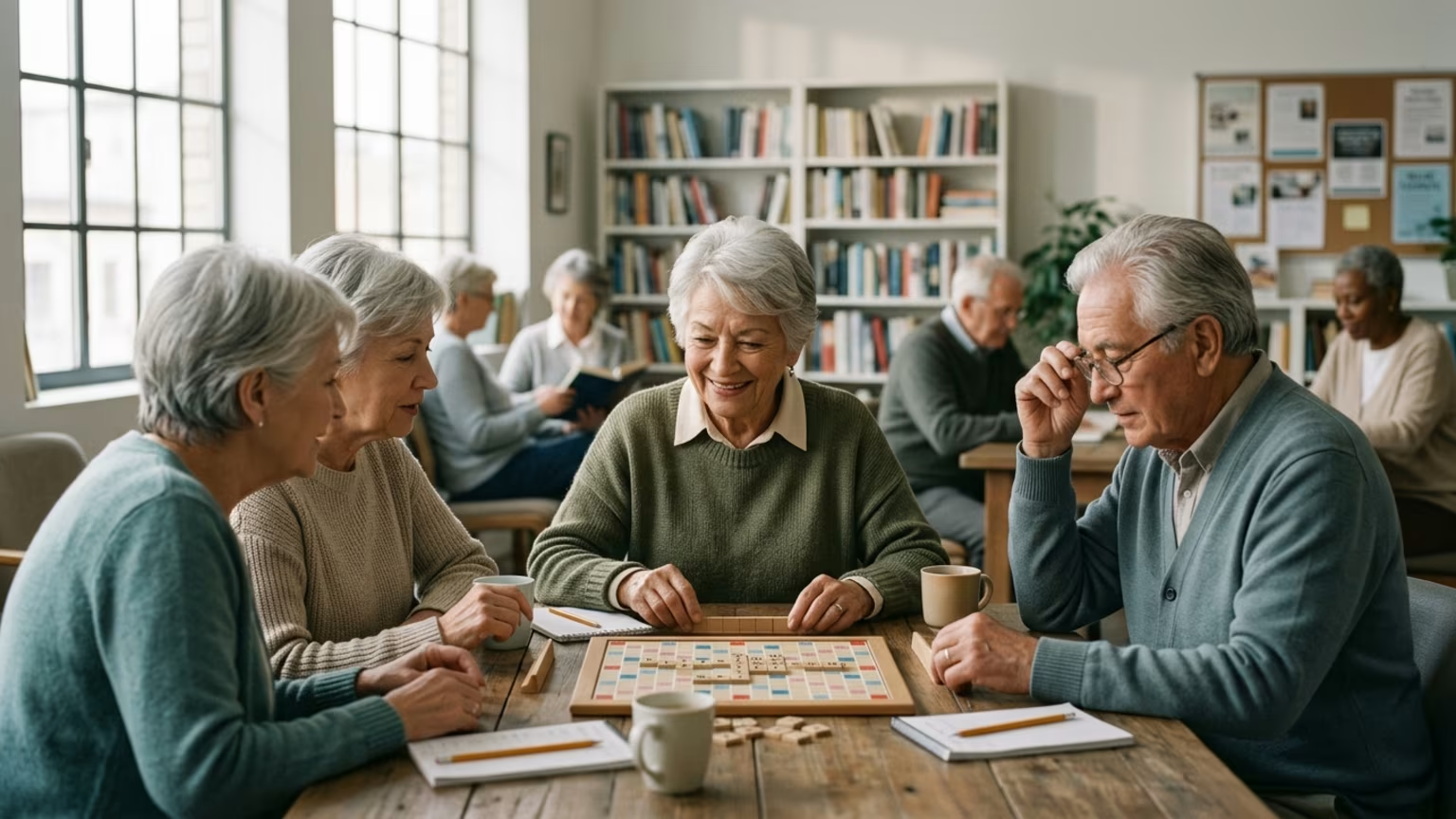
The WHO recommendations outline several domains for intervention. They address cognitive training, cognitive stimulation, social engagement, and healthy behaviors. Cognitive stimulation can include everyday group activities such as reading, storytelling, board games, and musical activities. Cognitive training refers to more targeted and repetitive exercises designed to challenge specific brain functions. Summaries of the WHO guidance describe cognitive training and stimulation as conditional recommendations. This conditional status reflects limitations in evidence certainty rather than proof that these activities guarantee protection.
For older adults mapping out their post-career years, retirement planning can include a deliberate cognitive component. Moving away from a demanding profession can sometimes lead to a sudden drop in daily mental stimulation. The practical lesson is not to recreate a full-time career after retirement. The goal is to preserve regular exposure to novelty, complexity, and active participation. Taking time to review retirement and mental fitness articles can help older adults structure these new daily routines effectively.
Activities become more mentally engaging when they require active recall and decision-making. Tasks involving explanation, creation, or interaction are also more beneficial than passive consumption. A flexible retirement schedule might combine language-rich activities, such as discussion groups or learning a new language, with practical problem-solving tasks. Engaging in creative work or music offers valuable intellectual stimulation. Playing games, volunteering, or teaching others can also provide meaningful mental challenges.
Mental activity should sit alongside physical health measures to support overall well-being. The WHO guidance notes that managing physical activity, tobacco, alcohol, and diet forms part of a broader risk-reduction strategy. Learning about lifestyle and brain resilience provides additional context for these physical health habits. People who had less formal education or less cognitively demanding employment should not interpret the SISSA findings as a lost opportunity.
The studies evaluated accumulated reserve, but the WHO’s life-course guidance supports cognitive and social engagement for older adults starting right now. A sensible personal goal is consistency rather than intensity. Older adults should choose activities that are challenging enough to require attention, meaningful enough to sustain interest, and emotionally rewarding enough to remain part of ordinary life.
Statements claiming a 70-year-old brain can perform like a 20-year-old brain represent an editorial simplification. The SISSA findings concern particular language and working memory measures rather than a statement about total brain age. The observation that older adults with high cognitive reserve performed comparably to younger adults applies strictly to the reported language task outcomes. This does not mean that older adults match young adults across all general cognitive functions. Expecting identical performance across every mental task sets an unrealistic standard for healthy aging.
The central findings of these studies are associative rather than causal. The research shows clear relationships between cognitive reserve and test performance. The studies do not prove that demanding work, more education, or mentally active hobbies independently caused the observed differences. Health researchers distinguish between habits that are linked to better outcomes and interventions that directly prevent disease. Cognitive reserve is not the same as immunity from normal aging or dementia.
A person might perform well on a particular test while still experiencing expected changes in processing speed, memory, or attention. Reviewing cognitive health protection articles can help clarify the difference between normal aging and clinical decline. The emotional findings from these studies also require careful interpretation to avoid misleading conclusions. The second study examined how emotional content influenced performance, not whether people should deny difficult feelings. Positive emotional processing may help on some specific tasks, but this should not be converted into advice to suppress negative emotions.
The research does not support forced positivity as a medical intervention. Maintaining emotional awareness remains a normal part of adult life. Emotional intelligence should not be marketed as a guaranteed way to improve memory. The available coverage indicates that emotional intelligence influenced processing speed and response time in the working memory study. It did not necessarily improve accuracy or the number of correct answers.
The evidence base from both SISSA and the WHO is not a prescription for a single brain-training routine. The conditional WHO recommendations argue for a broad, realistic approach rather than a single program that promises perfect recall. Reading brain aging and neuroplasticity articles can provide realistic context about what mental exercises can actually achieve. The SISSA research does not justify the use of supplements, commercial memory products, or claims that one specific activity is the best way to prevent dementia. The current evidence supports a multidomain, life-course perspective rather than an isolated commercial intervention. Finally, new or worsening memory problems should not automatically be attributed to normal aging or a lack of cognitive reserve. Persistent difficulties that interfere with daily life warrant discussion with a qualified clinician.
Cognitive reserve research frames mental capability through lifelong engagement and neuroplasticity rather than inevitable decline. The SISSA studies highlight how past educational, professional, and recreational experiences build resources that can support specific language and memory functions later in life. This perspective shifts the focus of brain health away from seeking quick fixes and toward appreciating the cumulative value of a mentally active life.
The most defensible takeaway for older adults is to build a varied routine involving continuous learning, meaningful problem-solving, social participation, and consistent physical health habits. There is no single activity that guarantees a younger brain or total immunity from cognitive decline. Committing to regular, intellectually stimulating activities helps older adults maintain focus, preserve their communication skills, and enjoy a deeply engaged post-career life.
Misunderstanding observational studies on cognitive reserve can make older adults feel they must recreate a demanding career to stay sharp. Confusion about what normal brain aging looks like often makes planning for retirement difficult, and FitBrainLab clarifies this research so you can build meaningful habits with confidence. Explore Resources

Follow FitBrainLab for research-led insights on memory, focus, brain aging, nutrition and mental fitness after 60. Stay connected for new articles, practical guidance and ideas for a sharper, more engaged life.





Build habits that support memory, focus and a curious, connected life.
Read the Blog