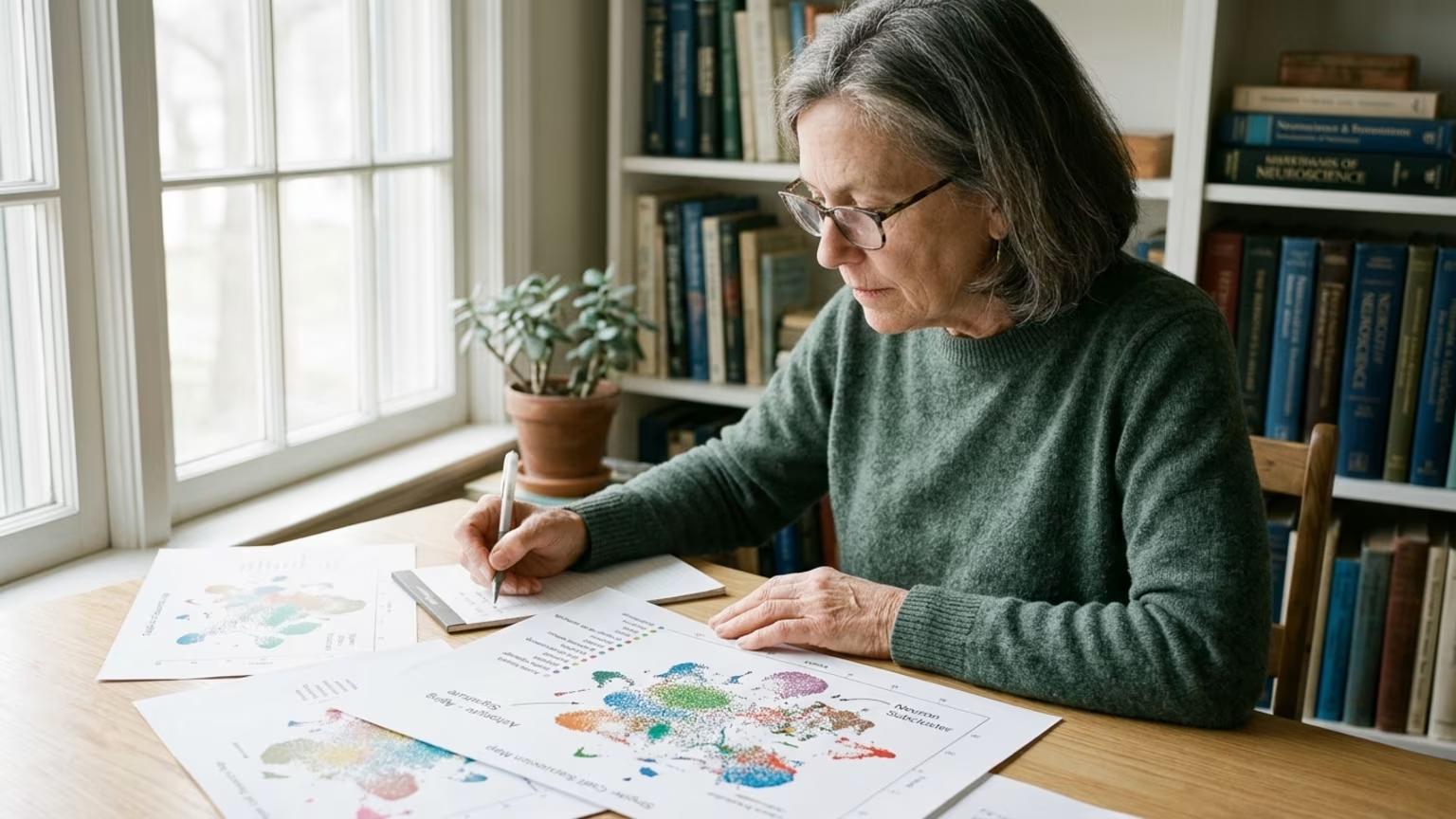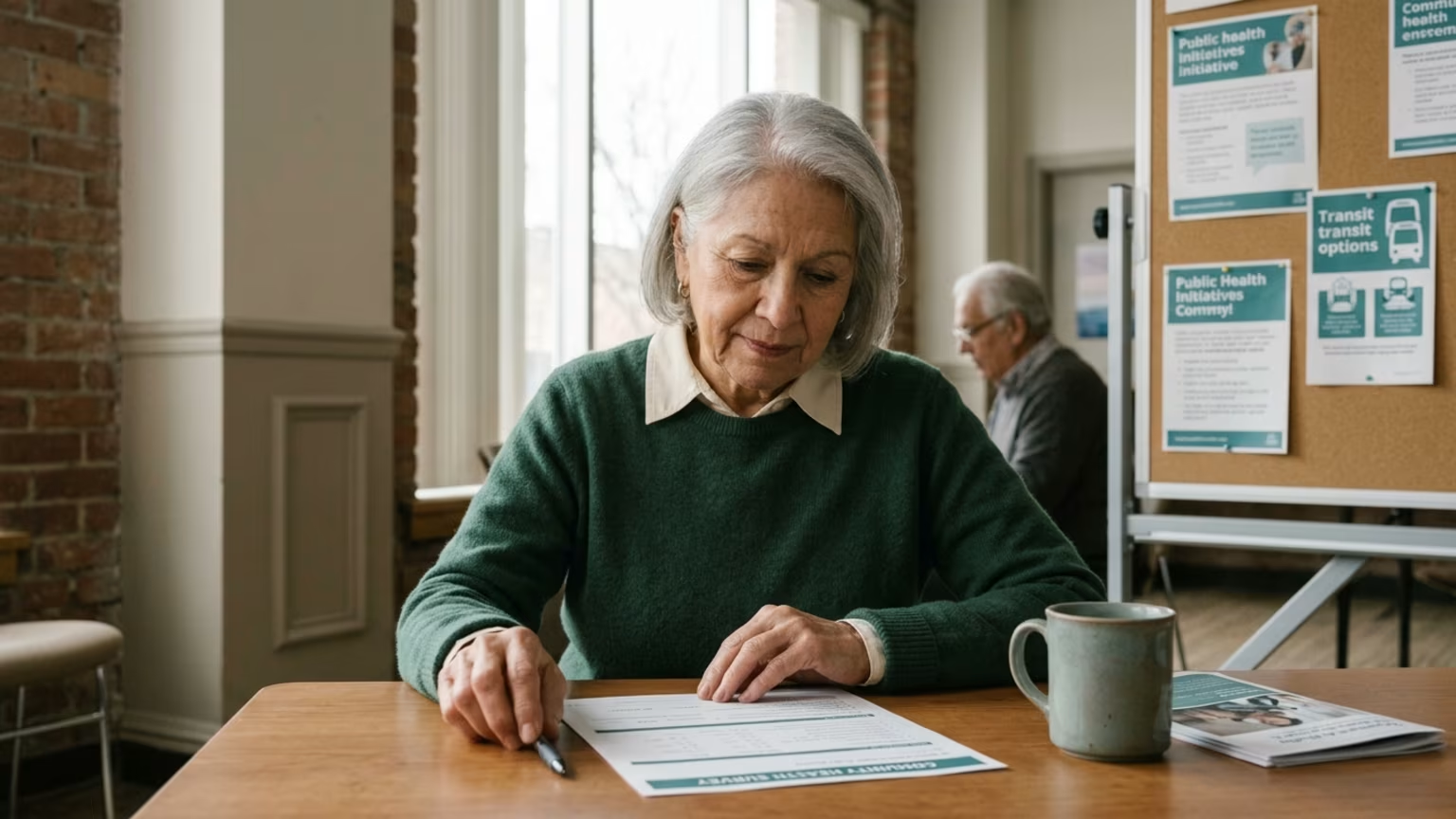

A Curtin University study argues dementia prevention must expand beyond individual lifestyle choices to include social and environmental factors for wellbeing.





In September 2026, Curtin University researchers published a paper in The Lancet arguing that dementia prevention strategies must expand beyond personal lifestyle choices to include social, environmental, and policy conditions. The research, funded by Dementia Australia, calls for a wider focus that supports quality of life and ongoing engagement for older adults.
A Curtin University paper published in The Lancet mapped 61 dementia risk factors and argued that prevention needs to account for social conditions, environmental factors, and policy decisions, not just individual behavior. According to the ABC news report, 49 of the 61 mapped factors were classified at the individual level. This means 80 per cent of the highlighted risks centered on personal actions. The research utilized a socioecological model to evaluate these variables.
The paper extends a major 2024 evidence review that identified 14 potentially modifiable risk factors. The 2024 study cited by ABC estimated that addressing 14 potentially modifiable risk factors could potentially prevent 45 per cent of dementia cases at the population level. The new mapping exercise reviewed interconnected variables spanning multiple categories. Factors discussed include high blood pressure, diabetes, and cholesterol.
The paper also evaluated physical inactivity, smoking, hearing loss, and uncorrected vision loss. The study also evaluated broader societal issues like social isolation, education, and housing. Researchers additionally looked at neighborhood safety, healthcare access, and air quality.
Study author Jennifer Dunne said physical activity can depend on access to places that are safe and affordable for exercise. She explained that many factors shaping dementia risk do not sit solely within personal control. The researchers suggest moving away from simply telling individuals to complete a checklist of lifestyle actions. These actions are more likely to succeed when the surrounding environment actively supports them.
Professor Simone Reppermund of UNSW, who was not involved in the research, stated that prevention messages can place too much responsibility on individuals. She noted that such messages often ignore interconnected economic and environmental influences. Professor Blossom Stephan, a co-author of the earlier systematic review, said dementia prevention should support healthy choices while improving neighborhood and healthcare conditions. Dementia Australia chief executive Professor Tanya Buchanan described dementia risk reduction as a collective responsibility. This requires action from governments, organizations, and everyday citizens.
This research changes how older adults can approach their daily routines and long-term planning. The findings encourage continued engagement in meaningful activities and social connection as highly worthwhile goals. This remains true even when dementia risk cannot be fully eliminated. Individuals can view lifestyle measures as practical ways to live better with cognitive changes rather than viewing them strictly as prevention guarantees.
This broader perspective focuses heavily on mental wellbeing and daily functioning. A recent systematic review and meta-analysis reported associations between higher physical activity, particularly leisure-time activity, and lower dementia risk. The analysis showed that high overall physical activity was associated with a 20 per cent lower risk of all-cause dementia over 10 years compared to the lowest activity level. Leisure-time activities like walking, swimming, and cycling were associated with a 24 per cent lower risk.
The same analysis found that occupational physical activity was associated with a higher dementia risk. This stark contrast illustrates why exercise should not be treated as a single uniform exposure. Older adults should continue pursuing enjoyable movement without viewing it as an absolute guarantee against cognitive decline. The available evidence is stronger for an association between leisure-time activity and lower risk than for a definitive promise of prevention.
Maintaining these physical routines is much easier when local environments are accessible. Looking beyond willpower is necessary when a healthy habit feels difficult to sustain. Older adults should consider local transport options, safe walking routes, financial costs, and social support when planning their week. Sustaining these habits supports long-term retirement and mental fitness.
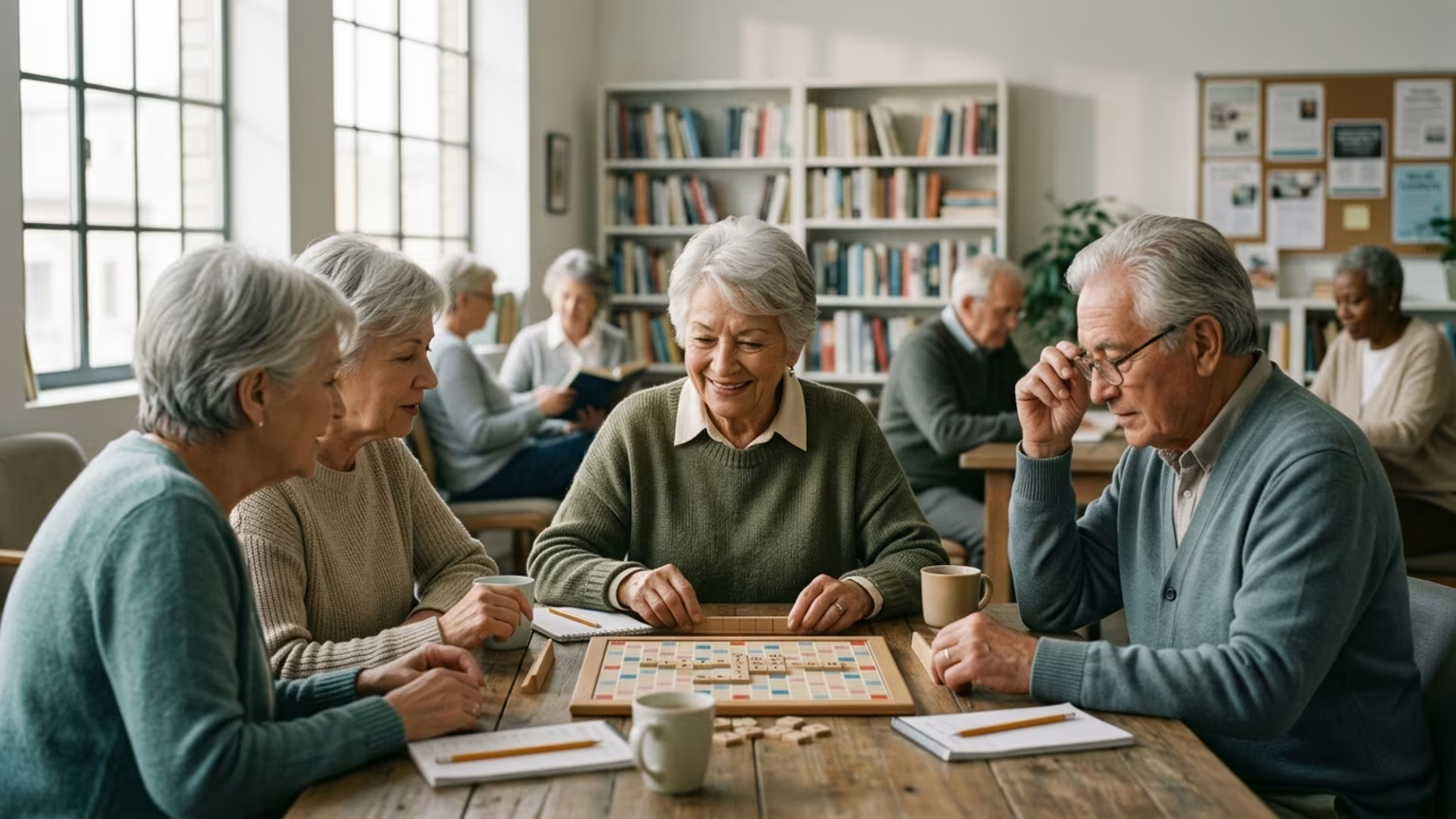
Social connection also functions as a highly effective health resource. ABC recently reported that one in six older Australians experiences social isolation. This isolation has been linked with poorer mental health, cognitive decline, and premature death. Regular phone calls, shared meals, community groups, and volunteering can make physical activity more achievable while directly reducing isolation. These group activities are a central part of maintaining brain health and cognitive longevity.
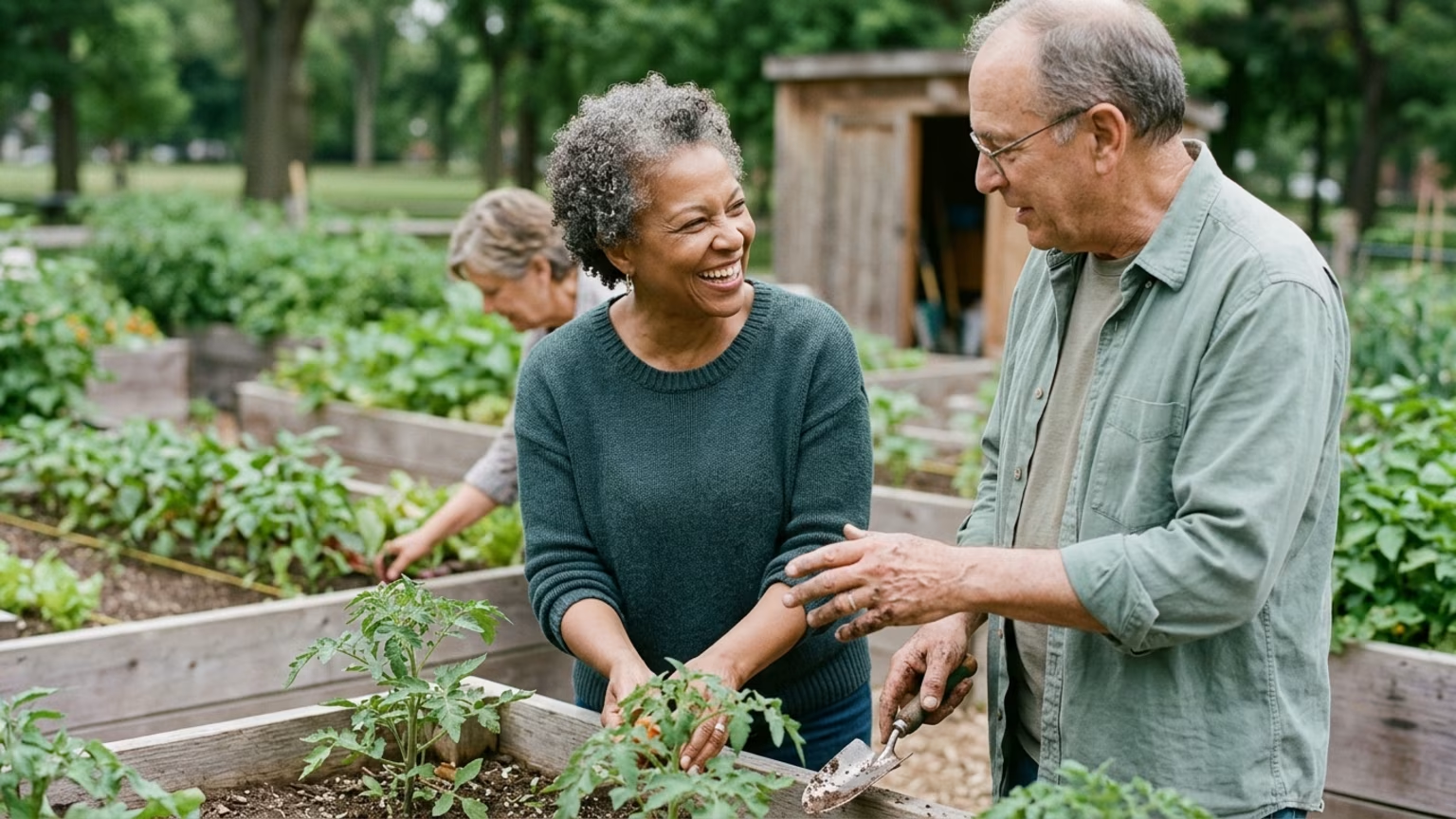
Meaningful engagement in specific environments offers additional practical benefits. A 2026 review found that nature-based interventions may support wellbeing, identity, social participation, and meaningful engagement for people living with dementia and their carers. Choosing activities that are personally meaningful and sustainable in your specific circumstances is a practical way to support daily participation.
Addressing individual medical factors remains an important step alongside these wider lifestyle habits. The research highlights the clear need to manage hearing or vision problems early. It is highly beneficial to discuss blood pressure, diabetes, and smoking with a doctor.
Patients should also review their mood and physical activity levels. These clinical conversations are crucial because they directly address the individual-level factors identified in the mapping exercise. Seeking early medical guidance is a key part of maintaining overall cognitive health protection.
Readers must interpret these research updates with careful objectivity. The Curtin University paper is primarily a mapping and framing exercise. It identifies risk factors and gaps in the evidence rather than proving that every listed social or environmental factor independently causes dementia. The paper does not prove that changing each specific environmental factor will prevent cognitive decline.
The 45 per cent estimate from the 2024 study is a broad population-level estimate. It is not a prediction of how much an individual can reduce their own personal risk. The interconnected nature of these risk factors makes the isolation of single causes incredibly difficult. Dunne described social isolation, depression, reduced activity, and smoking as interconnected factors that can contribute to a cascade of health conditions.
Because these factors overlap, separating the effect of one variable, such as isolation, from socioeconomic conditions or healthcare access is highly complex. Childhood education is discussed as a related factor, but adults cannot retrospectively change their own childhood education. This reality reinforces the need for public policy responses rather than implying older adults are personally responsible for every risk.
The accessible news coverage does not provide the complete methods, search strategy, effect sizes, or the full list of all 61 risk factors. The ABC article also does not establish that the Curtin paper tested a specific program designed to help people already experiencing cognitive changes. It does not report a clinical trial showing that meaningful activities improve dementia-related quality of life. The current evidence supports continuing constructive activity as a sensible wellbeing goal. It should not be presented as proof that hobbies can reverse cognitive impairment.
Lifestyle adjustments are never a viable substitute for proper clinical evaluation. Dementia is defined as a decline in thinking, memory, and reasoning that directly interferes with daily life and activities. If memory or thinking changes are affecting everyday functioning, individuals should seek a clinical assessment immediately. Attempting to interpret dementia risk strictly from lifestyle advice can delay necessary medical care. The news reports do not present behavioral measures as an alternative to professional medical diagnosis.
This research fundamentally reframes how we evaluate and support cognitive health in older populations. Understanding the massive scale of the issue is critical for both personal planning and long-term public policy. ABC reported that about 446,500 Australians were living with dementia, with the number projected to exceed one million by 2065.
SBS reported a separate 2025 estimate from the Australian Institute of Health and Welfare noting 439,000 Australians living with dementia. Women account for 56 per cent of that specific population. SBS also reported that 42.7 per cent of Australians aged 90 and over live with dementia.
By recognizing that health behaviors occur within specific environments, researchers are moving toward a highly realistic model of brain aging. Personal actions such as movement, healthy eating, and hearing care remain incredibly worthwhile. Their long-term feasibility depends heavily on supportive homes, neighborhoods, and public services.
For adults over 60, the most practical message is to pursue enjoyable movement and community connection for daily health. These sustainable habits improve the quality of daily life without relying on absolute promises of prevention.
Deciding how to evaluate environmental and social influences on your personal dementia risk requires clear analysis of current studies, and FitBrainLab translates these complex findings objectively. Difficulty separating established evidence from early or exaggerated health claims often makes risk reduction confusing, so we evaluate the clinical reality to help you build supportive routines safely. Explore Resources

Follow FitBrainLab for research-led insights on memory, focus, brain aging, nutrition and mental fitness after 60. Stay connected for new articles, practical guidance and ideas for a sharper, more engaged life.



Build habits that support memory, focus and a curious, connected life.
Read the Blog