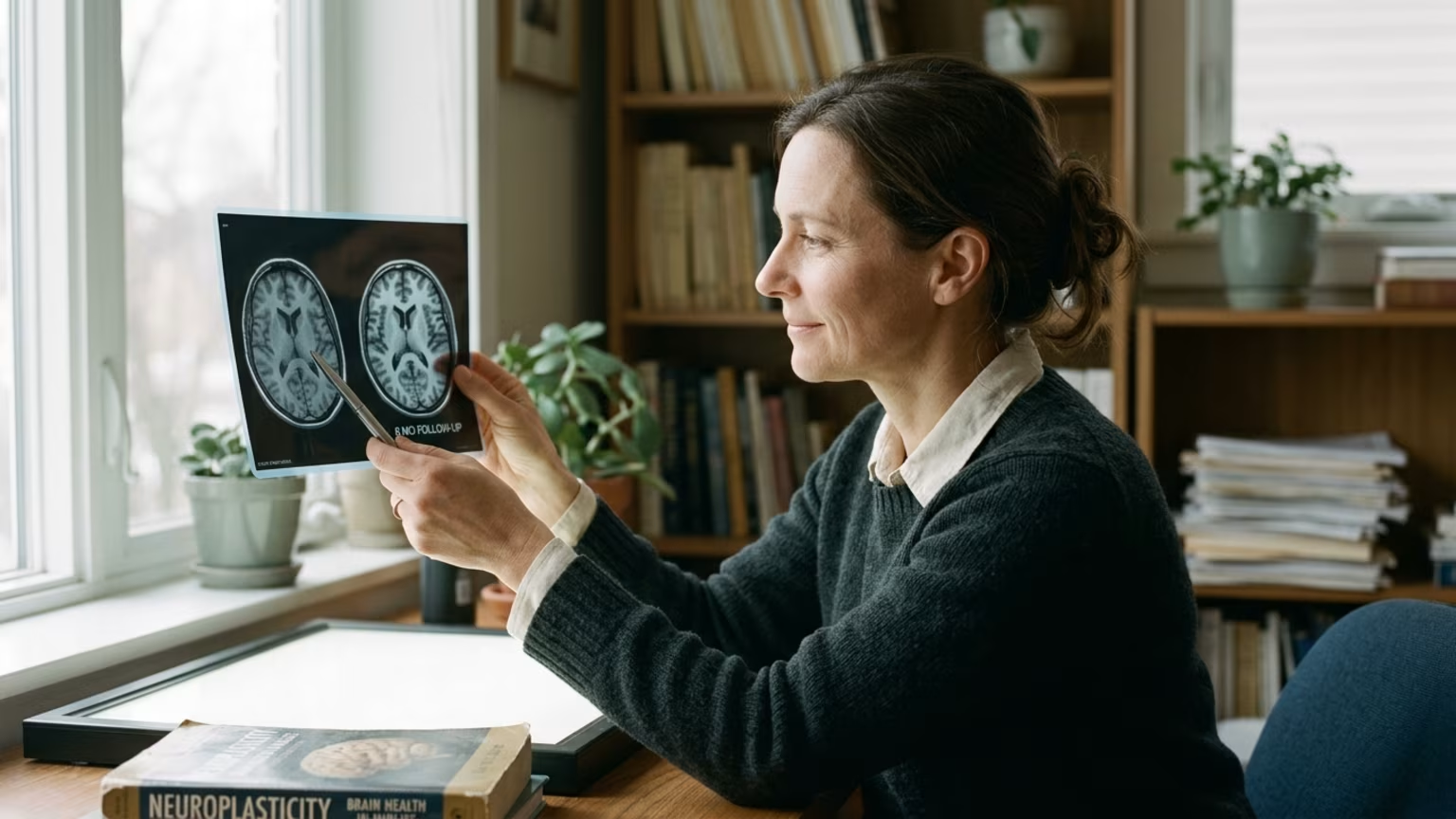

Research shows neuroplasticity allows the aging brain to partly reverse damage from inactivity and smoking through exercise, learning and diet changes.





Neuroplasticity is the biological mechanism that allows the adult brain to reorganize its structure and function in response to new behaviors, environments and learning. Medical research shows that the aging brain retains this capacity to adapt throughout life, challenging the assumption that cognitive aging is purely a one-way decline. This biological flexibility means that some cellular damage associated with inactivity, alcohol use and smoking can partly improve when adults adopt healthier routines. Understanding how this process works provides a factual foundation for making informed decisions about long-term cognitive health.
Understanding how the brain adapts requires looking at two distinct processes that operate simultaneously. Functional neuroplasticity occurs when the brain redistributes tasks to compensate for physical damage or structural loss. When specific neural pathways become impaired from heavy drinking or inactivity, healthy areas of the brain can adapt to take over those cognitive responsibilities. This functional shift helps individuals maintain daily capabilities even when underlying cellular damage remains present in the brain tissue.
Structural neuroplasticity involves physically altering the anatomy of the brain. This happens when new learning or behavior changes stimulate the creation of new neural connections. Professor Barbara Sahakian of the University of Cambridge notes that these ongoing adjustments allow the brain to recover from injuries, adapt to new circumstances and learn at any age. As adults change daily routines, blood flow and oxygen delivery increase to regions like the hippocampus, supporting physical recovery over time.
Clinical studies and major health reviews reveal several consistent findings regarding lifestyle modifications and brain structure. The current medical consensus establishes the following verified realities about adult neuroplasticity.
While the clinical evidence regarding neuroplasticity is encouraging, medical science cannot promise universal restoration of cognitive abilities. Observational studies link specific behaviors with structural brain changes, but they do not prove that altering those habits will prevent dementia entirely. For example, a 2025 study led by UCL researcher Dr Mikaela Bloomberg observed more than 9,000 smokers aged 40 and older. The research found that individuals who quit experienced slower declines in memory and verbal fluency than continuing smokers, but it does not establish that quitting reverses cognitive changes that have already occurred.
Similarly, brain volume increases observed in clinical trials do not guarantee that every individual will regain lost independence or specific memories. The clinical data indicates that recovery is not necessarily complete after severe alcohol-related injury. Recovery timelines vary significantly across individuals, and structural improvements in the brain are not strictly interchangeable with complete cognitive restoration. Adults with new or progressive memory problems should seek medical advice rather than relying solely on lifestyle changes.
Applying these clinical findings to daily life requires building consistent, measurable habits rather than relying on short-term fixes. The research indicates that deliberate behavior changes can support specific cognitive domains like working memory, verbal fluency and attention. Older adults can leverage these biological mechanisms by focusing on a few foundational habits. These practices require ongoing commitment rather than occasional effort.
A 2011 trial of 120 sedentary older adults found that one year of aerobic exercise increased hippocampal volume by about 2 percent. Researchers estimated this physical change represented approximately one to two years of reversal regarding age-related hippocampal shrinkage. Additionally, a 2025 review associated regular resistance training with increased brain-derived neurotrophic factor, improved connectivity between brain regions and better spatial memory. A review of 24 studies involving 1,079 people found a statistically significant but small extra improvement when cognitive training was added to physical exercise.
Professor Sahakian recommends choosing an unfamiliar activity that you cannot already perform and practicing it for 20 to 30 minutes three or four times per week. Examples include learning a musical instrument, studying a new language or learning to ride a bicycle. The cognitive demand of genuine novelty appears crucial for structural adaptation in the brain. A 2023 study of 40 final-year medical students showed a significant volume increase in part of the hippocampus between scans taken 19 weeks before and one week after exams, with larger increases among students who spent more time studying.
Nutrition plays a supportive role in brain function and structural maintenance throughout midlife and retirement. A 2022 randomized trial of 37 women with obesity compared a calorie-restricted control diet with a calorie-restricted MIND diet over three months. The MIND diet group showed greater improvements in working memory, verbal-recognition memory and attention while demonstrating increased volume in a lower region of the frontal lobe. The plan prioritizes vegetables, berries and wholegrains while recommending beans, nuts and oily fish over red meat and ultra-processed food.
Modifying daily habits in midlife and beyond cannot erase all past cellular damage, but it reliably provides the aging brain with the biological resources needed to adapt, recover and sustain functional independence.
Sustaining structural neuroplasticity and functional independence requires applying verified clinical findings to your weekly routine. Loss of structure, learning opportunities or purpose after retirement can make building these habits difficult, but FitBrainLab translates complex cognitive evidence into clear guidance so you can support your long-term brain health objectively. Explore Resources

Follow FitBrainLab for research-led insights on memory, focus, brain aging, nutrition and mental fitness after 60. Stay connected for new articles, practical guidance and ideas for a sharper, more engaged life.





Build habits that support memory, focus and a curious, connected life.
Read the Blog