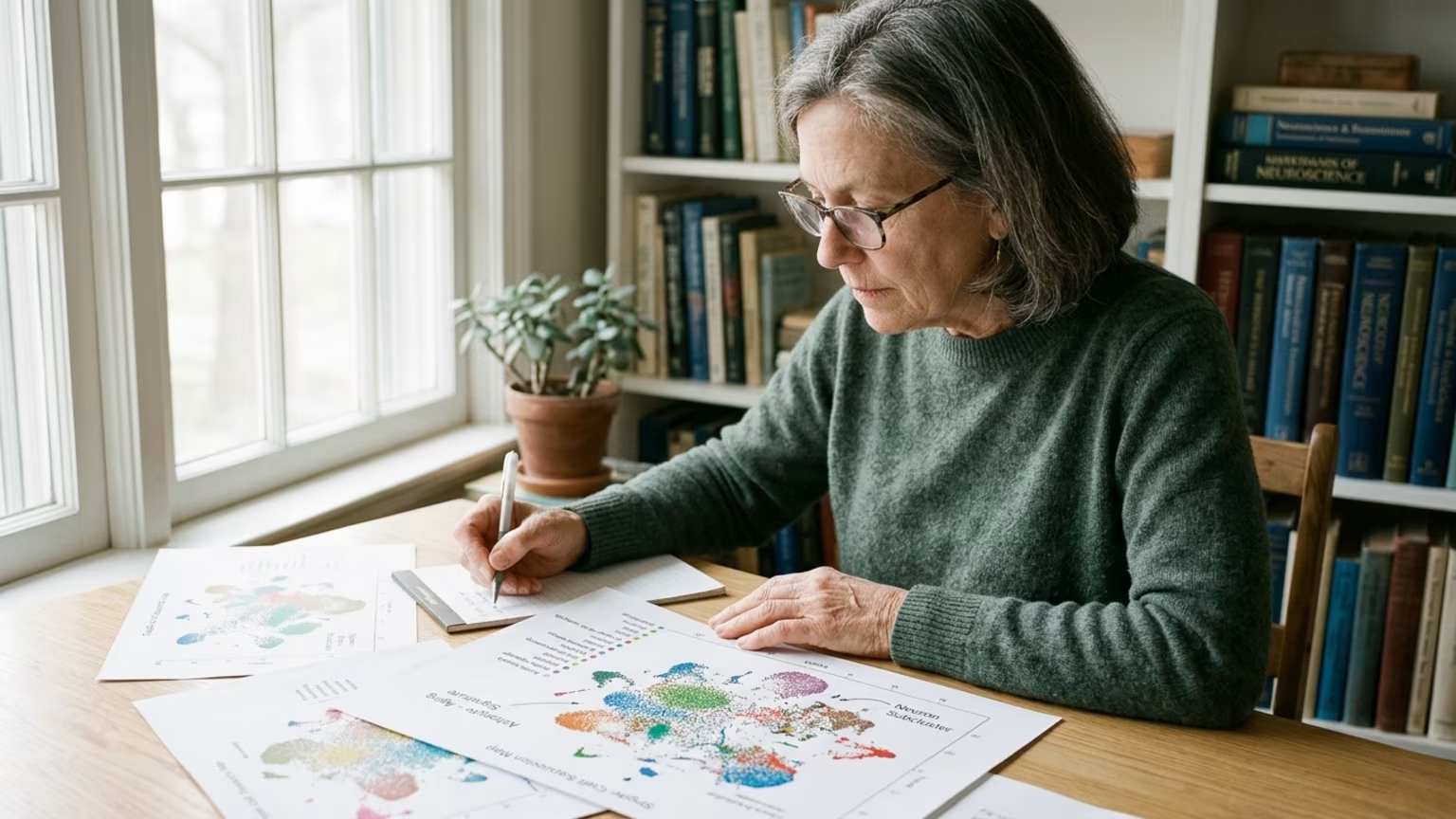

A 2026 Curtin University study reveals how social and environmental factors, like housing and healthcare access, shape dementia risk for adults over 60.





In September 2026, Curtin University researchers published a study in The Lancet Public Health arguing that dementia prevention should not place disproportionate responsibility on individual behavior. The research team mapped 61 potentially modifiable risk and protective factors using a socioecological framework. They concluded that prevention discussions heavily focus on personal habits while giving less attention to the social conditions that make those habits possible. This research shifts the focus from personal blame to a wider understanding of population health.
The Curtin study mapped 61 potentially modifiable dementia risk and protective factors using a detailed socioecological framework. The researchers noted that traditional prevention messaging centers heavily on what individuals can do to protect their memory. This often includes exercising, eating well, staying socially connected and managing health conditions. The study was conducted by researchers from Curtin University in collaboration with NeuRA, UNSW Sydney and Dementia Australia. These organizations recognize that long-term prevention requires a wide lens.
Lead author Dr. Jennifer Dunne stated that many influences on brain health do not sit solely within an individual's control. She explained that telling people to make healthier choices is less effective when surrounding conditions make those choices difficult. The broader factors highlighted in the study include education and housing. Neighborhood safety, healthcare access, air quality and wider economic conditions also play a critical role in supporting healthy lifestyles.
Professor Blossom Stephan added that prevention must combine support for healthy choices with improvements to these wider social conditions. She noted that these improvements are necessary across the life course to be truly effective. Professor Tanya Buchanan, chief executive officer of Dementia Australia, described risk reduction as a collective responsibility. She said individuals should receive support for healthy behaviors while organizations adopt policies that make risk reduction easier for everyone.
The sheer scale of cognitive decline highlights the need for broader strategies across the globe. According to Curtin University, dementia affects an estimated 57 million people worldwide. That figure is projected to reach 139 million by 2050. This staggering projection highlights the importance of addressing systemic barriers to health rather than relying on individual willpower alone.
Global guidelines now reflect a similar shift toward population-level approaches. The World Health Organization released updated guidance in 2026 on reducing cognitive decline and dementia risk. The WHO guidelines apply to adults without dementia, including people with normal cognition and mild cognitive impairment. They recommend integrated and multisectoral approaches that address structural and sociocultural barriers with a focus on equity. The WHO guidance includes healthy behaviors, management of medical conditions linked with dementia risk, reduction of environmental exposures and tailored multidomain interventions.
Nutritional access also demonstrates the impact of environmental resources. Separate University of Michigan research focused on older adults experiencing persistent food insecurity in both midlife and later life. The researchers reported that these individuals had an estimated 40 percent probability of probable dementia. This compared with just 11 percent among those who were food-secure at both points. This finding reinforces the link between physical resources and cognitive outcomes. It demonstrates that consistent access to basic needs strongly influences long-term brain health.
For adults over 60, this research changes how to plan for long-term cognitive protection. The operational takeaway is that brain health is shaped by personal habits and the physical environments surrounding them. A person who cannot safely walk outdoors does not face the same prevention choices as someone living near safe parks. This perspective removes the blame often associated with individual health outcomes.
Dr. Dunne stressed that some influences operate long before older adulthood. Childhood education cannot be changed retrospectively for someone already in later life. However, adults can evaluate their current local environment as a core part of their daily routine. Useful questions include whether there are safe places to walk and if public transport is readily available. It is also worth considering if hearing, vision and blood pressure care can be obtained without excessive cost or delay.
Adults should consider if their home supports mobility and social contact as they age. Exploring whether poor air quality or neighborhood insecurity limits outdoor activity is also helpful for long-term planning. These questions translate the study's broader themes into practical action. They help older adults identify where they need support rather than viewing health purely as a personal obligation.
Retirement can significantly change daily routines and reduce regular contact with colleagues. Creating recurring social commitments before leaving the workforce can help maintain mental clarity. This might involve joining a walking group, starting a volunteering role or setting a regular contact schedule with friends. The goal of these activities is to maintain relationships and purposeful engagement in a sustainable way.
If barriers like poor transport or high healthcare costs make healthy habits difficult, these challenges deserve direct attention. Adults can ask primary care clinicians or community organizations for help identifying accessible support services. Addressing these barriers is a valid and necessary part of maintaining cognitive function over time. Seeking community support is just as important as individual lifestyle choices when building a resilient health plan.
It is necessary to understand what this socioecological reappraisal does not mean. The Curtin research mapped risk and protective factors, but it did not test a specific clinical intervention. The study does not prove that building a safer neighborhood will produce a guaranteed reduction in local dementia cases. The available reporting also does not provide quantified comparisons between individual and environmental factors.
The researchers explicitly acknowledged that personal habits remain highly relevant. The argument is that personal habits operate within environments that either support or obstruct them. Adults over 60 should still focus on practical areas like physical activity, nutritious eating and blood pressure management. Relying on environmental changes is not a substitute for managing treatable health conditions.
It is helpful to remember that risk is not destiny. Changing any single factor does not guarantee protection for any individual. Dementia is an umbrella term covering many different conditions. The relationships among various risk factors are often complex and deeply intertwined.
Dr. Dunne described dementia risk factors as interconnected rather than isolated. Social isolation might be associated with depression, reduced exercise and increased smoking. A lack of transport might lead to reduced social contact, creating a cascade of related health conditions. Sensory loss, such as untreated hearing or vision changes, can further complicate these relationships by making social interaction more difficult. The Curtin study is best understood as a research agenda highlighting these connections rather than a list of proven interventions.
The long-term trajectory of cognitive health research is moving toward a more complete understanding of how we age. The Curtin University study provides a nuanced view that relieves individual blame without sacrificing scientific rigor. It confirms that maintaining brain aging and neuroplasticity depends on a combination of personal choices and supportive surroundings. This balanced perspective helps clarify complex health recommendations.
Adults over 60 can use this framework to build more realistic and sustainable health plans. Instead of viewing prevention as a strict list of personal obligations, individuals can recognize the value of their environment. Seeking out supportive communities, accessible healthcare and safe recreational spaces is just as valid as focusing on diet. This integrated approach establishes a reliable foundation for long-term mental fitness.
Focusing solely on personal habits while ignoring environmental barriers often complicates how we apply new cognitive research to our daily routines. Loss of structure, learning opportunities or purpose after retirement creates unique challenges, and FitBrainLab delivers objective analysis of brain health studies so you can build supportive habits safely. We translate complex evidence about neuroplasticity into practical direction that respects your intelligence.

Follow FitBrainLab for research-led insights on memory, focus, brain aging, nutrition and mental fitness after 60. Stay connected for new articles, practical guidance and ideas for a sharper, more engaged life.



Build habits that support memory, focus and a curious, connected life.
Read the Blog