Social Connection and Cognitive Longevity After 60: A Complete Guide

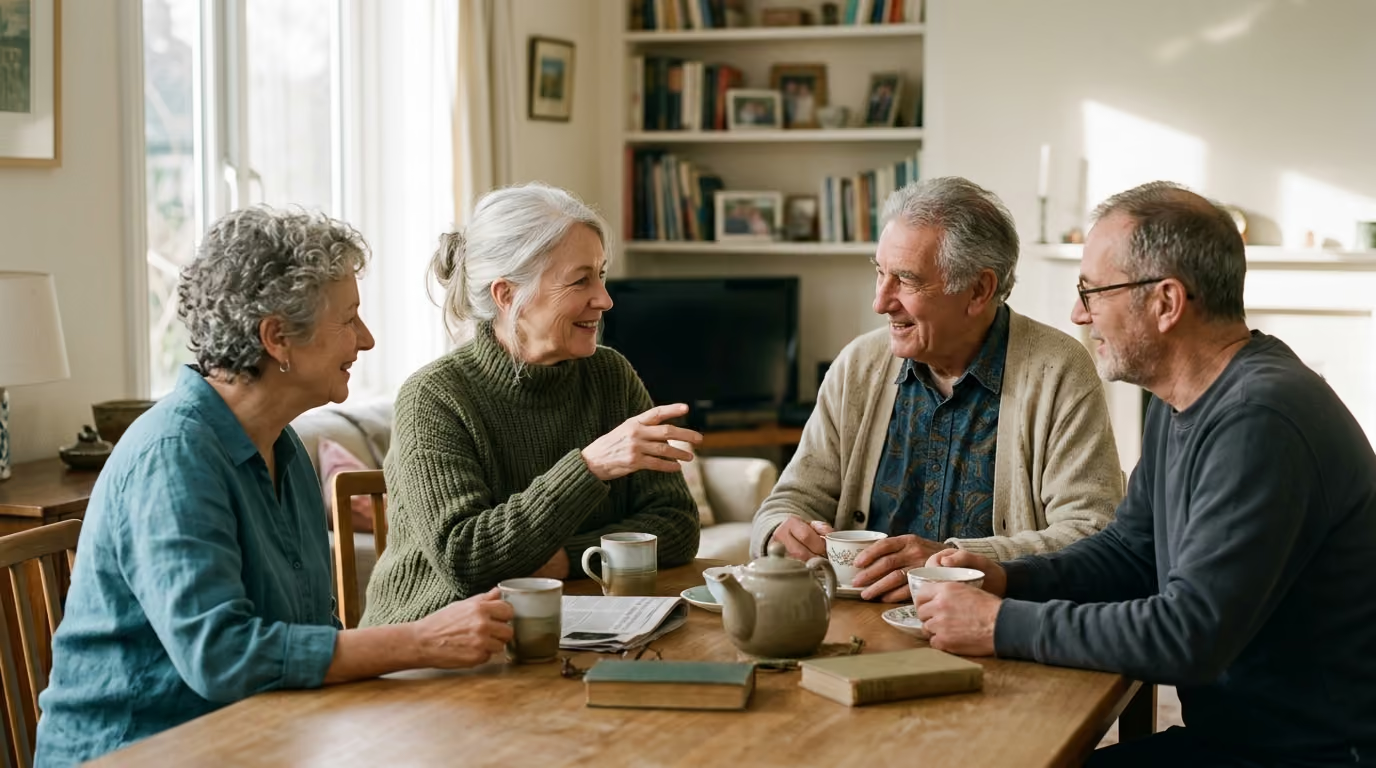
Sharing a lively conversation with good friends stimulates complex neural pathways that actively protect your brain health and lower long-term dementia risk after sixty.

Share
White Reddit alien mascot face icon on transparent background.White paper airplane icon on transparent background.White stylized X logo on black background, representing the brand X/Twitter.
September 8, 2026
Lifestyle & Brain Resilience

Many older adults search online asking whether living alone or feeling lonely will accelerate memory loss. The fear of cognitive decline can make every quiet evening feel like a medical risk. Commercial wellness headlines often claim that socializing prevents dementia, while alarmist articles suggest that loneliness damages the brain immediately. This complete guide provides a clear, balanced examination of how human relationships influence mood, stress, cognitive stimulation, and daily brain function as you age.

Core Insights on Social Connection and Brain Health

  • Quality outweighs interaction quantity: Having one or two trusted confidants provides greater emotional and cognitive support than attending frequent, superficial social events.
  • Active participation stimulates brain networks: Collaborative activities that require planning, conversation, and problem-solving provide mental exercise, whereas passive presence around others offers limited cognitive challenge.
  • Purposeful roles provide daily structure: Regular responsibilities like volunteering, mentoring, or organized group projects help regulate sleep, physical activity, and mental focus.

The Neurology of Human Interaction

The human brain evolved to operate within social groups. When you talk with another person, multiple brain networks work together in fractions of a second. You must track words, interpret facial expressions, decode tone of voice, recall shared memories, and manage your emotional responses.

Conversations activate the prefrontal cortex, which governs executive function, planning, and focus. They also engage the temporal lobes for language processing and the limbic system for emotional regulation. This complex mental activity requires rapid retrieval of facts, names, and concepts. In neurological terms, social dialogue serves as a natural form of continuous mental stimulation.

Chronic loneliness produces a very different neurological state. When a person feels socially isolated for extended periods, the body often perceives an ongoing threat. This state can elevate stress hormones like cortisol, which may promote systemic inflammation and disrupt sleep cycles over time. Sustained high cortisol levels can impair the hippocampus, a brain region that is central to memory formation and recall.

Supportive interactions help calm the autonomic nervous system. Feeling understood and secure lowers baseline stress responses and supports restorative sleep. You can read more about these mechanisms in our brain aging and cognitive longevity resources.

The Current Scientific Evidence on Isolation and Dementia Risk

Scientific interest in social connection and cognitive aging has expanded significantly over the past two decades. Major public health bodies, including the World Health Organization and the National Academies of Sciences, Engineering, and Medicine, now treat social connection as a public health priority.

National survey data show that roughly 24 percent of community-dwelling Americans aged 65 and older are socially isolated. In related dataset analyses, up to 43 percent of adults aged 60 and older report subjective feelings of loneliness. These numbers demonstrate that social disconnection is a common experience in later life.

Large epidemiological studies consistently link chronic social isolation and loneliness with poorer cognitive outcomes. A pooled review of observational studies indicates that social isolation is associated with roughly a 50 percent increased relative risk of dementia. In an analysis of the Health and Retirement Study following more than 12,000 adults aged 50 and older, loneliness was associated with a 40 percent higher risk of dementia, even after adjusting for genetic risk factors and social network size. A meta-analysis of over 2.3 million participants found that poor social networks carried a relative risk of 1.59 for dementia, while poor social support showed a relative risk of 1.28.

These figures represent statistical associations across large populations. They do not prove that isolation directly causes dementia in any single individual. The relationship is often bidirectional: subtle, early cognitive changes can make communication difficult, which leads an individual to withdraw socially before receiving a clinical diagnosis.

Some longitudinal studies with shorter follow-up periods show no consistent association between baseline loneliness and cognitive decline. Studies on volunteering also reveal mixed results. Several multi-year studies link regular volunteering with better memory retention and fewer cognitive complaints. Other diverse cohort analyses observe higher baseline performance among volunteers without measurable differences in the rate of decline over time. The strongest scientific stance recognizes social engagement as a supportive component of cognitive health protection, rather than a guaranteed safeguard against brain disease.

The Relationship, Participation, and Purpose Framework

Social connection is multidimensional. It cannot be measured accurately by counting phone calls or calendar events. A functional framework evaluates social health across three distinct layers.

  • MEANINGFUL ROLES
  • Identity, Responsibility, Contribution, Accountability
  • SOCIAL PARTICIPATION
  • Shared Goals, Discussion, Cooperation, Learning, Action
  • RELATIONSHIP QUALITY
  • Emotional Safety, Mutual Trust, Reciprocity, Warmth

Relationship Quality

The foundation of social health rests on emotional safety, mutual trust, and reciprocity. High-quality relationships provide confidants with whom you can share honest feelings and concerns. These bonds buffer psychological stress, improve mood stability, and reduce the risk of late-life depression.

A small network of dependable friends or family members is far more valuable than a wide circle of casual acquaintances. Problematic or high-conflict relationships can generate persistent stress, which harms cognitive wellbeing.

Social Participation

Participation involves activities that demand communication, collaboration, and shared focus. Examples include attending structured classes, joining musical ensembles, participating in civic groups, or organizing community events.

Recent research demonstrates that not all social activities affect cognition equally. Positive cognitive associations appear strongest for activities that involve meeting friends, volunteering, and structured community involvement. Passive group exposure, like sitting quietly in a crowded theater, lacks the mental demands of interactive participation.

Meaningful Roles

Meaningful roles provide identity, responsibility, and routine expectations. Serving as a volunteer coordinator, a community gardener, a mentor, or an active committee member creates an external reason to wake up, plan, travel, and solve problems.

Roles combine physical movement, cognitive effort, and social accountability into a single routine. They transform social interaction from an optional leisure activity into an organizing structure for daily life. Learn more about developing fulfilling routines through our retirement and purpose resources.

Biological and Behavioral Pathways Linking Social Health to Cognition

The connection between human relationships and brain health operates through several overlapping pathways. Understanding these routes shows why social habits influence day-to-day mental clarity.

  • SUPPORTIVE SOCIAL CONNECTION
  • v v v
  • PSYCHOLOGICAL BEHAVIORAL BIOLOGICAL
  • PATHWAYS PATHWAYS PATHWAYS
  • Mood stability - Physical habits - Lower cortisol
  • Stress buffer - Better sleep - Reduced systemic
  • Mental focus - Daily routine inflammation
  • Motivation - Medical care - Neuroplasticity
  • SUSTAINED COGNITIVE FUNCTION

Mood and Emotional Regulation

Loneliness is closely linked with clinical depression and anxiety in older adults. Depression impairs working memory, reduces processing speed, and disrupts attention span. When mood drops, individuals often withdraw from mental and physical challenges, which speeds up functional decline.

Supportive relationships help protect against depressive symptoms. Having someone to talk with provides perspective during difficult life transitions, which preserves emotional stability and mental focus.

Stress Buffering and Neuroendocrine Balance

Unresolved stress triggers prolonged activation of the sympathetic nervous system and the hypothalamic-pituitary-adrenal axis. This hormonal surge leads to elevated baseline cortisol levels. Research indicates that secure social bonds moderate the impact of life stressors on cognitive performance.

Close relationships provide emotional reassurance and practical problem-solving support. This buffer prevents acute challenges from turning into chronic, brain-draining distress.

Cognitive Stimulation and Cognitive Reserve

Interactive communication requires continuous mental effort. Following complex conversations, remembering names, interpreting body language, and debating topics challenge your processing speed and working memory.

These regular mental exercises support cognitive reserve, which is the brain's capacity to improvise and find alternative ways of getting a job done. Longitudinal data show that highly active social engagement correlates with slower rates of global cognitive decline over multi-year periods. You can explore additional approaches for sustaining mental agility in our memory and focus support section.

Behavioral Activation and Daily Structure

Social obligations encourage positive health behaviors. Having an appointment with a friend or a scheduled volunteer shift prompts people to dress, leave the house, walk, and maintain personal hygiene.

Studies from the Health and Retirement Study indicate that formal volunteering correlates with higher levels of moderate physical activity and cognitive effort. The social commitment organizes the day, creating secondary benefits for cardiovascular and metabolic health.

Practical Resilience and Recovery

A strong social network provides tangible aid during periods of illness, injury, or bereavement. Friends and neighbors can assist with transportation, home maintenance, meal preparation, and medical appointments.

This practical safety net prevents acute physical setbacks from causing total functional isolation. When an older adult receives swift help after a fall or surgery, they return more quickly to their active routines.

Common Misconceptions About Socializing and Memory

Misunderstandings about social connection can cause unnecessary worry or lead people to adopt frustrating, unsustainable habits.

Myth: Social Isolation and Loneliness Are the Same Thing

Isolation is an objective measure of network size and contact frequency. Loneliness is the subjective feeling that your relationships lack warmth or depth. A person can live alone with few contacts and feel contented, while another can feel deeply lonely in a busy retirement community.

Myth: Marriage Automatically Protects Brain Function

Living with a spouse or partner does not guarantee cognitive health. Relationship quality is the determining factor. Chronic domestic hostility, emotional neglect, or severe caregiving strain can generate chronic stress, whereas living alone with supportive friendships promotes excellent cognitive wellbeing.

Myth: More Social Contact Is Always Better

Socializing produces diminishing returns when it causes exhaustion or anxiety. Introverted adults require solitude to recharge their mental energy. The goal is meaningful, comfortable connection, not filling every hour with group activities.

Myth: Digital Communication Replaces In-Person Contact Entirely

Video calls, text messages, and online groups offer helpful contact for individuals with physical limitations. However, digital communication lacks subtle physical cues and spontaneous physical contact. Digital tools work best as a bridge to supplement real-world connections, rather than a permanent replacement.

Myth: Socializing Prevents Dementia Completely

No lifestyle habit can guarantee complete immunity from neurodegenerative disease. Genetics, vascular health, systemic diseases, and environmental exposures all shape cognitive outcomes. Framing social engagement as a universal shield creates unfair guilt for individuals who receive a dementia diagnosis despite having an active social life.

Myth: Introversion Is a Health Risk

Introversion is a personality trait, not a medical deficit. Introverts thrive with one-on-one discussions, shared hobbies, or independent projects with occasional collaboration. They do not need large parties or crowded clubs to keep their minds sharp.

Myth: Volunteering Is Always Good for Brain Health

Volunteering is beneficial when the tasks match a person's physical and mental capabilities. An unorganized, overly demanding volunteer role that produces chronic exhaustion can elevate stress and undermine health. Commitments should remain manageable, predictable, and emotionally rewarding.

Specific Life Circumstances and Practical Modifications

Generic advice to "get out and meet people" ignores real physical, sensory, and life transitions. Successful connection strategies must adapt to specific individual circumstances.

Untreated Hearing Loss

Age-related hearing loss makes noisy gatherings frustrating. When following conversations requires immense effort, many older adults withdraw from group dinners and clubs.

  • Practical adaptation: Schedule annual audiology examinations and use modern hearing aids or assistive listening devices.
  • Environmental choice: Choose quiet restaurants with carpeted floors and soft lighting, and request round tables that make lip-reading easier.
  • Communication strategy: Ask family members to face you directly when speaking and eliminate background music during visits.

Widowhood and Bereavement

Losing a spouse destroys a primary source of companionship, daily communication, and shared routine. Forcing rapid socialization during early grief can feel overwhelming.

  • Practical adaptation: Focus on small, predictable interactions with one trusted friend, family member, or grief counselor.
  • Routine maintenance: Establish new daily markers, such as a morning walk to a neighborhood market or a weekly phone call with a sibling.
  • Gradual expansion: Join a bereavement support group when ready, where shared experiences remove the pressure to seem cheerful.

The Retirement Transition

Leaving the workforce removes built-in daily conversation, professional identity, and problem-solving demands. Many new retirees experience unexpected loneliness.

  • Practical adaptation: Replace workplace interaction with structured community roles, board service, or educational programs.
  • Weekly scheduling: Build a recurring weekly calendar that includes two fixed social commitments alongside independent hobbies.
  • Skill utilization: Seek volunteer or mentoring opportunities that draw on your career knowledge and organizational skills.

Caregiving Demands

Caring for an impaired partner or family member provides purpose, but it can quickly cause severe physical and emotional isolation.

  • Practical adaptation: Use adult day care services, professional respite care, or family assistance to protect scheduled personal time.
  • Support networks: Join caregiver support groups to share coping strategies with peers who understand the situation.
  • Micro-connections: Maintain short, frequent phone check-ins with close friends when leaving home is difficult.

Mobility and Transportation Limitations

Giving up driving or experiencing mobility impairments can cut off access to community centers, religious services, and friends' homes.

  • Practical adaptation: Use community transit services, senior ride-share programs, or volunteer driver networks.
  • Home-based hosting: Invite neighbors or friends for tea, card games, or book discussions at your residence.
  • Structured digital connection: Join scheduled video-based discussion groups, book clubs, or lecture series.

Early Mild Cognitive Impairment

Individuals noticing early memory or language changes may withdraw socially out of embarrassment or fear of making mistakes.

  • Practical adaptation: Choose predictable, familiar environments where activities follow clear, repetitive structures.
  • Supportive companionship: Spend time with compassionate friends who allow extra time for word-finding without interrupting.
  • Task-focused participation: Engage in shared hands-on activities, like gardening, craft projects, or walking, where constant conversation is not required.

Illustrative Models of Social Adaptation

These models illustrate how older adults can address common social connection challenges.

Model 1: The Active Yet Disconnected Attendee

An individual attends multiple large community gatherings each week. Despite speaking with many people, they feel lonely because the conversations remain superficial and hurried.

  • CURRENT: High Quantity / Low Fit
  • Many large gatherings
  • Superficial conversations
  • Emotional isolation
  • v ADAPTATION STRATEGY
  • TARGET: Depth Over Breadth
  • Shift to small-group activities
  • One-on-one weekly coffee
  • Specific organizational role
  • Intervention: The individual reduces broad event attendance and focuses on a four-person book discussion group. They invite one member for regular coffee and take charge of managing the group's reading schedule.
  • Outcome Target: Deeper emotional safety and enhanced executive challenge through focused discussion and scheduling responsibilities.

Model 2: The Isolated Individual Facing Transportation Barriers

A retired professional stops attending a weekly discussion group after experiencing vision changes that prevent nighttime driving.

  • Intervention: The individual arranges a daytime ride share with another group member and transitions their monthly committee meeting to a hybrid video format.
  • Outcome Target: Restoring access to a valued peer network without risking personal safety.

Model 3: The Overloaded Caregiver

A partner provides continuous home care for their spouse. While they find the work meaningful, chronic exhaustion and lack of outside contact lead to severe anxiety.

  • Intervention: The family arranges for four hours of professional respite care every Tuesday morning. The caregiver uses this window to walk with a close friend and attend a local support group.
  • Outcome Target: Preserving the caregiving role while lowering stress hormones through peer support and exercise.

Model 4: The Dedicated Introvert

An older adult dislikes large social events and feels pressured by well-meaning relatives to join a busy community center.

  • Intervention: The individual declines large social clubs and instead joins a neighborhood tool-lending library, working two hours a week repairing equipment alongside one colleague.
  • Outcome Target: Meaningful contribution, regular conversation, and mechanical problem-solving without social overload.

Model 5: Addressing Sensory Barriers

An individual avoids family Sunday dinners because background television noise and rapid cross-talk make hearing impossible, leading to feelings of sadness.

  • Intervention: The family turns off the television, improves room lighting, and seats the individual in the middle of a round table. The individual visits an audiologist to adjust their hearing aid programming for voice isolation.
  • Outcome Target: Restoring confident participation in family conversations by removing acoustic obstacles.

Model 6: Collaborative Cognitive Challenge

A recent retiree misses the mental demands and camaraderie of their former workplace.

  • Intervention: The individual joins a local historical preservation society to organize archival documents and lead walking tours.
  • Outcome Target: Combining memory recall, public speaking, physical activity, and team cooperation into a regular weekly role.

Model 7: Remote Connection for Limited Mobility

An individual recovering from joint surgery experiences temporary home confinement and missing their weekly social circle.

  • Intervention: They establish a twice-weekly scheduled phone call with a friend and participate in an online weekly chess club.
  • Outcome Target: Maintaining cognitive stimulation, humor, and daily mental focus while recovering physically.

The Five-Part Connection Inventory

This self-assessment helps you evaluate your social landscape and identify specific areas for adjustment. It is an educational tool rather than a clinical test.

  • THE FIVE-PART CONNECTION INVENTORY
  • 1. CONTACT FREQUENCY Do you have regular, scheduled contact?
  • 2. QUALITY & TRUST Can you share honest thoughts safely?
  • 3. COGNITIVE DEMAND Do activities require active thought?
  • 4. MEANINGFUL PURPOSE Does someone rely on your contributions?
  • 5. PRACTICAL BARRIERS Are hearing, transit, or fatigue issues?

1. Contact Frequency and Structure

  • Do you speak with or see someone you care about at least two to three times each week?
  • Do you have a regular commitment marked on your calendar each week?
  • Have your daily interactions decreased significantly over the past year?

2. Quality and Emotional Safety

  • Do you have at least one person you can call during a personal emergency or moment of grief?
  • Do your regular interactions leave you feeling refreshed, calm, or validated rather than depleted?
  • Are you dealing with ongoing interpersonal conflict or criticism that causes persistent stress?

3. Mental and Social Participation

  • Do you take part in activities that require attention, communication, problem-solving, or new learning?
  • Do you regularly engage in two-way conversations where you must listen, reflect, and reply?
  • Do you leave your living space regularly for shared group endeavors?

4. Meaningful Roles and Purpose

  • Does another person, group, or organization rely on your presence, advice, or practical help?
  • Do you have regular opportunities to teach, mentor, create, or assist others?
  • Do you feel that your time and life experience are put to productive use?

5. Practical and Environmental Barriers

  • Is difficulty hearing or seeing making group conversations stressful?
  • Are transportation challenges, physical pain, or mobility limitations keeping you at home?
  • Are you avoiding social contact because of low mood, worry, or memory concerns?

Practical Strategies for Meaningful Social Engagement

Building healthy social habits requires sustainable planning, clear boundaries, and activities that align with your genuine interests. For wider context on building durable routines, explore our lifestyle and brain resilience strategies.

Step 1: Base Social Activities on Existing Interests

Do not join an activity simply because someone says it is good for seniors. If you dislike card games, joining a bridge club will only cause frustration.

  • Identify genuine preferences: Focus on subjects you already enjoy, like gardening, local history, carpentry, choral singing, literature, or animal welfare.
  • Seek interactive formats: Look for local organizations, classes, or volunteer programs built around those specific topics.
  • Prioritize depth over novelty: Joining a group that shares your core passions makes conversation flow naturally and builds authentic friendships.

Step 2: Combine Social Connection with Other Health Habits

Pairing social interactions with physical movement or continuous learning delivers multiple brain health benefits at the same time.

  • Walking partnerships: Meet a friend for a weekly brisk walk in a park rather than sitting for coffee.
  • Group exercise programs: Join a community strength, yoga, or water aerobics class to combine physical conditioning with casual peer contact.
  • Collaborative learning: Enroll in an art, language, or cooking course where participants work together on practical projects.

Step 3: Establish Predictable, Recurring Commitments

Occasional social events lack the organizing power of a regular schedule. A predictable weekly routine provides structure and a clear reason to prepare.

  • Select fixed days: Commit to an activity that occurs at the same time every week, like volunteering on Tuesday mornings or attending a Thursday book club.
  • Build gentle accountability: Choose roles where others notice and care if you are absent, which helps overcome short-term inertia.
  • Protect recovery time: Schedule quiet downtime before and after social commitments to avoid physical or sensory fatigue.

Step 4: Use Graduated Steps for Social Anxiety or Grief

If you are recovering from illness, experiencing deep grief, or feeling socially unpracticed, avoid overwhelming environments.

  • Start with brief interactions: Begin with a ten-minute phone call to a relative or a short conversation with a neighbor.
  • Progress to low-pressure groups: Attend a public lecture, library event, or religious service where you can sit quietly without pressure to speak.
  • Step into small-group discussions: Move on to a small hobby or discussion group once you feel comfortable in public settings.

Step 5: Build Network Redundancy

Relying entirely on a single person for all emotional, practical, and social needs creates vulnerability if that person moves, becomes ill, or passes away.

  • Diversify your support circle: Maintain one or two close confidants for emotional talks, a neighbor for local practical help, and an activity group for mental engagement.
  • Cultivate intergenerational ties: Connect with younger family members, neighbors, or mentees to gain fresh viewpoints and varied conversation.
  • Engage with your community: Get to know local shopkeepers, librarians, and postal carriers to create warm, everyday neighborhood interactions.

Clinical Conversations About Social Health and Memory

Social isolation, low mood, sensory decline, and memory concerns interact closely. Bring these targeted questions to your next primary care appointment to address the biological factors shaping your social life.

  • "Could my current medications be contributing to fatigue, low motivation, or mental fog that makes socializing difficult?"
  • "Can we review my recent hearing and vision screenings to ensure sensory loss is not interfering with my daily communication?"
  • "How can we distinguish between normal age-related changes in processing speed and medical conditions like depression or mild cognitive impairment?"
  • "Are there local, hospital-affiliated community wellness programs, support groups, or physical therapy classes you recommend for someone with my health profile?"
  • "Would a formal referral for audiology, counseling, or occupational therapy help me overcome the physical barriers keeping me at home?"

Immediate Next Steps for the Coming Week

Meaningful change begins with small, concrete actions. Use this checklist to adjust your social and cognitive routine over the next seven days.

  • [ ] Review your sensory health: Check whether your hearing aid or eyeglasses need cleaning, updated prescriptions, or new batteries.
  • [ ] Complete the connection inventory: Work through the Five-Part Connection Inventory above to identify your primary social priority or physical barrier.
  • [ ] Schedule one one-on-one conversation: Contact a reliable friend or family member to set up a dedicated phone call, shared walk, or home visit.
  • [ ] Audit your weekly calendar: Identify one high-stress, unrewarding social obligation you can decline, and reserve that time for rest or a meaningful hobby.
  • [ ] Research one structured community group: Look up a local volunteer program, community garden, walking club, or class matching an interest you already enjoy.
  • [ ] Set up one low-barrier routine: Introduce a simple weekly habit, like visiting your local library every Wednesday morning or calling a sibling every Sunday.
  • [ ] Prepare doctor discussion notes: Write down any concerns about hearing loss, mood changes, or persistent fatigue to discuss at your next medical visit.

Sources

  1. The Impact of Loneliness and Social Isolation on Cognitive ...
  2. WHO Commission on Social Connection
  3. Report of the WHO Commission on Social Connection
  4. Social Isolation, Loneliness, and Cognitive Health - PMC - NIH
  5. Social Isolation and Loneliness in Older Adults - PMC - NIH
  6. Social connection linked to improved health and reduced ...
  7. The Association between Social Engagement, Loneliness ...
  8. Association between formal social participation and ...
  9. Can volunteering in later life reduce the risk of dementia? A 5-year longitudinal study among volunteering and non-volunteering retired seniors - PubMed
  10. Volunteering, polygenic risk for Alzheimer’s disease, and cognitive functioning among older adults
  11. The relationship between volunteering and cognitive performance in older adults: A systematic review
  12. Social Relationships and Cognitive Function in Older Adults
  13. The effect of social relationships on cognitive decline in older ...
  14. Longitudinal impact of volunteering on the cognitive functioning of ...
  15. Longitudinal Associations Between Formal Volunteering and ...
  16. Volunteering with mild cognitive impairment - Oxford Academic
  17. Community & Connection | Mental Health
  18. HIGH IMPACT ACTIVITIES: ASSESSING THE ASSOCIATION BETWEEN SOCIAL PARTICIPATION FREQUENCY AND COGNITION
  19. Social Isolation and Loneliness in Older Adults: A National Academies of Sciences, Engineering, and Medicine Report
  20. Lack of Social Connection - Household Pulse Survey - COVID-19
short eyebrow

Your sharpest years can still be ahead

Build habits that support memory, focus and a curious, connected life.

Read the Blog