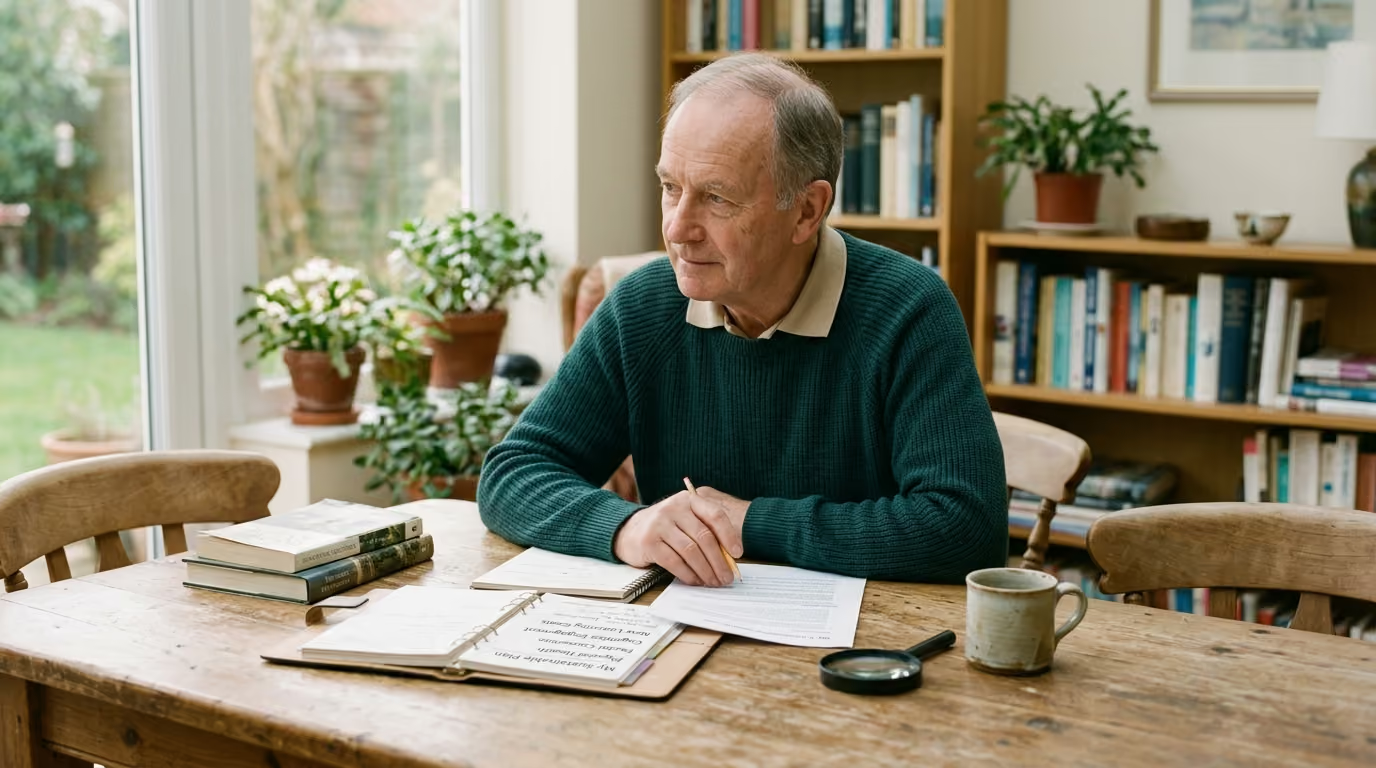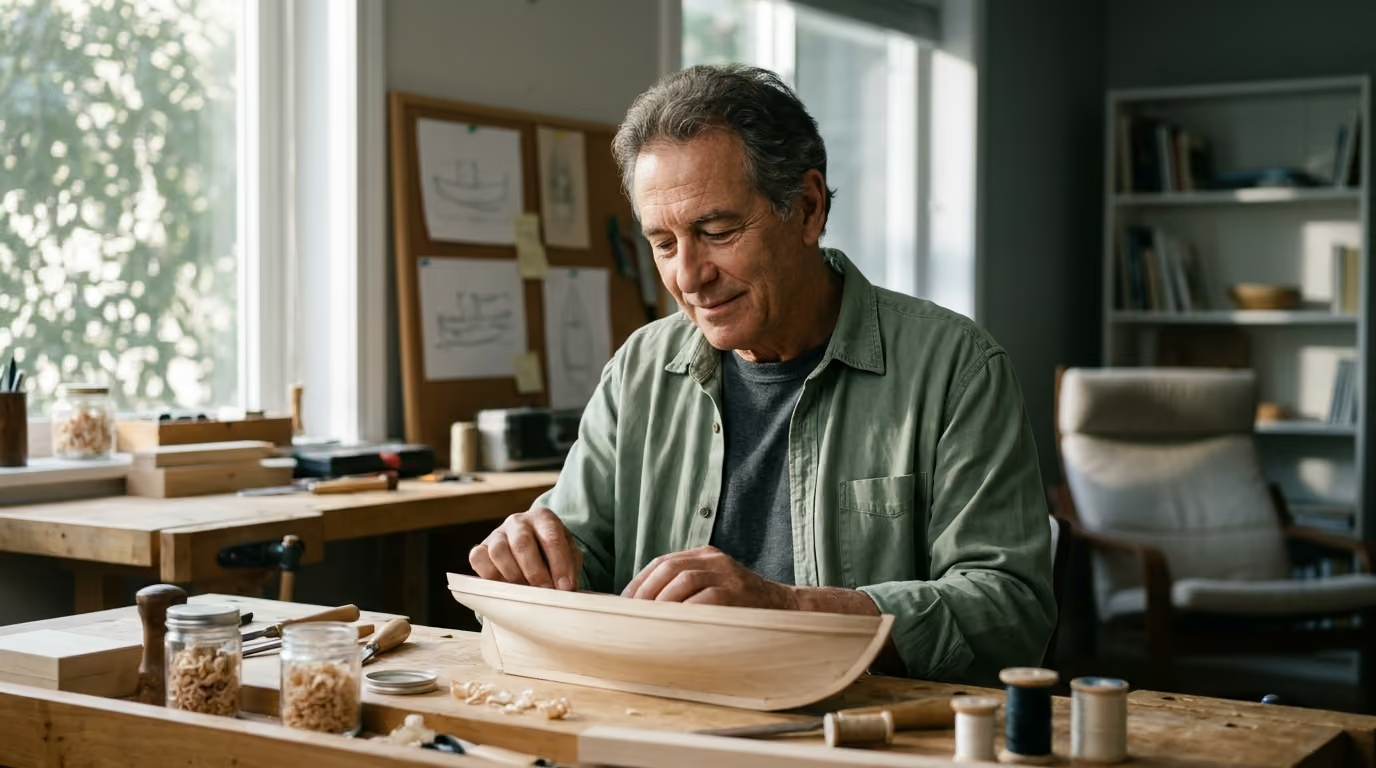

Three core planning strategies help retirees structure self-directed projects that protect cognitive health, maintain daily energy limits, and deliver finished work.





A personal project after retirement is a self-directed body of effort designed to build, preserve, repair, or understand something of personal significance. It is not an unpaid replacement for a corporate career. It is also not passive leisure designed merely to pass the hours until bedtime.
When approached with clear boundaries, a structured project provides cognitive stimulation, daily structure, and social connection. It creates tangible evidence of progress while respecting real limits on physical energy, finances, and caregiving duties.
This guide provides a comprehensive framework for planning and completing meaningful work in retirement. You will learn how to select projects aligned with your values, break broad goals into manageable milestones, protect your physical safety, and reach a definitive finish line.
Engaging in structured, goal-directed work activates multiple cognitive networks simultaneously. When you plan a project, your brain relies heavily on executive functions housed in the prefrontal cortex. These functions include working memory, task switching, problem solving, and long-term planning.
Following a sequence of complex tasks demands sustained attention and active memory retrieval. For example, building a piece of furniture or organizing a historical photo collection requires holding dimensions and categories in mind while manipulating materials. This sustained mental effort supports synaptic plasticity, which is the brain's ability to maintain and reorganize neural connections.
Purposeful work also influences neurological health through neurochemical and emotional pathways. Working toward an achievable goal stimulates dopamine pathways associated with motivation, reward, and positive mood. Having a clear reason to wake up and focus each morning regulates circadian rhythms, promotes better sleep quality, and lowers chronic systemic inflammation.
According to the World Health Organization framework on healthy aging, well-being in later life depends on preserving functional ability. Functional ability allows individuals to learn, make decisions, build relationships, and contribute to their communities. Designing structured personal projects directly exercises these capabilities within the context of your everyday environment.
Scientific research demonstrates clear associations between goal-directed engagement, mental health, and longevity among older adults. However, evaluating the evidence requires distinguishing between proven causal mechanisms and observational trends.
Research published on retirement transitions indicates that a strong sense of purpose correlates with lower rates of psychological distress. In one study of retirees, higher purpose was associated with significant reductions in depression and anxiety symptoms. That same research noted that retirees frequently report lower baseline purpose than their peers who remain employed, highlighting the need to rebuild personal structure deliberately.
Longitudinal data from over 2,000 older adults showed that baseline activity levels strongly predicted maintained purpose four years later. The protective relationship between daily activity and sustained purpose was especially pronounced among retired participants compared to working adults. A related study observed that older adults reported greater purpose on specific days when they engaged in structured leisure and volunteer tasks.
Volunteering represents another well-documented project pathway. A systematic review published by the Campbell Collaboration concluded that volunteering produces measurable improvements in physical and mental health for older adults. A four-year follow-up study found that older adults who volunteered at least 100 hours per year, or roughly two hours per week, had lower mortality risk, fewer functional limitations, and reduced loneliness.
Observational studies also link intellectual and creative hobbies to preserved cognitive function. A Japanese longitudinal study found lower risks of cognitive impairment among older adults who regularly practiced reading, crafts, or painting. Similar findings from the English Longitudinal Study of Ageing reported that intellectual activities, cultural outings, and gardening were inversely associated with dementia incidence over six years.
While these findings are encouraging, they must be interpreted carefully. Observational studies demonstrate correlation rather than direct causation. Healthy older adults may simply have more energy and capability to participate in hobbies and volunteering. Creative projects support mental stimulation, mood stability, and social connection, but no single activity can guarantee the prevention of dementia.
To learn more about keeping your thinking adaptable as you age, read our guide on retirement and mental fitness.
Starting a project successfully requires choosing work that matches your current physical capacity and psychological values. Unrealistic commitments lead to fatigue, guilt, and abandoned materials.
Before purchasing supplies or making public promises, evaluate your idea against the five-part V-A-L-U-E framework:
Retirement projects generally fall into eight functional archetypes. Reviewing these categories helps narrow your focus to the type of effort you find most rewarding:
When selecting an archetype, evaluate your daily energy patterns rather than your calendar availability. You may have eight open hours on a Tuesday, but your sharpest mental focus might only last for two hours in the morning. Build your project around your high-focus windows and reserve lower-energy periods for rest or light administrative chores.
You can learn more about aligning mental energy with everyday habits in our lifestyle and brain resilience resources.
Ambitious ideas often collapse under their own weight when they lack operational structure. A broad desire such as "write my family history" or "redesign the backyard" provides no direct clue about what to do on a Tuesday morning.
The Project Ladder converts vague ambitions into small, sequential actions. Each rung down brings you closer to an immediate physical task:
Alongside the ladder, define a Minimum Viable Project. This represents the smallest complete version of the effort that retains its core meaning. If health issues or family emergencies interrupt your work, the minimum viable version ensures your effort remains functional rather than abandoned.
Consider these minimum viable alternatives to common ambitions:
To ensure consistent execution, combine milestones with implementation intentions, also known as if-then plans. Behavioral research shows that linking a specific environmental cue to a planned behavior improves follow-through.
Every meaningful project operates on three distinct layers: the product, the process, and the relationships involved. The product is the tangible outcome you produce. The process is what you learn and practice along the way. The relationship layer encompasses the people you interview, teach, or collaborate with during the work.
Keeping all three layers in mind ensures that the project remains valuable even if you decide to adjust the final product later.
Maintaining momentum over several months requires balancing creative work with periods of deliberate recovery. A sustainable working schedule protects against physical exhaustion and cognitive fatigue.
Structure your weekly calendar around distinct categories of effort:
Do not measure your progress solely by hours spent sitting at a desk or working in a shop. Tracking hours can reward unproductive wheel-spinning. Instead, track concrete progress markers, such as the number of interviews completed, square feet of soil prepared, or pages revised.
When health setbacks, caregiving obligations, or bereavement interrupt your schedule, activate a pre-planned recovery protocol:
Explore our collection of cognitive health and protection articles for more research on sustaining attention and mental clarity.
Collaborative projects can strengthen social ties across generations, but they can also create misunderstandings if roles and expectations remain unstated.
Before beginning collaborative work, establish clear boundaries regarding ownership, financial costs, and privacy. Write down a brief agreement that answers essential operational questions:
Family history and oral memoir projects require special ethical sensitivity. Historical research frequently reveals painful topics, including divorces, financial crises, mental health struggles, adoptions, and family estrangements.
To handle sensitive family material responsibly, follow these preservation guidelines:
Working with younger family members creates natural opportunities for intergenerational learning. An older relative can provide cultural context, professional wisdom, and historical narratives, while a younger collaborator might assist with photo scanning, audio editing, or cloud storage backups.
Practical projects involving gardening, carpentry, home maintenance, or heavy archiving introduce real physical and digital risks that must be managed systematically.
Data from the Centers for Disease Control and Prevention indicate that falls remain a leading cause of accidental injury among older adults. More than one in four older adults reports falling each year, resulting in approximately 41,000 deaths annually. Physical projects must prioritize safety over speed or stubborn self-reliance.
Apply these fundamental safety practices to workshops, gardens, and home improvement areas:
Digital preservation requires equally structured safeguards. Following guidance from national archival institutions, personal archives should follow an eight-stage digital preservation workflow:
1965-08-Smith-Family-Reunion.jpg).
Many retirement projects stall in the final stages due to creeping perfectionism or an expanding scope. Without a clear definition of completion, a project can turn into an open-ended obligation that drains your energy.
To prevent endless expansion, write a single completion sentence before doing any work:
> "This project will be complete when [specific deliverable] is [specific action] and shared with [specific recipient]."
Review these examples of unambiguous completion sentences across different types of work:
When you reach roughly 80 percent of your target milestones, initiate a formal scope freeze. Stop collecting new historical sources, planting additional garden beds, or expanding text chapters. Make a brief list of remaining tasks and classify them as essential or optional. Complete the essential items, eliminate the optional additions, and prepare the final packaging.
Remember to create a finish-line budget. Reserve adequate time, energy, and money for the final stages of your project:
Finally, establish a separate maintenance protocol. A finished physical project often leaves behind ongoing maintenance demands. Clarify who will weed the new garden beds, update the digitized photo software, or check workshop safety gear in future years. A project is only truly complete when its future care is simple and clear.
To find more tools for planning meaningful activities, explore our brain health resources.
Integrating project work into your daily routine requires low friction and realistic habits. Use these two practical routines to build consistent momentum without causing physical or mental strain.
Set aside a single 45-minute block during your period of highest natural energy, three mornings per week. Dedicate this block entirely to one active milestone.
Spend fifteen minutes every Sunday morning updating a simple physical notebook or digital project document.
Misunderstandings about retirement, aging, and creative productivity can derail worthwhile projects before they begin. Addressing these misconceptions helps you set healthy, realistic expectations.
Many new retirees assume that leaving full-time employment creates an endless supply of open hours. In reality, household maintenance, medical appointments, family obligations, exercise, and physical rest consume a large portion of every week.
Treat your time as available in discrete energy windows rather than an infinite open calendar.
Gathering endless books, collecting historical documents, or ordering tools often feels productive while delaying actual creative decisions. Research becomes an obstacle when it substitutes for drafting, constructing, or organizing.
Set strict limits on your research phases by establishing clear source quotas and firm decision deadlines.
You do not need to write a bestselling novel, build an entire house, or launch a large non-profit organization to experience meaning. Restoring a collection of vintage hand planes, creating a pollinator garden, or preserving family recipes offers deep satisfaction.
Personal meaning comes from the care and attention you bring to the work, not public recognition or commercial scale.
While observational research shows that older adults who engage in creative and intellectual pastimes tend to maintain better cognitive health, hobbies are not medical treatments. Engaging in crafts, writing, or gardening supports cognitive reserve and daily quality of life, but it cannot guarantee the prevention of neurodegenerative conditions.
Pursue your projects for their intrinsic value, personal satisfaction, and social connection rather than treating them as medical prevention tools.
Before beginning physically demanding projects or making major adjustments to your daily routine, speak with your primary physician, physical therapist, or occupational therapist. Use these targeted questions during your next appointment:
Losing initial excitement is a normal part of the creative cycle. When your motivation dips, determine whether the problem is genuine disinterest or temporary project fatigue. Review your original completion sentence and strip away all non-essential requirements to reach the minimum viable version.
If the work no longer aligns with your personal values or physical capacity, perform a conscious exit review. Document what you accomplished, organize your materials in labeled storage boxes, and deliberately close the project without self-criticism.
Conflicting recollections are common in family history and memoir projects. When relatives remember events differently, record both versions neutrally rather than trying to force a single narrative. Use phrases such as "family accounts differ on this event" to acknowledge alternative viewpoints.
If a living relative expresses serious privacy concerns about a personal story, keep that material in your private research notes and omit it from the shared family booklet.
Physical limitations do not require abandoning hands-on crafts. Replace standard hand tools with ergonomic alternatives featuring enlarged, cushioned grips and spring-assisted mechanisms. Install raised garden beds at standing or wheelchair height to eliminate the need for bending.
You can also divide physical work into shorter 15-minute segments and use dictation software or digital assistance tools for writing and administrative tasks.
Focus on a single primary project at any one time, alongside no more than one secondary maintenance task. Managing multiple ambitious projects divides your attention, increases mental clutter, and leads to unfinished work across all areas.
Keep a separate "future ideas" notebook where you write down new project concepts. Do not begin a new project until your current primary deliverable has reached its defined finish line.

Follow FitBrainLab for research-led insights on memory, focus, brain aging, nutrition and mental fitness after 60. Stay connected for new articles, practical guidance and ideas for a sharper, more engaged life.


Build habits that support memory, focus and a curious, connected life.
Read the Blog