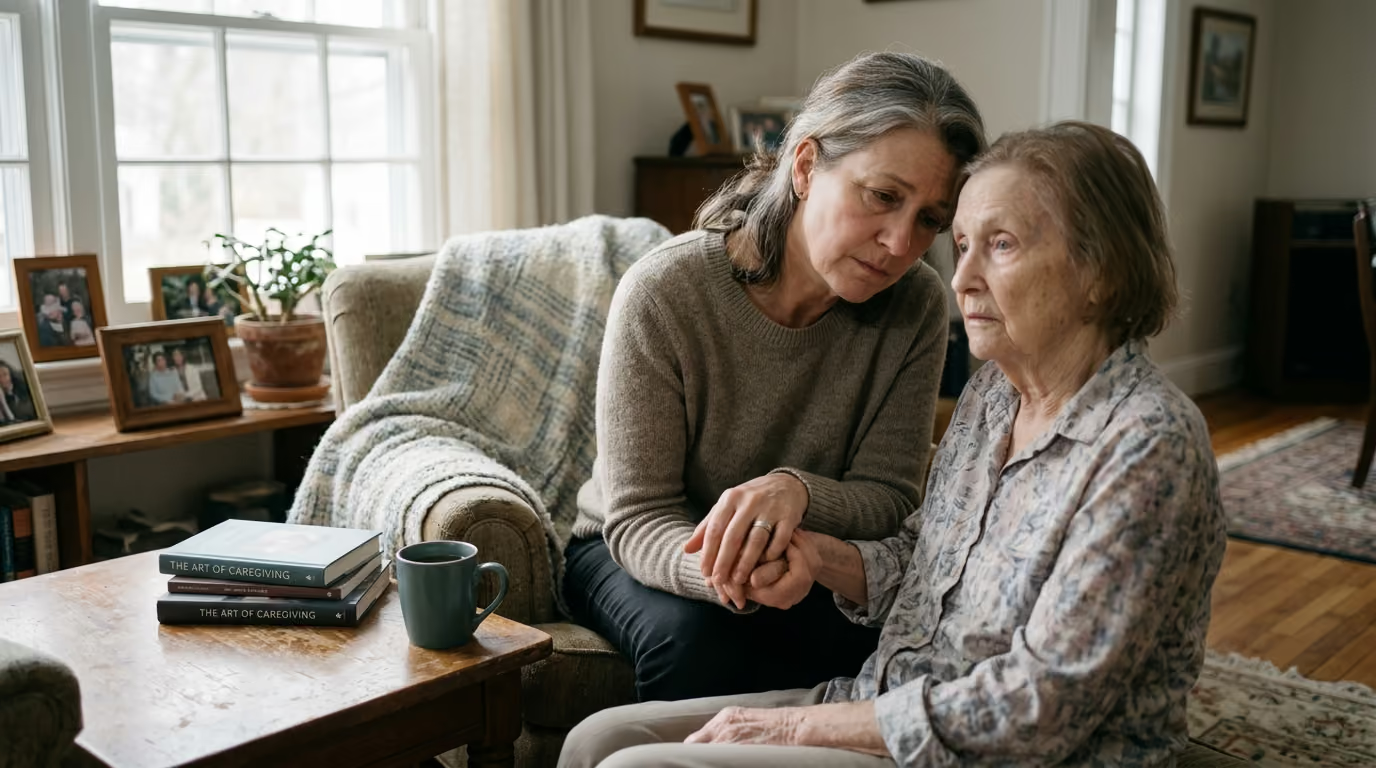

Dignified daily independence is achieved by evaluating baseline abilities, adjusting support levels across five practical stages, and simplifying home routines.





Most people believe that independence means doing every single task entirely alone. When memory slips or executive skills decline, families often assume the only choices are total self-reliance or total loss of control.
This view creates unnecessary fear. True independence is not about performing every action without assistance. It is about retaining the power to direct your life, express personal preferences, and engage in meaningful activities.
Accepting support for complex tasks protects your energy for the things that matter most. When you set up reliable systems early, you maintain authority over your daily routine, your living space, and your future care.
The brain relies on executive functions to plan, sequence, prioritize, and complete complex activities. These cognitive processes act like an air traffic controller for daily tasks. When age-related changes or neurological conditions affect these pathways, familiar activities can feel fragmented.
A person might clearly remember their goal, such as making a pot of soup, but struggle to coordinate the steps in order. This difficulty is not a loss of intelligence or willpower. It is a change in the brain's processing efficiency.
To protect autonomy, care partners and individuals should view daily functioning as a spectrum. Independence does not disappear overnight. Instead, it moves through distinct stages of adaptation:
The individual handles the task safely and accurately without external reminders or modifications.
The person completes the entire task themselves by using external aids. These aids include written checklists, visual labels, automated alarms, or dedicated storage stations.
The activity is split into manageable components. The individual handles familiar, low-risk steps, while a family member or helper takes over higher-risk or complex elements.
The individual performs the activity with a trusted companion present. The companion provides occasional verbal prompts, checks for safety, and intervenes only when necessary.
A caregiver or professional completes the task because the safety risk has become too high. Even in this stage, the individual can still express preferences, such as choosing what shirt to wear or picking a radio station.
Using the least restrictive level of support protects dignity. When a specific task becomes difficult, the goal is not to take over completely. The goal is to move only one step down the ladder. For more resources on navigating these neurological shifts, review our cognitive health and protection articles.
Global health data underscores the importance of proactive planning for cognitive changes. According to the World Health Organization, roughly 57 million people worldwide were living with dementia in 2021. Nearly 10 million new cases emerge each year, making cognitive disability a major public health priority.
In the United States, data from the Centers for Disease Control and Prevention indicates that about one in ten adults aged 45 and older reports worsening memory loss. Furthermore, approximately one-third of adults aged 85 or older live with some form of dementia. However, clinical authorities emphasize that significant cognitive decline is not a normal part of typical aging.
Researchers have evaluated numerous assistive tools designed to preserve independence for older adults with memory loss. A systematic review published in medical literature examined assistive technologies and found that while they did not definitively prevent care home admissions, they were associated with a 50 percent reduction in the probability of falls.
A pooled analysis of 12 randomized trials involving 584 participants found that technology-assisted interventions produced measurable improvements in cognitive scores and mood symptoms. However, these tools did not show statistically significant gains in broad activities of daily living or overall quality of life.
Other reviews, including comprehensive assessments by the Cochrane Library, caution that high-quality evidence remains limited regarding electronic memory aids. Technology cannot replace careful human assessment, personal care, or individualized safety planning. Digital devices offer real utility, but they function best when integrated into simple, consistent human routines. You can read deeper analyses within our dementia and cognitive protection resources.
Before changing a household routine or purchasing assistive devices, conduct a structured baseline assessment. Rushing to add complicated tools often creates confusion. A practical assessment identifies the exact point where a task breaks down.
Begin by distinguishing normal aging from more significant cognitive changes. Forgetting an acquaintance's name and recalling it later is typical. Repeatedly losing the ability to retrace steps, missing familiar appointments, or struggling to follow a recipe indicates a need for structured evaluation.
Observe when cognitive errors happen. Does confusion peak late in the afternoon? Does it occur only when the person feels rushed, fatigued, or unwell?
Sudden fluctuations in memory or attention require prompt medical evaluation. Acute confusion is often caused by urinary tract infections, metabolic imbalances, sleep apnea, or medication interactions. These issues are frequently treatable when caught early.
Many common prescriptions impair alertness and memory. Sedatives, anticholinergic drugs, certain bladder medications, antihistamines, and narcotic pain relievers can cloud thinking.
Ask your physician or pharmacist to conduct a comprehensive medication review. At the same time, schedule professional vision and hearing exams. Many supposed memory failures occur simply because a person could not clearly hear a spoken instruction or read a calendar entry.
Observe how daily activities unfold in the home. Assess both basic activities of daily living, such as dressing and grooming, and instrumental activities, such as cooking, managing finances, and tracking medications.
Create an objective tracking log that records:
Writing down observable facts prevents emotional arguments. Saying "the morning pill was taken twice on Tuesday" is far more productive than saying "you cannot manage your medicine anymore."
Predictable daily routines preserve mental energy. When everyday actions follow a fixed sequence, the brain relies on automatic procedural memory rather than active recall. This frees up attention for conversation, hobbies, and social connections.
Keep morning and evening sequences identical from day to day. Pair new supportive habits with firmly established routines.
A standard morning flow might follow this direct order:
Post this sequence in large, clear print in a prominent location. If reading text becomes difficult, use clear photographs or line drawings showing each step. Keep instructions brief, with only one distinct action per line.
Misplacing keys, glasses, and wallets causes substantial daily anxiety. Create a dedicated "one home for everything" station near the main exit door.
Use a wide, brightly colored tray placed on a sturdy entryway table. This tray should hold:
Train the habit of placing these items into the tray the exact moment you step through the front door. Place a second, smaller tray nearby labeled "Action Items" to hold incoming mail, outgoing letters, or forms that need attention. Explore further organizational approaches in our lifestyle and brain resilience articles.
When an individual forgets a step, apply the least intrusive prompt first. Do not immediately take over the task. Move through prompts in this sequence:
This structured patience reinforces existing neural pathways and helps the person maintain practical capability longer.
Managing time and appointments becomes difficult when information is scattered across multiple notebooks, sticky notes, and digital apps. A single, unified calendar system eliminates conflicting entries and forgotten commitments.
Choose one primary format that matches the person's lifelong habits. If digital devices cause frustration, use a large, high-contrast paper wall calendar with plenty of writing space. If the family coordinates care remotely, use a wall-mounted digital screen that syncs with shared calendar apps.
Discard secondary notepads and random scraps of paper. Every appointment, repair visit, social event, and family outing must go onto the master calendar immediately.
Avoid vague entries like "Dr. Smith at 2:00." A functional calendar entry answers all practical logistical questions:
A complete entry looks like this:
> Thursday, October 14
> Dr. Martinez (Heart Clinic)
> Appointment: 2:00 PM
> Leave home: 1:15 PM
> Driver: Robert arrives at 1:00 PM
> Bring: Current medication bag and insurance card
Prevent missed commitments by using a three-tier check-in process:
Engage the individual actively in this review. Rather than telling them where they have to go, look at the board together and ask what the schedule shows.
Medication mistakes represent one of the greatest safety threats to independent living. Missing doses, taking double doses, or confusing morning and evening pills can lead to hospitalizations. A structured medication system provides safety while letting the person manage their daily health.
If the primary issue is occasionally forgetting whether a pill was taken, simple physical tools are often sufficient:
When sorting loose bottles becomes confusing, transfer the organization to professionals. Most community pharmacies offer blister packaging or multi-dose strip packaging:
When an individual accidentally takes duplicate doses or forgets doses despite blister packs, implement an automated dispenser:
Reassess the medication plan immediately if any of the following occur:
Work with healthcare providers to simplify the daily drug regimen. Inquire if multiple daily doses can be consolidated into once-daily extended-release formulas. Learn more practical strategies in our memory and focus resources.
Living at home safely does not require turning a residence into an institutional care facility. Targeted modifications address specific functional risks while keeping the home warm, familiar, and comfortable.
Poor vision and reduced spatial awareness significantly increase fall risks. Make these simple environmental adjustments:
Preparing meals brings pleasure and purpose. If kitchen safety becomes a concern, modify the equipment rather than banning the person from cooking entirely:
Walking outdoors provides physical exercise and mental well-being. To support safe movement while preventing wandering distress:
These measures provide safety while supporting natural mobility and outdoor activity.
Driving represents personal freedom, mobility, and identity. However, progressive changes in reaction time, visual processing, divided attention, and spatial navigation eventually make driving unsafe. Approaching this transition with empathy and planning prevents sudden isolation.
Monitor driving skills objectively. Warning signs that require a formal driving evaluation include:
If these signs appear, consult a physician or request an evaluation from an occupational therapy driving rehabilitation specialist. A medical assessment frames the discussion around objective physical and cognitive measurements rather than personal opinion.
Stopping driving should never mean stopping life outside the house. Set up a practical transportation network long before driving stops entirely:
Frame this shift as hiring a personal driver service, protecting independence rather than surrendering it.
Maintaining control over personal finances requires balance. You need safeguards against fraud and missed payments while maintaining personal spending autonomy for as long as possible.
Legal documents must be completed while an individual retains legal capacity. Schedule an appointment with an elder law attorney to establish:
These documents protect personal wishes and prevent future court-appointed guardianship proceedings.
Financial management can be adjusted in stages, preserving the ability to make everyday spending choices while protecting primary assets:
This structure allows the individual to shop, buy gifts, and enjoy daily activities without exposing core retirement savings to exploitation or error.
Misconceptions about cognitive aging often prevent people from seeking help or using practical aids.
Occasional forgetfulness happens at any age. Stress, poor sleep, grief, depression, and normal age-related slowing can all cause forgetfulness. Significant cognitive impairment involves persistent deficits that interfere with daily activities.
Cognitive capacity is decision-specific. A person may need help balancing an investment portfolio while remaining fully capable of deciding where to live, choosing their daily schedule, and selecting healthcare preferences.
Technology is only an aid. Alarms and automated dispensers fail if a person lacks the orientation to respond correctly or if batteries die. Devices must always be backed by human check-ins and consistent routines.
Overprotecting a person leads to deconditioning, boredom, and rapid loss of confidence. Modifying an activity, such as preparing cold salads instead of cooking over an open flame, allows ongoing participation while managing risk.
Managing tasks behind someone's back damages trust and dignity. Transparent collaboration, using open discussions about safety and teamwork, builds long-term cooperation.
Take this structured list of questions to your next healthcare appointment to guide productive discussions:
Maintaining independence through cognitive changes is an active, ongoing process that relies on structured routines, practical home adaptations, and open collaboration.

Follow FitBrainLab for research-led insights on memory, focus, brain aging, nutrition and mental fitness after 60. Stay connected for new articles, practical guidance and ideas for a sharper, more engaged life.


Build habits that support memory, focus and a curious, connected life.
Read the Blog