
Independent adults over 60 can maintain sharp mental focus by building supportive household systems and staying actively connected with their communities.





The morning begins in total quiet. You make your coffee, listen to the radio, and decide how to spend the hours ahead without coordinating with anyone else. For many adults over 60, this autonomy is deeply satisfying.
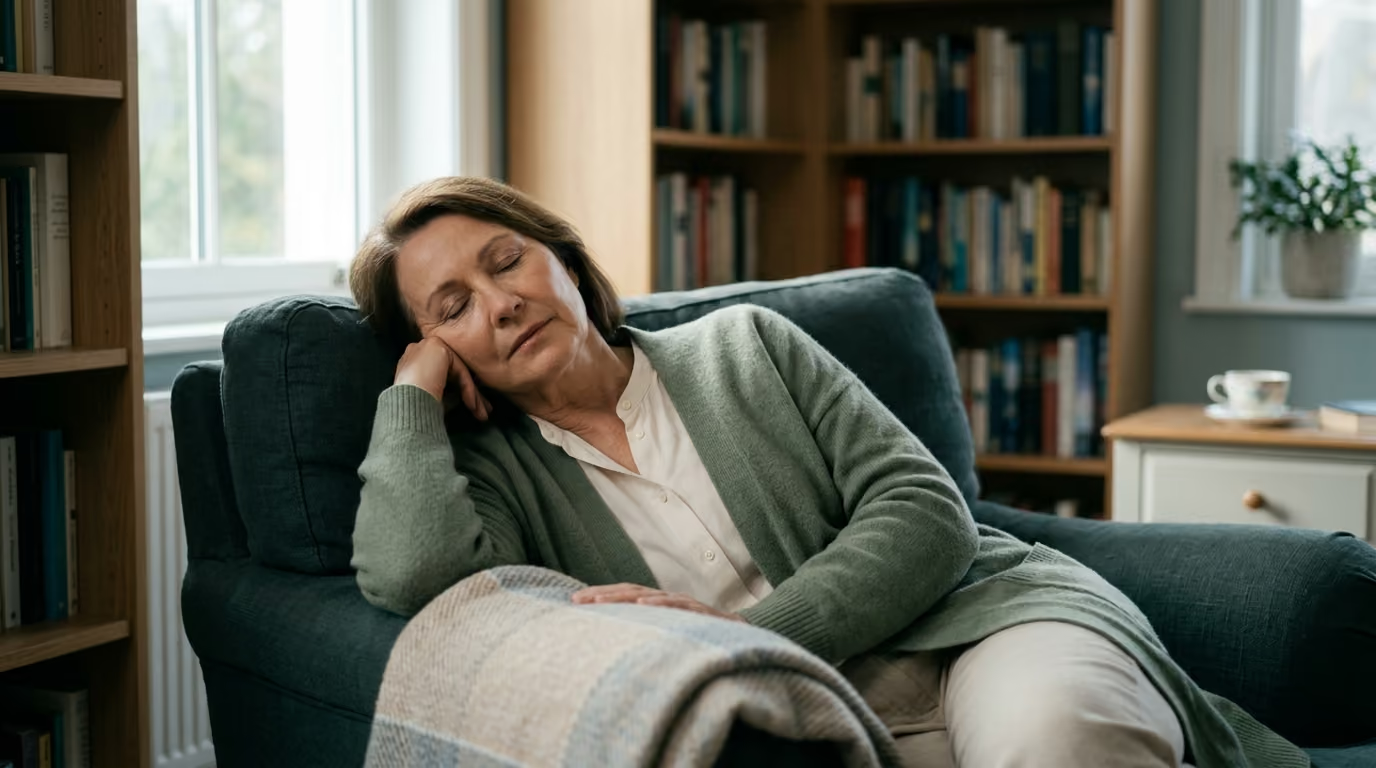
At the same time, solo living means you are entirely responsible for your daily structure. When there is no one else in the house, it is easy for days to lose their shape. Meals can become irregular, physical movement can decline, and quiet afternoons can shift from restful solitude into unintended isolation.
Living alone after 60 does not mean you are destined for loneliness or cognitive decline. Independence thrives when you build reliable routines that nourish your brain, maintain your physical strength, and keep you connected to the wider world.
Understanding how the brain functions when living solo begins with separating your physical environment from your mental state. Solitude is the objective state of being alone. When chosen, solitude allows for deep focus, creative projects, and emotional rest.
Loneliness is completely different. Loneliness is the painful feeling that your social relationships do not meet your emotional needs. A person can live alone and feel entirely fulfilled, or live in a crowded home and experience profound loneliness.
Social isolation is another distinct category. It refers to having very few social contacts, interactions, or community ties. Both persistent loneliness and prolonged social isolation can trigger chronic stress responses in the nervous system.
When you feel isolated, your brain may interpret that lack of connection as a threat. This state can raise cortisol levels, disrupt healthy sleep architecture, and increase systemic inflammation. Over time, these physiological changes can impair memory consolidation and reduce mental clarity.
Managing a solo household also places unique demands on executive function. Executive function includes the mental skills you use to plan, focus attention, remember instructions, and juggle multiple tasks.
When you live with others, executive tasks are often divided naturally. One person might track medical appointments while another plans dinner or manages household repairs. When you live alone, your frontal cortex manages every single decision.
This total responsibility can be mentally stimulating, but it can also cause decision fatigue. Without predictable routines, your brain spends excessive energy deciding what to eat, when to move, and how to structure each hour. Establishing clear daily systems frees your mind for higher-level learning and creative problem-solving.
For those interested in how daily habits shape cognitive reserve, learning more about lifestyle habits that support brain resilience can provide useful context.
The relationship between living alone and long-term brain health is often oversimplified in public media. Clear scientific analysis requires looking closely at what the data shows, what remains mixed, and where gaps exist.
Some observational studies show a statistical association between living alone and an increased risk of dementia. A systematic review of twelve studies identified a pooled relative risk of 1.30 for people living alone compared to those living with others.
However, researchers emphasize that living alone does not cause dementia. A statistical association simply means two factors appear together in population data.
Solo dwellers are more likely to experience bereavement, lower overall income, reduced access to transportation, or undiagnosed health conditions. A 2026 study found that after adjusting for health and social factors, living alone had no significant association with cognitive decline, though it was linked to higher rates of institutionalization when health failed.
The primary vulnerability of solo living is practical rather than neurological. When a health problem develops, a solo dweller may lack immediate assistance, leading to worse complications. Household arrangement matters far less than functional capacity, physical health, and access to support.
The evidence regarding subjective loneliness is more consistent. An analysis of population-based studies supported by the National Institute on Aging found that persistent loneliness was associated with a 31% higher risk of dementia.
Meta-analyses examining tens of thousands of older adults show that loneliness correlates with lower scores in episodic memory, processing speed, and verbal fluency. Another meta-analysis of over 10,000 older adults found a modest but statistically significant correlation of -0.08 between loneliness and global cognitive function.
These findings show that persistent emotional distress from lack of connection can affect cognitive performance. Yet researchers also observe a bidirectional relationship. Early, subtle changes in cognitive processing can make social interaction exhausting or confusing, leading people to withdraw.
The World Health Organization notes that while social participation supports overall mental wellbeing, current evidence is insufficient to prove that social activity alone prevents dementia.
Joining clubs or attending events will not guarantee cognitive protection. Social contact is valuable because it encourages physical movement, provides emotional stability, creates daily accountability, and provides a safety net if your health changes.
You can read more about evidence-based perspectives on cognitive longevity in our collection of evidence-based brain health resources.
Living successfully on your own requires a deliberate framework. Without workplace schedules or family demands, you must design your own structure. The Six Supports model provides a balanced approach to maintaining independence after 60.
Physical health is the foundation of cognitive stamina. The National Institute on Aging recommends that older adults aim for 150 to 300 minutes of moderate aerobic activity weekly, paired with strength training at least two days per week.
Movement increases blood flow to the brain, supports neuroplasticity, and helps preserve brain volume in regions responsible for memory. For someone living alone, strength and balance are critical safety factors. Building leg and core strength directly reduces the risk of falls.
Body support also includes sensory health. Untreated hearing loss and vision changes force the brain to work harder simply to decode incoming information. Scheduling annual hearing and vision exams protects your cognitive energy and keeps you engaged with your environment.
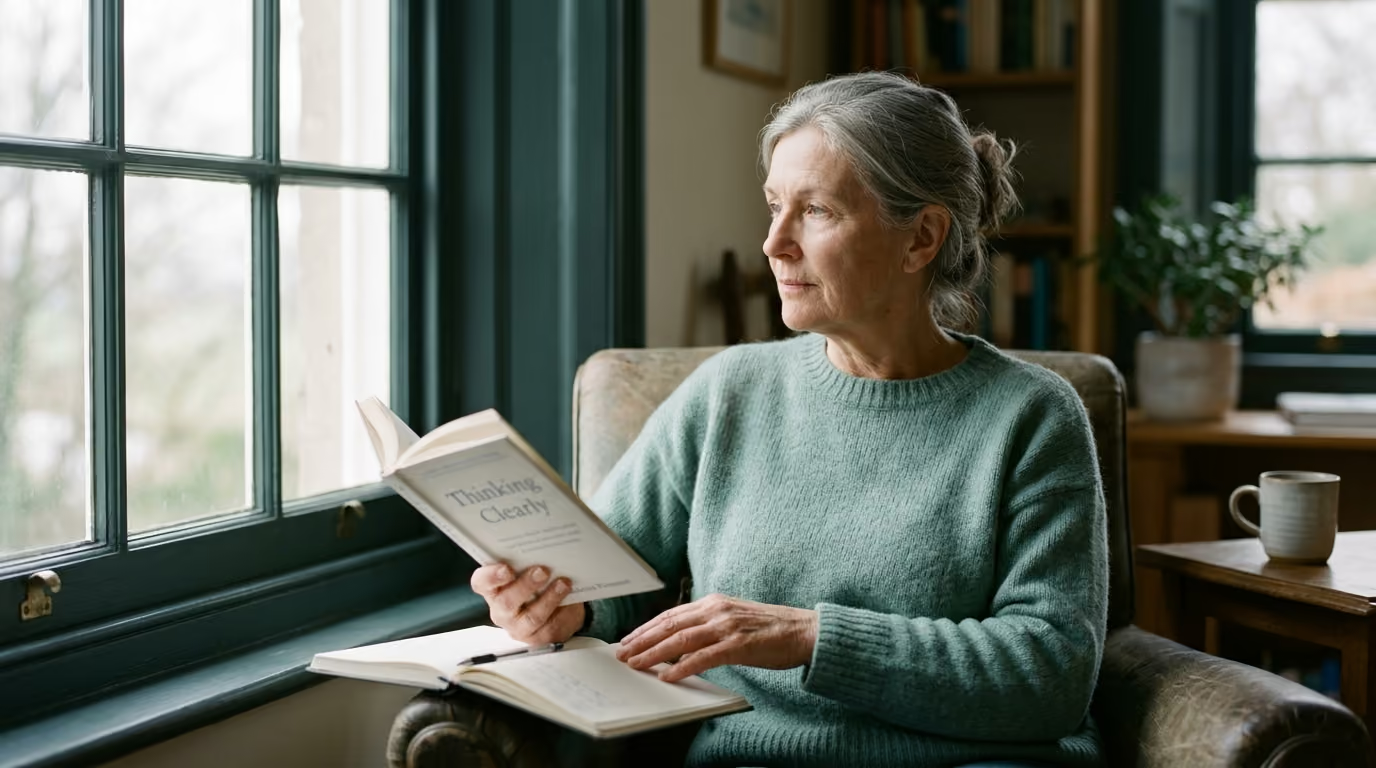
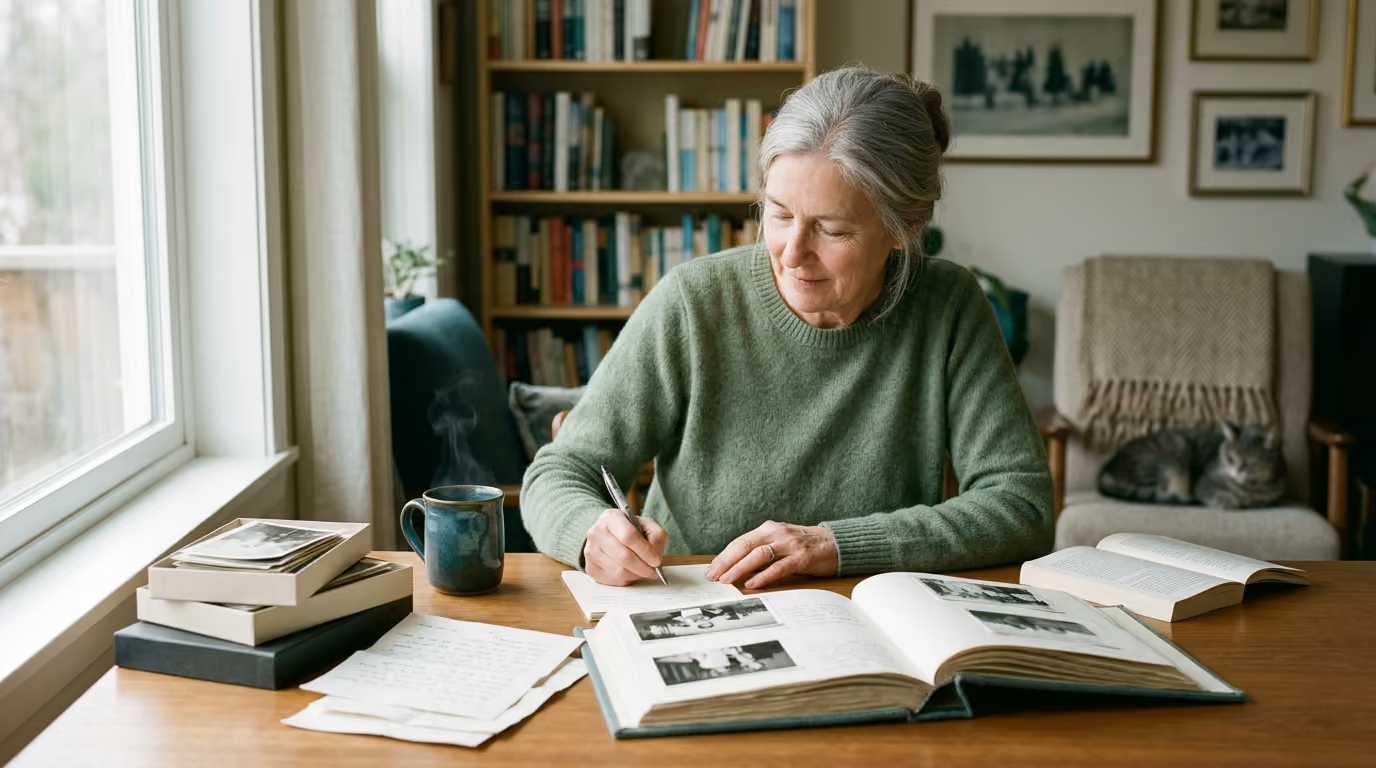
Brain health requires purposeful cognitive engagement. This means participating in tasks that require sequencing, learning, creativity, or real-world problem-solving.
Engaging mental activities include:
Passive entertainment like watching television requires very little cognitive effort. Real mental engagement involves active decision-making and adapting to new information.
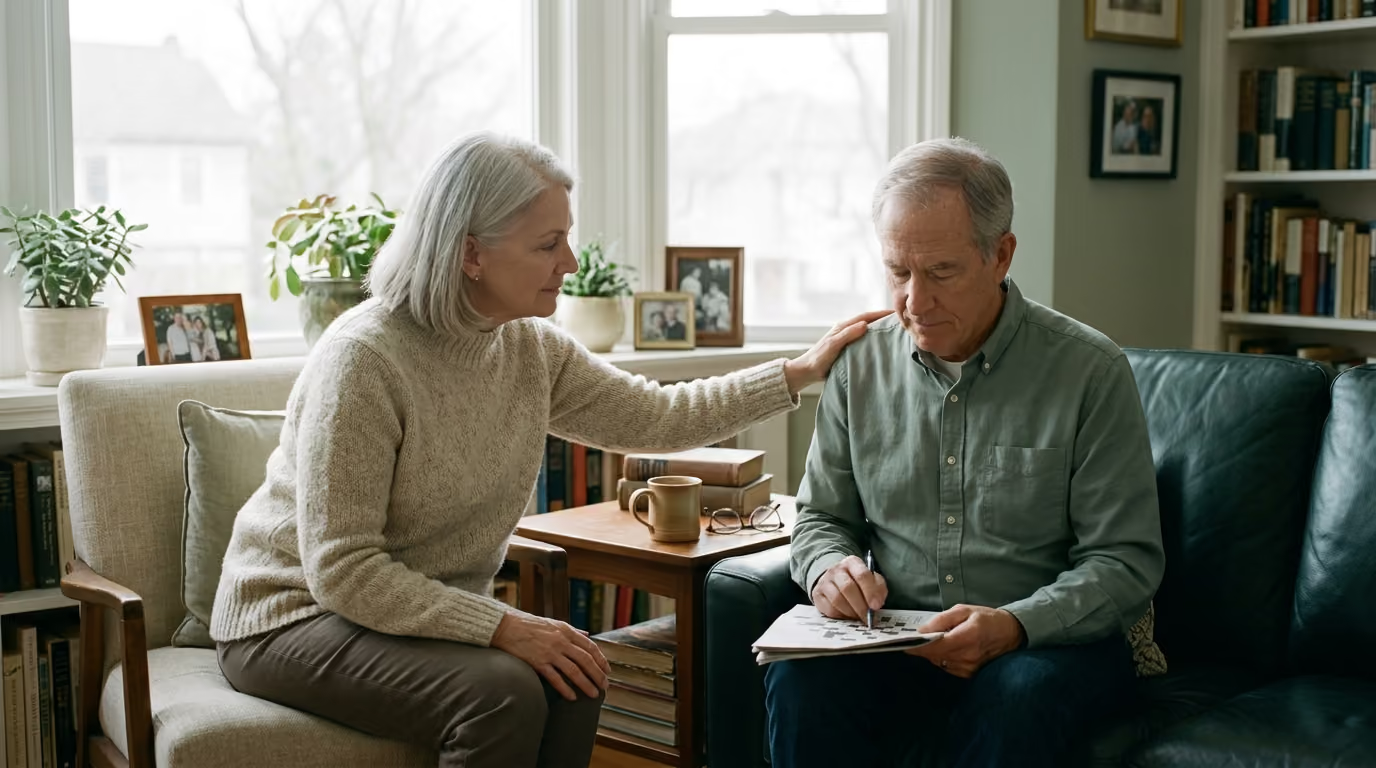
Belonging refers to the quality and reliability of your social connections. It is not about having a packed social calendar. It is about having reciprocal, meaningful relationships where you feel valued and heard.
Meaningful belonging can come from:
Having a few dependable relationships where you can speak honestly provides far more emotional support than dozens of superficial acquaintances.
A well-structured home reduces mental fatigue and supports daily functioning. When daily chores follow a predictable rhythm, you spend less cognitive energy managing basic logistics.
Effective household systems include:
Automating these routines leaves your mind clear for learning, social connection, and creative pursuits.
Safety in a solo household requires proactive design. According to the Centers for Disease Control and Prevention, more than 14 million older adults fall each year, making falls a major cause of injury and loss of independence.
A safe home environment includes:
Taking these steps is not an admission of weakness. It is a smart, forward-thinking strategy to protect your autonomy.
A response network is your system for handling unexpected emergencies. Living alone requires a clear plan for what happens if you become ill, slip, or need urgent help.
A complete response network includes:
Planning for emergencies before they occur ensures that you remain in control of your choices.
Routines create a stable framework for the day. When you live alone, a consistent daily rhythm keeps you active, engaged, and motivated without feeling overwhelmed.
If detailed schedules feel restrictive, use a simple daily baseline. Every day, make time for three specific actions:
This simple rule guarantees that you touch each essential pillar of health every single day.
Here is an example of a balanced daily routine for a solo household:
Begin your morning at a consistent time. Open the blinds immediately to expose your eyes to natural daylight, which sets your circadian rhythm and supports healthy nighttime sleep.
Drink a large glass of water to rehydrate. Spend ten minutes reviewing your calendar for the day, then complete a gentle mobility or stretching routine. Send a quick morning check-in message to a friend or family member.
Use the middle of the day for your most demanding tasks. Take a brisk walk outside, run your errands, or attend an exercise class.
After lunch, dedicate sixty to ninety minutes to an engaging cognitive activity while your focus is sharp. Practice a musical instrument, work on a woodworking project, or study a new subject. Take your midday medications according to your regular schedule.
Dedicate the early afternoon to one household maintenance task, such as cleaning a room or sorting mail. Step outside for fresh air and natural light.
Connect with your community during these hours. Attend a local lecture, volunteer, or meet a friend for tea. If you stay home, use this time to call a family member or participate in an online discussion group.
Prepare a wholesome dinner and take time to sit down and enjoy it without rushing. After dinner, pack away leftovers and tidy the kitchen so you wake up to a clean space.
Review tomorrow's schedule and lay out any items you will need. Turn off bright overhead lights and minimize television and computer screens. Read a book, listen to music, or take a warm shower before getting into bed at a consistent hour.
To learn more about organizing your daily habits, read our detailed guide on practical strategies for memory and focus.
A balanced week balances regular habits with variety. Predictable patterns reduce stress, while novel experiences stimulate your brain.
Good nutrition directly supports mental sharpness and physical vitality. The National Institute on Aging highlights the importance of eating nutrient-dense foods, including vegetables, fruits, whole grains, lean proteins, and healthy fats.
However, cooking for one presents real practical challenges. It is easy to lose motivation when preparing meals only for yourself. Large recipes lead to food waste, and fatigue can tempt you to rely on processed snacks.
To explore the link between diet and cognition in depth, review our guide on nutrition approaches for brain health.
Use these practical strategies to eat well with minimal effort:
Preparing food from scratch is an excellent workout for your brain. Cooking requires:
Challenge your brain by adapting old family recipes for a single serving or cooking with an unfamiliar vegetable each week.
Sometimes food preparation challenges point to larger health issues. Consult your doctor if you experience:
These symptoms warrant a medical assessment to identify treatable underlying conditions.
A home that is safe and well-organized protects your independence. Simple adjustments to your living space can prevent serious injuries and ensure help is available when needed.
Falls are a major threat to independent living. Take time to complete a thorough safety walk through your home:
Living alone requires practical backup systems for communication. Do not rely solely on a mobile phone sitting on a distant counter.
Follow these communication guidelines:
Federal emergency planning guidelines from Ready.gov emphasize that older adults should maintain a personal support network that knows where your supplies are kept and how to reach your home in an emergency.
Every person experiences solo living differently. Here is how to handle common life situations effectively.
Some people thrive in quiet environments and have little desire for frequent parties or club meetings. Introversion is a natural personality trait, not a health problem.
If you enjoy your own company, you do not need to force yourself into large social groups. Focus on quiet, meaningful connections. A weekly coffee with one close friend, active participation in an online forum, or volunteer work at a local archive can provide healthy connection while respecting your need for quiet.
Losing a spouse or partner changes your daily life overnight. Along with deep grief, you lose the natural conversations, shared meals, and practical teamwork of married life.
In the early months of bereavement, focus on preserving gentle, basic routines. Do not worry about building an ambitious new social life immediately.
Accept help with cooking and practical tasks from friends. Join a bereavement support group where you can speak openly with others who understand your loss. Gradually rebuild your daily rhythm one small step at a time.
Living alone in a rural area offers peace and natural beauty, but it also creates transportation and safety challenges. Weather events can leave you cut off, and emergency medical services may take longer to arrive.
Rural solo dwellers should build strong relationships with nearby neighbors. Set up a mutual check-in system for severe weather.
Keep an emergency pantry stocked with non-perishable food, bottled water, and necessary medications for at least two weeks. Look into local volunteer driver programs or public transit options before you need to stop driving.
A diagnosis of mild cognitive impairment does not mean you must immediately give up living on your own. Many people continue to live safely alone for years with appropriate supports.
If you notice memory or planning difficulties, simplify your environment right away. Use automatic pill dispensers that chime when it is time for medication.
Set up automatic bill payments through your bank. Invite a trusted family member or professional financial manager to review your accounts monthly to protect against scams. Work closely with your physician to monitor your safety and adapt your care plan over time.
For an overview of how clinical care supports cognitive health, visit our section on long-term cognitive health protection.
Every six months, take an honest look at how your daily systems are functioning. Use these self-assessment questions to identify areas that need attention.
If you answer "no" to several of these questions, consider it a helpful signal to adjust your routines, modify your home, or reach out to healthcare professionals and family for support.
Widespread myths about aging alone can create unnecessary fear or lead to poor decisions. Let us examine what the evidence actually shows.
Living alone is associated with higher rates of dementia in some population studies, but it is not a direct cause. The association is largely driven by related factors such as social isolation, bereavement, poor physical health, and lack of care support. An engaged, healthy person living alone is not automatically at higher risk.
Attending constant events will not guarantee brain health. The World Health Organization notes there is insufficient evidence that social activity alone prevents dementia.
Quality matters far more than quantity. A few deep, supportive relationships provide meaningful emotional and practical benefits, while a packed calendar of superficial events can simply cause fatigue.
Digital brain games often improve your score on that specific game, but that improvement rarely translates into better real-world memory or thinking skills. Real-world cognitive engagement, such as learning complex skills, managing projects, reading, cooking, and engaging in lively conversations, provides far broader benefits for the brain.
True independence means having the power to make your own decisions and shape your life. Utilizing grocery delivery, hiring a house cleaner, using a ride service, or asking a neighbor for assistance with repairs helps you stay in your home safely. Accepting practical support protects your autonomy rather than diminishing it.
A fall is often an early warning sign of muscle weakness, balance changes, vision problems, or medication side effects. The Centers for Disease Control and Prevention notes that falling once doubles your chance of falling again. Treat any fall or near-fall as an important medical event that requires a doctor's evaluation.
Your annual wellness visit is an ideal time to discuss how living alone intersects with your health. Bring these specific questions to your next appointment:
To learn more about our editorial mission and approach to cognitive longevity, visit the About FitBrainLab page.
Revisit this guide whenever your living situation or health changes. Useful times for a review include after a move to a new home, following the loss of a close friend or spouse, after a fall or hospital stay, or whenever you feel your daily routines have become disorganized.
Living alone after 60 offers tremendous freedom, peace, and self-direction. By building reliable daily habits, keeping your home safe, and staying connected with people you trust, you can protect your brain health and enjoy your independence for years to come.

Follow FitBrainLab for research-led insights on memory, focus, brain aging, nutrition and mental fitness after 60. Stay connected for new articles, practical guidance and ideas for a sharper, more engaged life.


Build habits that support memory, focus and a curious, connected life.
Read the Blog