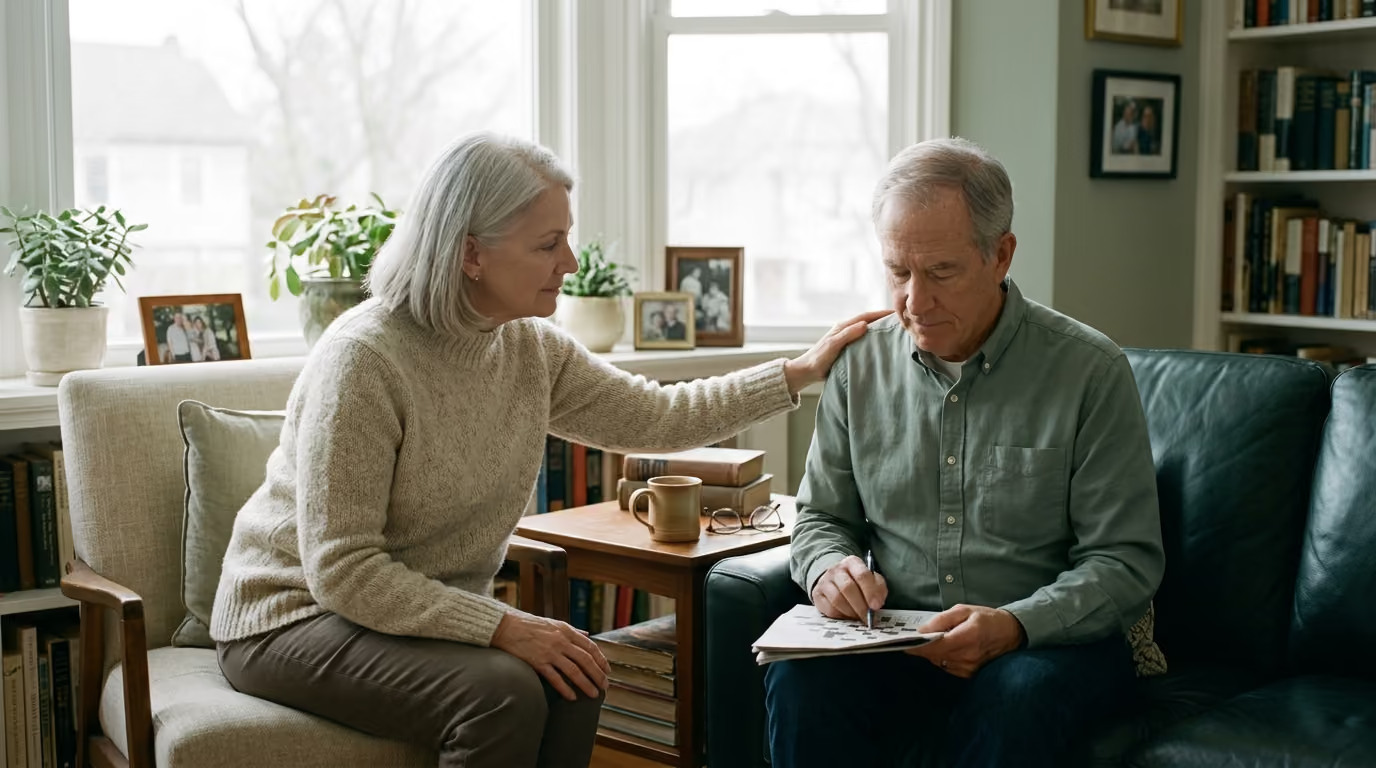

Connecting regularly with younger family members stimulates vital brain networks and protects memory through balanced activities designed for healthy aging after sixty.





Popular advice often suggests that spending time with younger people is an automatic safeguard against cognitive decline. Many well-meaning articles tell older adults that simply being around grandchildren or teenagers will keep the mind sharp. This view oversimplifies how the brain responds to social environments.
Unstructured, stressful, or one-sided family obligations can lead to chronic fatigue and sleep disruption. When social contact feels like unpaid labor or emotional extraction, it drains mental energy rather than supporting it. Brain health improves when connection is reciprocal, mentally engaging, and sustainable.
Building meaningful cross-generational relationships requires conscious planning and clear boundaries. This guide reviews what clinical research says about social engagement and cognitive aging. It also offers practical strategies to help you build balanced relationships that support mental clarity and long-term independence.
Social interaction is one of the most complex tasks the human brain performs. A simple conversation requires your brain to process auditory signals, interpret body language, and retrieve long-term memories simultaneously. You must track the topic, hold new details in working memory, and formulate clear replies.
When you speak with someone from a different generation, your brain works even harder. You frequently adjust your vocabulary, explain cultural references, and evaluate different life experiences. This mental flexibility exercises executive function, which is the brain system responsible for planning, focusing attention, and switching between tasks.
Intergenerational engagement also stimulates generativity. Generativity refers to the desire to contribute to the growth and wellbeing of younger generations. Research shows that feeling useful and passing on knowledge supports psychological health. These positive emotional states can reduce chronic stress hormones that otherwise damage delicate brain structures over time.
Scientists often study how these activities support cognitive reserve. Cognitive reserve is the brain's ability to improvise, adapt, and find alternate ways of getting a job done when facing age-related changes. While cognitive reserve is a concept rather than a literal bank account, keeping your neural networks active through varied social challenges helps maintain daily functional abilities. You can read more about these adaptive mechanisms in our guide to brain aging and neuroplasticity.
To understand how connection affects the brain, you must distinguish between related social states:
A person can live alone with few contacts yet feel content and mentally engaged. Another person can attend family events every week and still feel lonely. The brain responds directly to the emotional quality, intellectual stimulation, and safety of the interaction.
The scientific literature on aging shows strong associations between active social lives and better cognitive outcomes. However, it is necessary to separate established facts from early or mixed findings. Researchers study social engagement, volunteering, and formal intergenerational programs using different methods.
A comprehensive systematic review evaluated 44 studies examining intergenerational programs for older adults. The review discovered significant improvements in four out of eight studies that measured cognitive performance. Furthermore, 15 out of 24 studies showed measurable social benefits, and 21 of 31 reported broader health improvements. The data showed consistent reductions in anxiety, increased generativity, and improved attitudes toward other age groups.
These findings show that intergenerational programs offer real psychological value, but they do not work like a simple medication. Intergenerational contact is a delivery format, while the active ingredients are purposeful engagement, cognitive stimulation, and mutual respect. A passive visit where you sit quietly provides far fewer cognitive challenges than working together on a practical project.
Volunteering provides another useful lens for researchers. A longitudinal analysis of the U.S. Health and Retirement Study revealed that older adults who volunteered regularly showed higher levels of physical activity, social contact, and cognitive activity. The participants who engaged in higher cognitive activity maintained stronger thinking skills in subsequent years.
Another study tracked older adults over 14 years. It found that regular volunteering was independently associated with a lower risk of cognitive impairment, even after controlling for baseline health and education. Volunteering works through mediation. It bundles several healthy behaviors together, including regular schedules, physical movement, mental focus, and social accountability.
The National Institute on Aging highlighted findings from a study of more than 7,000 adults aged 65 and older. That investigation found that high social engagement, such as regular community involvement and visiting neighbors, was linked to better cognitive health in later life. Early clinical trials like I-CONECT have also tested structured digital conversations among adults aged 75 and older, showing preliminary potential for stabilizing cognitive scores.
Research also links social isolation to elevated health risks. The 2024 Lancet Commission on Dementia identified social isolation as one of 14 modifiable risk factors across the life course. The report estimated that managing these 14 factors could prevent or delay up to 45% of dementia cases worldwide.
Population-level risk statistics describe large groups across many decades. They do not predict what will happen to any individual. Social isolation frequently coexists with hearing loss, mobility challenges, depression, or economic hardship. Addressing these underlying factors is part of a sensible lifestyle and brain resilience approach.
To keep cross-generational relationships mentally stimulating and sustainable, you can apply the RECIPROCAL model. This framework helps you design interactions that provide genuine cognitive engagement without draining your energy.
Choose activities based on authentic shared interests rather than age-based assumptions. Do not assume every older adult wants to do crafts with young children or that every teenager only cares about video games.
Focus on projects that match your real values, skills, and current curiosity. If you love woodworking, history, or gardening, look for younger people who genuinely want to learn those specific skills. Shared curiosity creates natural conversation and keeps your attention focused.
Distribute the mental and physical work of the relationship fairly. An interaction is not balanced simply because two people sit in the same room.
Notice who plans the meetings, organizes the transportation, prepares the food, and pays for expenses. If you carry all the logistical and emotional weight, the relationship becomes an obligation. Healthy connections share the effort of staying in touch.
Incorporate activities that require active thinking, memory retrieval, and problem-solving. Passive interactions, such as watching television side by side, provide minimal stimulation for your neural pathways.
Work on projects with clear steps and mild novelty. You might compare how two generations research family history, learn to navigate a new computer tool, or build a raised garden bed together. The goal is comfortable mental effort, not high-stakes frustration.
Adapt the physical and sensory environment so everyone can participate comfortably. Untreated sensory decline makes conversations exhausting and causes many older adults to withdraw from social settings.
Choose quiet spaces with soft furnishings that reduce background noise. Position chairs so you can see faces clearly, which aids speech comprehension. If you use hearing aids, test them in smaller settings before attending larger gatherings. You can read more about protecting sensory processing in our cognitive health and protection resources.
Center your interactions around a clear, shared objective. Working together toward a common goal creates structure and removes the awkwardness of forced small talk.
Shared goals might include organizing neighborhood archives, restoring a local park, or compiling family stories. Purposeful tasks stimulate working memory and organizational planning while giving both participants a sense of shared accomplishment.
Prioritize steady, predictable contact over rare, high-stress gatherings. A brief interaction on a regular schedule supports mental focus far better than an exhausting holiday weekend.
A reliable rhythm might be a twenty-minute phone call every Sunday or a monthly morning work session at a community garden. Predictable schedules allow you to prepare mentally and manage your energy throughout the week.
Keep all participation entirely voluntary. Every person involved must feel free to decline an invitation, adjust their role, or leave early without feeling guilty.
Forced socialization causes resentment and anxiety. When you know you can step away whenever you need rest, you participate with greater focus and enthusiasm.
Evaluate how you feel during and after the interaction. High-quality relationships allow for quiet pauses, honest disagreements, and shared humor.
Pay attention to whether you feel respected and heard. A high-quality conversation leaves you feeling mentally engaged, while an unbalanced interaction leaves you feeling invisible or depleted.
Reflect on your energy levels across several weeks of social activity. A healthy routine should leave your mind refreshed and your daily schedule manageable.
If an activity causes sleep loss, ongoing physical pain, or persistent dread, modify it immediately. Long-term brain resilience depends on habits you can maintain comfortably for years.
Intergenerational relationships thrive when boundaries are clear. Without boundaries, family and community roles can become unbalanced, leading to chronic stress that damages sleep patterns and cognitive performance.
Use the three-bucket method to evaluate your current relationships:
If a relationship falls into the extraction bucket, you must reset the expectations. You can practice clear, respectful scripts to establish your limits:
Watch for warning signs of social burnout. If you regularly experience physical exhaustion, poor sleep, or irritability after seeing certain people, your schedule needs adjustment. Preserving your cognitive health requires protecting your sleep, recovery time, and autonomy.
Physical and sensory changes can alter how you experience social settings. Acknowledging these changes allows you to stay socially connected without unnecessary fatigue or embarrassment.
The Lancet Commission reports that untreated hearing loss in midlife and later life is a significant modifiable risk factor for dementia. When your brain constantly struggles to decode muffled sounds, it expends precious cognitive resources on basic auditory processing. This effort leaves fewer resources for working memory, comprehension, and spontaneous conversation.
Make environmental modifications before you sit down to talk:
When interacting with peers or family members who live with mild cognitive impairment, modify your communication style gently. Use short, direct sentences and offer one idea at a time. Focus on shared emotional presence, music, familiar manual tasks, and gentle humor rather than testing their factual memory.
Cultural expectations also shape intergenerational roles. In some families, older adults are expected to provide extensive daily support for extended households. In others, families live far apart and interact mainly through screens. Respect your own cultural values while maintaining the personal boundaries necessary to protect your physical and cognitive wellbeing.
If family relationships have a history of conflict, manipulation, or neglect, do not force reconciliation under the guise of brain health. The brain benefits from safe, supportive connections. You can find meaningful cross-generational ties through local schools, neighborhood associations, and structured volunteer programs that provide a secure environment.
Real-world intergenerational activities work best when they have clear structure, defined timeframes, and built-in rest periods. Here are six practical models that illustrate how to apply these concepts in everyday life.
In this model, an older adult and a younger relative or neighbor set up a bi-weekly video call lasting exactly 30 minutes. During the first 15 minutes, the younger person explains a digital tool, such as managing photo libraries or organizing cloud files. During the second 15 minutes, the older adult shares family history, explains an old trade skill, or discusses a historical event they witnessed.
This arrangement exercises working memory, instructional language, and digital literacy for both participants. Because the call has a strict 30-minute limit, neither person feels overwhelmed. Both leave the interaction with their self-esteem supported because each served as a teacher.
A neighborhood community garden pairs older gardeners with local teenagers. The older adults provide planning expertise, plant selection knowledge, and seasonal advice. The younger participants handle heavier physical tasks, such as turning compost and moving soil bags, while learning how to grow fresh food.
This model combines light physical exercise, exposure to nature, and complex planning. Raised garden beds and shaded seating areas ensure that older adults can participate comfortably without physical strain. The shared goal of harvesting produce creates natural social bonds without forced conversation.
A retired professional or craftsperson volunteers with a local vocational program to mentor students once a month. The program provides a structured curriculum, meeting rooms, and clear rules. The mentor assists with interview preparation, resume reviews, or technical drawing feedback.
This role exercises executive function, analytical thinking, and verbal articulation. Because a formal organization manages the program, the mentor is not asked to provide personal transportation, money, or crisis intervention. The role remains safe, purposeful, and mentally stimulating.
A grandparent who loves spending time with their grandchildren establishes a clear, predictable schedule with the parents. They agree on one specific afternoon per week for three hours. The parents handle all transportation to and from the home.
During the visit, the grandparent focuses on focused activities, such as baking, reading books, or playing board games. These activities stimulate narrative memory, patience, and fine motor skills. Because the visit has a defined end time, the grandparent avoids physical exhaustion and enjoys the interaction fully.
A local library pairs high school history students with older residents to record oral histories of the town. The student prepares specific interview questions, and the older adult recalls neighborhood developments, historical weather events, and cultural changes. After the recording, both review the transcript together to verify facts and dates.
This project stimulates autobiographical memory, chronological ordering, and precise language recall. The older adult retains full editorial control over what is published, which preserves their autonomy and dignity. The finished recording provides a permanent, valuable resource for the entire community.
An older adult who recently lost a spouse is invited to reconnect with community life at a gentle pace. Instead of attending large, noisy family reunions, they begin with a 20-minute weekly walk in a park with a younger neighbor.
The outdoor setting reduces direct eye-contact pressure and allows for comfortable silences. The walking partner listens without trying to offer simplistic advice. This gentle format provides light aerobic activity, fresh air, and steady social contact without triggering emotional overwhelm.
You do not need to overhaul your entire lifestyle to enjoy the cognitive benefits of social engagement. Making small, deliberate adjustments to your monthly schedule can build strong neural connections and keep your mind active. Reviewing our retirement and mental fitness guides can help you structure your weekly routine.
Follow this 30-day plan to build sustainable connections:
Spend seven days observing your current interactions. Write down every major conversation or social event in a notebook. Note whether you felt energized, neutral, or exhausted after each meeting.
Identify any relationships that currently drain your energy or disrupt your sleep. Decide which interactions you want to maintain and which ones require firmer time boundaries.
Select a single project that involves shared learning or mutual assistance. Reach out to one person, a family member, a neighbor, or a local volunteer coordinator, and propose a specific, short activity.
Ensure the proposed activity has a clear objective and a scheduled duration of under an hour. Setting clear expectations from the start prevents misunderstandings later.
Conduct your planned activity while paying close attention to the sensory environment. Minimize background noise and sit in a comfortable, well-lit space.
Practice mutual exchange during the meeting. Spend time listening, but also share your own perspective or ask the other person to explain a topic you find interesting. End the session precisely at the agreed-upon time.
Assess how your body and mind feel the day after the activity. If you feel refreshed and mentally alert, consider turning the activity into a recurring monthly or bi-weekly event.
If you felt tired or rushed, adjust the duration, location, or format. Building a resilient mind requires finding a sustainable pace that fits your unique energy levels.
Use these five self-reflection questions to evaluate any regular social commitment:
Clear thinking about brain health requires separating popular myths from scientific reality. Examining these assumptions helps you make informed choices about your time and relationships. You can find more evidence-based analyses in our memory and focus articles.
Packing your calendar with back-to-back social events does not guarantee better cognitive health. Superficial or stressful interactions can elevate cortisol levels, which impairs memory retrieval and disrupts restorative sleep. A few calm, intellectually stimulating conversations are far more beneficial than a crowded schedule that leaves you exhausted.
Loneliness is an internal emotional state, not a mathematical count of the relatives in your living room. You can feel lonely in a crowded room if your thoughts, feelings, and boundaries are ignored. True connection requires psychological safety, mutual listening, and genuine respect.
No lifestyle habit provides guaranteed immunity against neurodegenerative conditions. Social engagement, physical movement, healthy nutrition, and cognitive challenges help build cognitive reserve, which helps your brain function better for longer. However, dementia is a complex medical condition influenced by genetics, vascular health, and environmental factors.
Placing older adults on a pedestal as always-wise mentors can be limiting. It prevents you from enjoying the vulnerability and mental stimulation of being a beginner. Real cognitive growth happens when you try new things, make mistakes, and learn unfamiliar skills alongside younger people.
Digital tools are helpful for staying in touch across long distances, but they require good lighting, stable internet, and clear audio. Video calls lack many subtle spatial and physical cues, which can increase mental fatigue if calls last too long. Keep virtual meetings short, well-lit, and focused to avoid screen burnout.
Social engagement, hearing health, and mood are fundamental components of your overall medical care. Your primary care physician can help you identify underlying physical barriers that might be interfering with your ability to stay connected.
Bring these specific questions to your next wellness checkup:
Seek prompt medical guidance if you notice sudden changes in your social interest, persistent feelings of worthlessness, severe memory lapses, or complete withdrawal from activities you once enjoyed. These symptoms may point to treatable medical conditions, such as clinical depression, thyroid imbalances, vitamin deficiencies, or sensory impairment.
Intergenerational connection is a valuable way to keep your mind engaged, your curiosity active, and your daily life meaningful after 60.

Follow FitBrainLab for research-led insights on memory, focus, brain aging, nutrition and mental fitness after 60. Stay connected for new articles, practical guidance and ideas for a sharper, more engaged life.


Build habits that support memory, focus and a curious, connected life.
Read the Blog