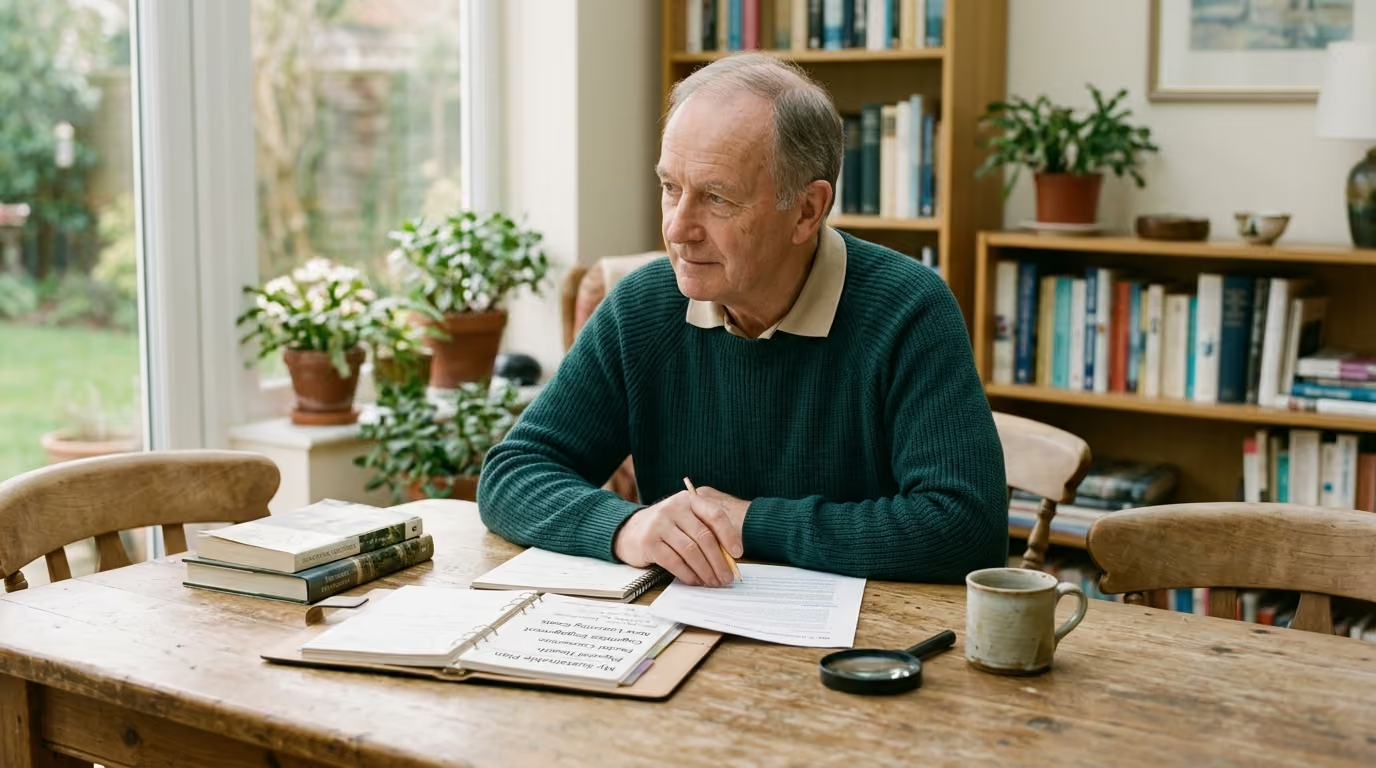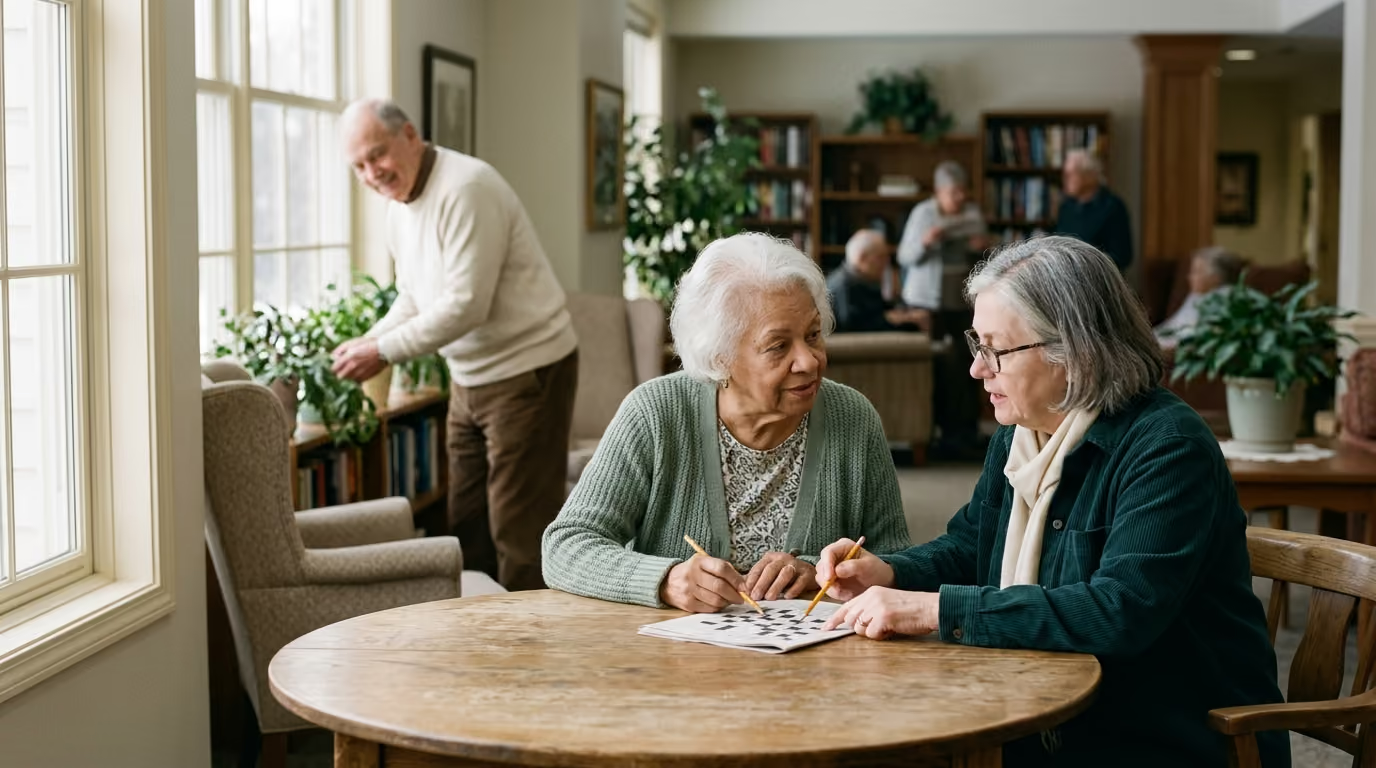

Long-term brain health and fulfilling relationships depend on selecting a supportive living community that promotes independent routines and meaningful social participation.





Many older adults search online for the best place to retire to protect memory, stay active, and avoid loneliness. Marketing brochures often highlight golf courses, swimming pools, and packed social calendars. However, finding a living environment that supports long-term brain health and social fulfillment requires looking beyond resort-style amenities.
This guide provides a comprehensive evaluation of retirement living models. It examines how physical surroundings, social networks, and daily routines shape cognitive resilience, mobility, and personal agency over time.
Cognitive wellbeing involves more than the absence of clinical memory loss. It includes executive function, processing speed, working memory, spatial orientation, and the ability to make independent decisions. The physical and social environment plays a direct role in maintaining these neurological networks.
When an individual engages with complex surroundings, navigates new routes, resolves daily challenges, and maintains conversations, the brain recruits multiple neural pathways. This ongoing activation helps preserve cognitive reserve.
In contrast, prolonged social isolation and unstimulating routines reduce cognitive demands. Over time, this reduction in mental effort can accelerate the loss of cognitive sharpness.
Social isolation represents an objective lack of regular contact with other people. Loneliness is the subjective feeling of being disconnected or dissatisfied with one's relationships. Both conditions can exist independently.
A person can live alone in a walkable neighborhood and maintain rich connections through daily errands, volunteering, and local clubs. Another individual can live in a crowded senior development yet feel completely isolated if the culture feels unwelcoming. Evaluating a retirement community requires understanding this difference between sheer proximity and genuine connection.
Epidemiological research consistently links sustained social engagement with better cognitive performance across late adulthood. A National Academies report found that roughly one-quarter of community-dwelling Americans aged 65 and older are socially isolated. The report summarized extensive evidence linking limited social contact to measurable declines in executive function, processing speed, and memory performance.
Longitudinal studies demonstrate that social connection serves as a protective factor during major life changes. Research published in the journal The Gerontologist tracked older adults during the transition into retirement. The authors found that regular participation in social groups predicted better overall cognitive performance. Maintaining or increasing group memberships helped reduce the rate of cognitive decline during this four-year life transition.
The health outcomes of community-level engagement extend into healthcare utilization. In a cohort study of 12,412 older adults published in JAMA Network Open, researchers observed that individuals with frequent participation in social, cultural, and community activities had lower rates of inpatient hospital admissions. While observational studies cannot establish direct cause and effect, the association between social participation and systemic health remains robust across diverse populations.
The specific type of living arrangement also influences physical and mental outcomes. A major study by NORC at the University of Chicago analyzed health records of older adults entering independent and assisted living settings. The researchers found that residents in these structured communities experienced similar or slightly better health outcomes compared to non-residents in the broader community. These outcomes included lower rates of preventable hospitalizations.
However, communal living does not automatically eliminate emotional distress. Studies of senior cohousing developments reveal that while residents generally report high life satisfaction and lower rates of loneliness than national averages, roughly 24% still experience significant loneliness. Communal architecture encourages casual meetings, but personal relationship dynamics and individual temperament still dictate emotional wellbeing.
Research examining late-life volunteerism highlights the neuroprotective value of purposeful social roles. Longitudinal analyses show that adults who volunteer at least 100 hours per year experience higher levels of optimism, greater purpose in life, and reduced depressive symptoms. These cognitive and emotional benefits appear tied to the complexity of the tasks and the sense of genuine contribution rather than passive participation.
Evaluating any potential living environment requires looking through the lens of a connection ecology. A successful setting provides natural opportunities for social interaction, intellectual novelty, and personal responsibility.
Relationship density measures how many potential social connections, local institutions, and services exist within a manageable radius. High density reduces the effort needed to initiate contact.
When cafes, parks, libraries, grocery stores, and community centers sit within a short distance, casual encounters happen naturally. Low density forces every interaction to become a planned event requiring scheduling and transportation.
High density alone does not ensure friendship. A high-rise building in a congested city can feel isolating if public spaces feel uncomfortable or unsafe.
The ideal environment balances physical closeness with pleasant, accessible third places. These are public or semiprivate spaces outside the home where people gather regularly and comfortably.
Strong friendships usually develop from repeated, spontaneous encounters over time. Environments that support brain health create natural pathways for these unplanned interactions.
Examples include shared courtyards, community mailrooms, central walking paths, resident-tended gardens, and communal coffee areas. These locations allow people to exchange brief greetings without committing to a formal event.
Over months, these small exchanges build familiarity, trust, and mutual recognition. This gradual process creates a supportive social fabric without putting pressure on introverted residents.
A full schedule of entertainment does not replace authentic human intimacy. Meaningful social connection requires relationships where individuals feel heard, valued, and supported during difficult periods.
Communities should offer quiet spaces where two or three people can hold uninterrupted conversations. The culture should also encourage residents to launch self-directed interest groups rather than relying solely on staff-directed entertainment.
True social wellbeing allows residents to choose their level of participation freely. When participation feels mandatory or performative, social fatigue can quickly follow.
Sustaining a clear sense of purpose and mental fitness is essential for cognitive longevity. When individuals retire from full-time careers, they often lose defined responsibilities, professional status, and daily problem-solving opportunities.
A living environment should offer meaningful replacement roles. These include opportunities to serve on resident councils, plan educational programs, manage community budgets, teach skills to others, or participate in local advocacy.
The World Health Organization explicitly lists civic participation and employment as fundamental pillars of age-friendly communities. Environments that treat older adults exclusively as consumers of recreation ignore their deep need to contribute.
A cognitive affordance is an environmental feature that invites mental effort, curiosity, and learning. Living spaces should stimulate intellectual growth rather than encourage passivity.
Challenging affordances include access to advanced lectures, performing arts, musical training, complex gardening, local mentorship programs, and foreign language practice. True cognitive stimulation requires novel problem-solving and focused attention.
Passive entertainment, such as watching movies or listening to light presentations, offers little cognitive challenge. A healthy brain requires regular encounters with new information, demanding tasks, and varied perspectives.
Transportation access determines whether an individual can sustain social connections and intellectual habits over time. When an older adult stops driving, their geographic world can shrink dramatically if alternatives do not exist.
The built environment must support independent mobility across all functional stages. This means providing continuous, level sidewalks, well-lit street crossings, step-free building entries, reliable public transit, and flexible community shuttles.
A retirement setting that works only for active drivers is fragile. A temporary illness, vision change, or minor injury can quickly cause severe social isolation if the neighborhood lacks walkable pathways and non-driving transport options.
Different housing models offer distinct advantages and trade-offs for social and mental wellbeing. Choosing the right setting requires matching personal preferences with the specific structural realities of each environment.
Aging in place involves remaining in one's existing private home or moving to a smaller dwelling within the same familiar town.
Active-adult developments are age-restricted subdivisions or complexes designed for independent older adults, typically aged 55 and older.
Independent living communities provide private apartments along with shared dining, housekeeping, and organized recreation. Continuing Care Retirement Communities, also known as Life Plan Communities, combine independent living, assisted living, and skilled nursing on a single campus.
Senior cohousing consists of privately owned, fully equipped homes arranged around extensive shared spaces, such as common houses, shared kitchens, gardens, and workshops.
University towns and campus-linked retirement developments connect residents directly or informally with academic institutions.
Multigenerational neighborhoods are standard residential areas that include households of all ages, from young families to working professionals and retirees.
A truly supportive living environment offers meaningful responsibilities rather than endless leisure. Neurological health relies heavily on feeling needed by others and having clear daily goals.
When people leave regular employment, they often lose the structured tasks that kept their executive functioning active. A retirement setting should offer clear paths to contribute skills, energy, and knowledge.
Research shows that having a strong sense of purpose protects against cognitive decline and depressive symptoms. When an individual feels that their daily actions matter to their community, they show greater resilience during stressful life events.
Opportunities to lead committees, manage community resources, or organize neighborhood projects provide meaningful mental challenges. These activities exercise planning, working memory, and emotional regulation.
Cross-generational relationships provide distinct cognitive and emotional benefits for older adults. Explaining complex concepts to younger people forces older mentors to synthesize knowledge, organize ideas clearly, and adapt to different communication styles.
These interactions challenge verbal fluency and perspective-taking. Intergenerational programs also reduce feelings of cultural isolation, helping older adults stay connected to evolving technology and ideas.
Living in an environment that facilitates contact with local schools, youth sports leagues, or vocational training centers creates natural conduits for these rewarding relationships.
Participating in community self-governance serves as an intensive cognitive workout. Serving on a cohousing steering committee, a condominium board, or a resident council requires continuous intellectual effort.
Residents must read financial balance sheets, interpret property regulations, negotiate differing viewpoints, and reach workable compromises. These demanding tasks recruit executive function and analytical problem-solving skills.
While community governance can occasionally produce interpersonal stress, the mental engagement it requires provides genuine cognitive value. For additional perspectives on preserving mental sharpness, review our detailed guide on brain aging and neuroplasticity.
Physical mobility and geographic independence directly influence social and cognitive health. When choosing a retirement community, evaluating the transportation infrastructure is as important as evaluating the living units.
A thorough community assessment evaluates accessibility across three distinct life stages:
The World Health Organization identifies eight essential domains for age-friendly community planning. Four of these domains directly govern mobility and physical access:
Living in an automobile-dependent subdivision without sidewalks or public transit creates severe vulnerabilities as people age. When an individual stops driving in such an area, their daily social contacts often drop instantly.
Spontaneous visits to cafes, bookstores, parks, and friends become nearly impossible. Relying on family members or volunteer drivers for every trip can feel disempowering and burdensome.
Over time, this loss of independence can lead to isolation, reduced physical activity, and worsening cognitive health. A community that supports long-term wellbeing must offer safe, practical ways to navigate daily life without a car.
Different personality types, health realities, and identity factors require tailored living environments. A community that works well for one person may prove completely unsuitable for another.
Large retirement communities that emphasize constant group interaction, shared dining halls, and crowded social calendars can overwhelm introverted adults. These individuals often thrive in settings that offer quiet autonomy, accessible nature trails, well-stocked libraries, and private entryways.
The ideal community allows residents to choose small-group or one-on-one activities without feeling pressured to attend large social events. Privacy and solitude should be respected as healthy personal preferences rather than viewed as signs of withdrawal.
Older adults from minority backgrounds face unique concerns regarding safety, respect, and belonging in senior living environments. Many fear encountering discrimination, cultural misunderstandings, or social rejection from peers and staff members.
When evaluating communities, look for clear, written non-discrimination policies, explicit recognition of chosen family in care decisions, and ongoing cultural competency training for all employees.
A supportive community should feature diverse resident demographics, inclusive social programming, and partnerships with local cultural organizations.
Uncorrected hearing loss, low vision, and physical disabilities can quickly turn a lively community into an isolating environment. High background noise and poor room acoustics in communal dining areas make following conversations exhausting for people with hearing aids.
Dim lighting, uneven walking paths, and heavy manual doors create physical barriers for individuals with vision or balance challenges.
A supportive environment should offer excellent acoustic design in common areas, assistive listening systems in meeting rooms, high-contrast visual signage, reliable elevator access, and zero-threshold entryways throughout the property.
Individuals experiencing mild cognitive changes benefit from consistent daily routines, familiar physical layouts, clear wayfinding cues, and structured, low-stress social interactions.
Communities should offer supportive programming that accommodates mild memory changes without forcing an immediate move into secure memory care units.
Staff members should be trained to recognize cognitive changes with patience, maintain resident dignity, and provide subtle assistance with daily scheduling, medication management, and navigation when needed.
Couples often experience different health changes, where one partner remains fully independent while the other develops significant physical or cognitive care needs. In poorly designed communities, this imbalance can force couples into difficult separations or place an overwhelming caregiving burden on the healthier spouse.
The best living environments provide modular support services within the same apartment or offer multiple care levels on a single campus. This setup allows the healthier partner to participate freely in community life while the other receives professional daily care nearby.
Many adults continue working part-time, managing consulting practices, or launching entrepreneurial ventures well past standard retirement age. A resort-style community focused solely on leisure may feel unmotivating and disconnected for these individuals.
Working retirees thrive in environments with reliable high-speed internet, quiet shared workspaces, meeting rooms, and easy access to regional transit hubs and business centers. Engaging in professional tasks helps maintain complex executive functioning, mental clarity, and diverse professional networks.
Marketing materials often repeat common assumptions about senior living that do not hold up under closer examination.
A common assumption is that moving to a community with an extensive daily activity schedule will instantly solve loneliness. However, attending structured lectures, games, or crafts does not automatically produce close, trusted friendships.
A person can attend multiple events daily and still feel emotionally disconnected if interactions remain superficial. True social wellbeing requires environments that encourage spontaneous, repeated contact and small-group collaboration where genuine vulnerability and mutual support can grow.
Many developments advertise the benefits of living exclusively among people of the same age and life stage. While peer communities can make finding shared recreational interests easier, strict age segregation can narrow an individual's social perspective.
Living in environments that include children, young families, and working adults provides varied social roles, such as informal mentoring, storytelling, and civic collaboration. Intergenerational contact keeps older adults connected to wider cultural changes and provides a richer, more diverse social world.
Locating a retirement community near a major university does not guarantee an intellectually rich retirement. In many college towns, campus facilities are spread across large distances with limited accessible parking.
University courses may be closed to older auditors, require high tuition fees, or conflict with transportation schedules. Furthermore, university social life often centers almost entirely on undergraduate students.
Before moving, prospective residents must verify actual auditing rights, class availability, campus library privileges, and the accessibility of educational facilities.
Prospective residents sometimes view senior cohousing as a built-in replacement for professional long-term care. While cohousing communities offer strong social support, mutual aid, and neighborly check-ins, they are not designed to provide professional medical or personal care.
Expecting aging neighbors to prepare daily meals, assist with bathing, manage complex medications, or handle dementia-related behaviors can create severe community strain and interpersonal conflict. Cohousing works best when residents view neighborly support as a social benefit while arranging independent professional care for serious medical needs.
A master-planned community may feature paved sidewalks, manicured landscaping, and walking paths, yet still remain completely car-dependent for daily living. If those sidewalks lead only in loops around residential cul-de-sacs without connecting to grocery stores, pharmacies, cafes, or transit stops, the community is not truly walkable for daily life.
True walkability means being able to safely reach essential commercial services and civic institutions on foot or using a mobility scooter.
Choosing a retirement living environment requires careful, objective on-site evaluation rather than relying on promotional brochures or guided sales tours.
Before committing to a relocation, spend seven consecutive days in your current home or a rental unit in your prospective community without driving a private vehicle.
During this week, complete all normal daily tasks exclusively by walking, riding public transit, using community shuttles, or hailing commercial rideshare services. Record the following practical details:
Avoid judging a prospective community solely on a staged weekend open house or an official marketing tour. Visit the community unannounced on an ordinary Tuesday or Wednesday morning and afternoon. Spend several hours observing daily routines in common areas:
Speak directly with current residents out of earshot of sales staff. Ask specific, open-ended questions designed to uncover the community's true social culture:
Evaluate every prospective location by scoring the following thirteen core criteria on a scale from 1 (poor) to 5 (excellent):
After scoring each location, review the three lowest scores carefully. A low score in mobility, healthcare access, or financial predictability often outweighs a high score in leisure amenities.
Discussing housing transitions with your healthcare providers helps clarify what physical, sensory, and cognitive supports you may need in the coming years.
Applying a structured approach to your housing search will help you choose a community that supports your long-term independence and cognitive wellbeing.

Follow FitBrainLab for research-led insights on memory, focus, brain aging, nutrition and mental fitness after 60. Stay connected for new articles, practical guidance and ideas for a sharper, more engaged life.


Build habits that support memory, focus and a curious, connected life.
Read the Blog