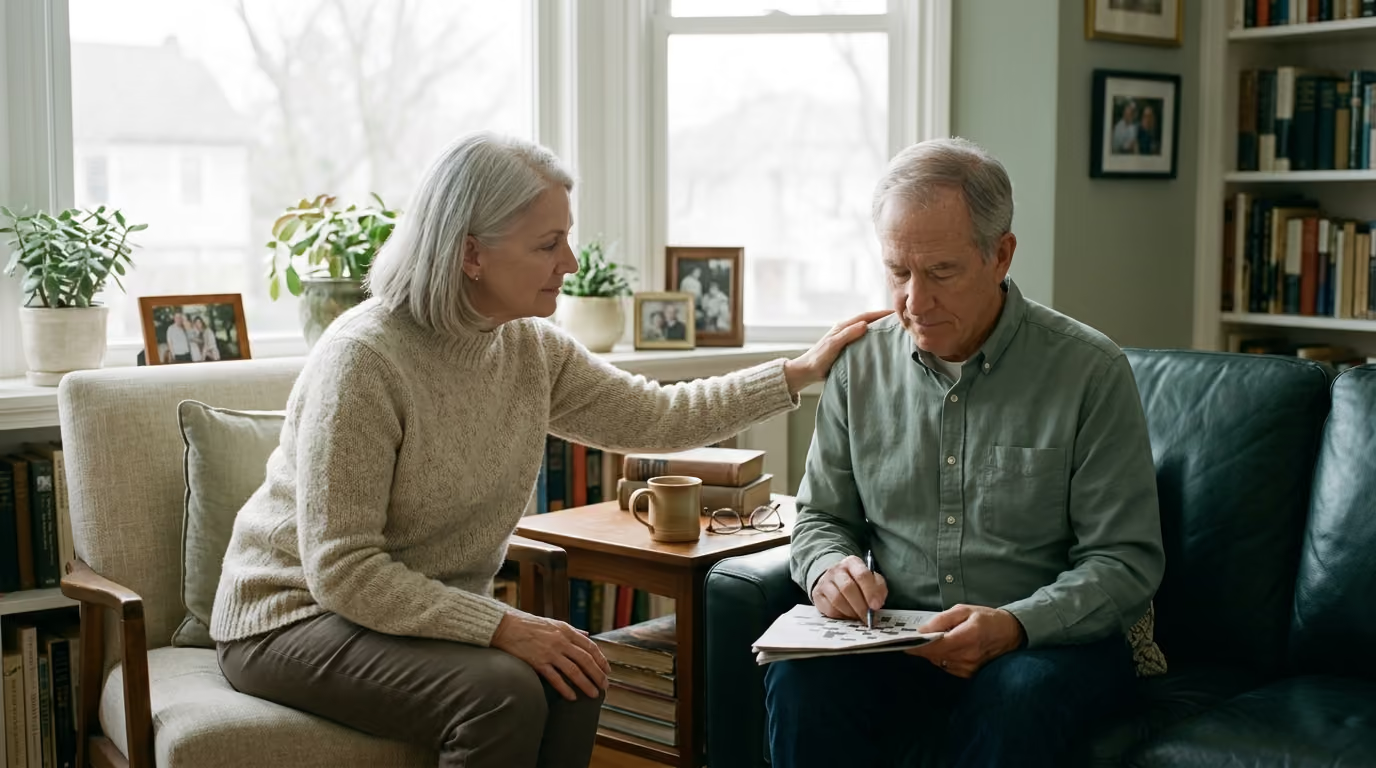

Cooking dinner, tending a garden, and running daily errands naturally challenge your executive function while building lasting cognitive reserve through everyday physical movement.





Many people search online for ways to keep their memory sharp without spending hours on repetitive computer games or exhausting fitness routines. The question is straightforward: can ordinary daily routines support brain function as we grow older? This guide provides clear answers based on current neurological and public health research.
Active living means weaving physical movement and mental engagement into ordinary routines. It includes transportation, domestic chores, hobbies, volunteering, and community involvement. Instead of viewing brain health as a chore done during a twenty-minute training session, active living treats your entire day as an environment for cognitive support.
The human brain relies on a steady supply of oxygen, glucose, and nutrients delivered through a complex network of blood vessels. When you move your body, your heart pumps more blood through this vascular network. This circulation supports the health of neurons and glial cells in brain regions responsible for memory and decision-making.
Everyday tasks also challenge what neurologists call executive function. Executive function is the command center of the brain. It includes working memory, cognitive flexibility, sequencing, and the ability to ignore distractions. When you balance multiple steps while preparing a meal or navigating a busy hardware store, you call upon these frontally mediated brain networks.
Active living also builds cognitive reserve. Cognitive reserve refers to the brain's resilience against age-related changes or neuropathology. When you regularly combine physical movement with problem-solving and social interaction, you help maintain neural pathways. Exploring resources on brain aging and neuroplasticity shows how regular stimulation keeps these communication networks responsive across the lifespan.
Breaking up prolonged sitting is just as important as structured physical activity. Sitting for hours without standing slows circulation and reduces metabolic turnover. Moving periodically throughout the day helps maintain steady blood sugar levels and supports vascular health, both of which are closely linked to long-term brain health.
Scientific research offers a balanced perspective on lifestyle habits and brain health. Researchers look at both population-level risk patterns and clinical interventions to understand what works.
The 2024 Lancet Commission report identified 14 modifiable risk factors across the life course that account for roughly 45 percent of dementia cases worldwide. These factors include physical inactivity, social isolation, high blood pressure, diabetes, obesity, depression, smoking, excess alcohol, hearing loss, and untreated vision loss. This 45 percent figure represents a theoretical population estimate. It is not a personal guarantee that an individual can prevent cognitive decline, but it shows that daily lifestyle habits matter significantly.
Large-scale reviews show positive associations between regular physical activity and cognitive stability. A 2024 systematic review and meta-analysis published in JAMA Network Open examined 104 prospective studies with over 341,000 participants. The researchers found a modest positive association between baseline physical activity and later cognitive function, including episodic memory and verbal fluency. The study noted no strict dose-response threshold, which means that any regular movement provides value over total inactivity.
The Finnish Geriatric Intervention Study to Prevent Cognitive Impairment and Disability, known as the FINGER trial, tested a multidomain lifestyle program in older adults. This landmark study combined aerobic and strength training, nutritional guidance, cognitive tasks, and regular monitoring of vascular risk factors. Over two years, participants in the multidomain program showed significantly better overall cognitive performance, processing speed, and executive function compared to a control group receiving standard health advice.
Public health organizations have translated these findings into practical physical guidelines. The World Health Organization recommends that adults aged 65 and older accumulate 150 to 300 minutes of moderate-intensity aerobic activity each week, or 75 to 150 minutes of vigorous activity. The organization also recommends muscle-strengthening activities on two or more days each week, along with multicomponent physical activity that emphasizes balance and strength on three or more days to reduce fall risk. For those who cannot meet these targets due to chronic conditions, the guidance emphasizes that moving as much as abilities allow is far better than remaining inactive.
Evidence from the National Institute on Aging and the CDC Healthy Brain Initiative highlights that daily physical activity supports sleep quality and mood regulation. High-quality sleep allows the brain to consolidate memories and perform basic metabolic maintenance. When daytime activity improves sleep, it creates a positive cycle that reinforces cognitive clarity.
Domestic work is often viewed as a collection of repetitive chores. Viewed through a neurological lens, these tasks represent complex, real-world cognitive exercises that require physical coordination and mental focus.
Cooking is one of the richest multidomain activities available in the home. A study examining a Japanese cohort of over 10,000 older adults found that preparing meals at least once weekly was associated with lower dementia incidence over time. While observational data cannot prove direct causation, cooking naturally bundles multiple brain systems together.
Preparing a fresh meal requires several cognitive steps:
You can learn more about how dietary choices and kitchen routines intersect by reading about lifestyle and brain resilience. Simple adjustments, such as preparing a new recipe each week or cooking with a partner, add learning opportunities without requiring artificial brain games.
Tending a garden or caring for indoor plants requires moderate physical effort, balance, and continuous planning. Studies published in public health and horticulture journals have linked regular gardening to better cognitive functioning in older adults. Research with the Lothian Birth Cohort demonstrated that gardening frequency correlated with higher cognitive performance into later decades of life.
Gardening recruits multiple physical and cognitive systems:
Gardening can be adapted for any living environment. Raised beds, container gardening on a patio, or tending indoor herb collections on a sunny windowsill offer similar sensory engagement without requiring strenuous ground-level digging.
Managing a living space demands ongoing judgment and physical action. Sorting a cluttered workspace, repairing a cabinet hinge, or organizing seasonal clothing requires visuospatial skills, logical categorization, and sustained attention.
Taking on small repair or organization projects offers several cognitive benefits:
Safety should always come first during home projects. Complex electrical work, heavy lifting, or climbing ladders should be left to professionals or helpful neighbors. The goal is purposeful, safe engagement that exercises your judgment without exposing you to injury.
Active living extends beyond the home into the community. Stepping out into your neighborhood or local town centers provides dynamic environments that stimulate spatial navigation, communication networks, and motor control.
Going to the grocery store, pharmacy, or post office can be turned into a cognitively rich outing. When you walk through store aisles, you process visual information, compare options, calculate costs, and navigate around other people and carts.
To make errands more engaging, consider these strategies:
Navigating physical stores engages working memory and spatial awareness far more than ordering items with a single click online. If physical limitations make large stores fatiguing, break errands into shorter trips across the week.
Volunteering provides a structured framework that combines physical movement, cognitive effort, and social connection. The National Institute on Aging highlights community volunteering as a prime way for older adults to stay active and connected.
Volunteering opportunities provide distinct cognitive benefits:
Volunteering provides a clear sense of social purpose. Feeling useful and needed promotes emotional health, which protects against the cognitive effects of chronic stress and depression. Discover more insights on maintaining purpose by reviewing retirement and mental fitness strategies.
Exploring new environments provides powerful cognitive stimulation. Travel does not require international flights or expensive vacations. Visiting a new park, taking a different walking path, or exploring a nearby town library challenges your brain to build new spatial maps.
Navigating unfamiliar environments recruits distinct mental faculties:
Keep travel manageable and low-stress. Build in plenty of rest periods, maintain hydration, and avoid rushed itineraries that produce exhaustion. The goal is to stimulate curiosity while preserving energy.
To evaluate whether your daily habits support your brain, you can use a structured framework. This model helps you identify how ordinary activities combine physical and mental engagement.
Examine how much physical effort an activity requires. Does it involve walking, standing, bending, carrying, or balancing? Moving your body increases blood flow and strengthens the musculoskeletal system. Try to replace passive sitting with standing or walking whenever feasible.
Look at the mental requirements of the task. Does it require planning, sequencing, working memory, or creative problem-solving? Preparing complex meals, building wooden shelves, or organizing family photos require higher-order executive function. Tasks that require real thinking provide more stimulation than automatic, mindless routines.
Consider the sensory richness of the experience. Does the activity expose you to outdoor light, varied sounds, natural scents, or distinct textures? Working in a garden, visiting an art exhibit, or walking through a farmers market engages sensory processing networks across the cerebral cortex.
Assess the social component of the activity. Does it create opportunities for conversation, humor, storytelling, or cooperation? Social interaction is one of the most demanding cognitive tasks because it requires rapid processing of language, vocal tone, and facial expressions. Connecting with others helps lower the risk of isolation, which the Lancet Commission identifies as a key modifiable risk factor.
Ensure the activity is realistic, enjoyable, and safe. A habit must fit your budget, physical abilities, and personal interests to last over the long term. Pair active periods with restorative sleep and relaxing downtime to allow your nervous system to recover.
Integrating active living into your life does not require overturning your existing schedule. You can modify familiar habits to include more movement, decision-making, and social engagement. Exploring resources on memory and cognitive performance can help you tailor these habits to your personal goals.
Start the morning by turning passive habits into active preparation:
Transform standard errands into a purposeful circuit:
Use the evening meal as an opportunity for shared engagement:
Many popular ideas about brain health oversimplify the science or promise unrealistic results. Understanding what the evidence actually shows helps you focus your energy on habits that truly matter.
While cleaning, cooking, and gardening burn calories and reduce sedentary time, they rarely provide the sustained cardiovascular effort of a brisk walk, swimming session, or cycling ride. Everyday movement is valuable, but it works best alongside deliberate aerobic and strength activities that elevate your heart rate and challenge your muscles.
Popular articles sometimes claim that doing specific chores will make you immune to memory loss. This claim is not supported by science. Cognitive decline and dementia arise from a complex interplay of genetics, cardiovascular health, environmental exposures, and biological aging. Active living supports brain resilience and lowers statistical risk across populations, but it is not an absolute shield against disease.
Some advice suggests that you must constantly change your hand movements, take entirely new routes every day, or solve endless puzzles to keep your brain agile. While occasional novelty is helpful, deep engagement with familiar, complex tasks is equally beneficial. Perfecting a recipe, mastering a woodworking technique, or tending a seasonal garden offers rich cognitive value through refinement and sustained focus.
Commercial brain-training programs often claim to rejuvenate mental faculties through computerized games. Research shows that while users get better at playing those specific games, the improvements rarely transfer to real-world memory, financial management, or driving capability. Real-world activities like managing a household budget, navigating a new transit route, or organizing a volunteer event provide broader cognitive engagement because they involve multiple senses, physical movement, and practical problem-solving.
Active living should be accessible to everyone, regardless of physical limitations, sensory changes, or financial constraints. Tailoring habits to individual needs preserves independence while ensuring safety. Readers interested in broader protective measures can review materials on cognitive health and protection for comprehensive guidance.
Arthritis, joint replacements, or balance instability can make standard household chores challenging:
Untreated sensory loss is a major modifiable risk factor identified by the Lancet Commission. Sensory deficits increase cognitive fatigue because the brain must work harder to decode muffled sounds or blurry visuals.
For individuals noticing subtle changes in memory or executive function, structured routines reduce frustration and preserve autonomy:
Active living does not require expensive club memberships, specialty equipment, or urban walkability:
Lifestyle habits are powerful tools, but they work alongside professional medical care. Regular communication with your healthcare provider ensures that your cardiovascular, metabolic, and sensory systems support your active lifestyle.
Consider discussing these questions at your next medical visit:
You do not need to alter your entire lifestyle at once. Pick a few realistic adjustments to apply across the coming week:

Follow FitBrainLab for research-led insights on memory, focus, brain aging, nutrition and mental fitness after 60. Stay connected for new articles, practical guidance and ideas for a sharper, more engaged life.


Build habits that support memory, focus and a curious, connected life.
Read the Blog