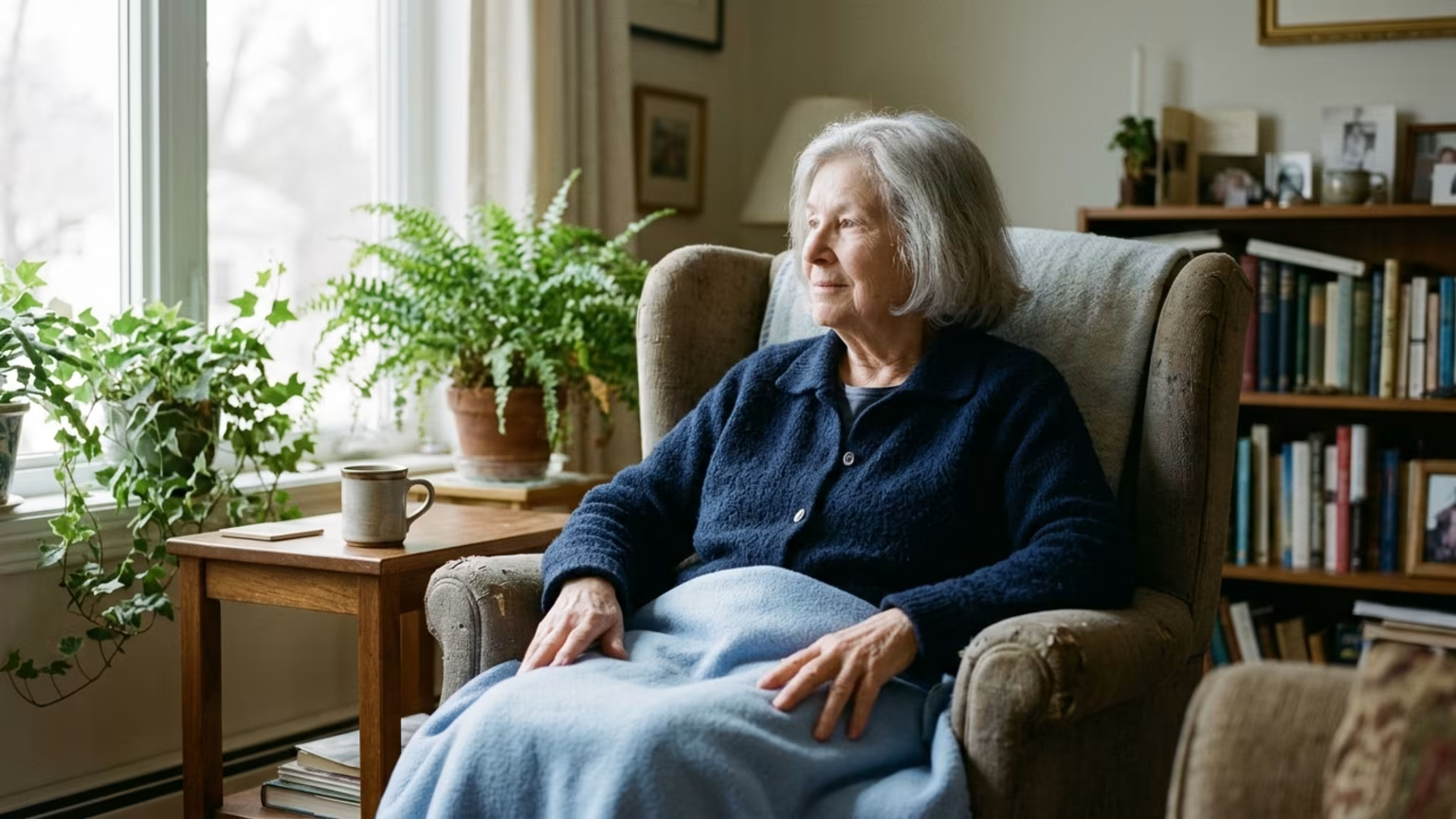

A large observational study linked daytime light with lower dementia risk. Read the findings, limitations and practical context for adults over 60.





In June 2026, researchers including Hongliang Feng published an observational study in General Psychiatry linking higher daytime light exposure with lower dementia risk. The study included 87,577 UK adults who were dementia-free at the start, according to Yahoo Health’s republication of HuffPost Life.
The participants’ average age was about 62. They wore wrist sensors that recorded light exposure for one week. Researchers then tracked dementia diagnoses through health records over a median follow-up of 8.1 years.
During that follow-up, 741 participants developed dementia. This gave the researchers a way to compare recorded light exposure with dementia diagnoses over the years that followed.
The design was a prospective cohort study. That means the researchers measured an exposure and then followed a group over time. In this case, the exposure was daytime light and the outcome was a later dementia diagnosis.
Feng described the work as “the largest prospective cohort to date” using objective wearable measurements to examine routine daytime light exposure and dementia risk, according to Yahoo Health.
The study examined both average daytime light exposure and time spent in brighter conditions. Those measures capture different aspects of a person’s day: the overall level and the duration of brighter exposure.
The lux figures describe the light levels recorded by the sensors. The first finding concerned an average across daytime exposure. The second concerned time spent at or above a brighter light level.
These findings answer related but different questions. One asks whether average daytime exposure was associated with later diagnoses. The other asks whether the amount of time spent in brighter conditions was associated with those diagnoses. Keeping that distinction clear helps readers follow what the researchers actually measured.
The researchers also examined nighttime light. They found no significant association between nighttime exposure and dementia risk in the overall analysis.
For adults over 60, the practical question is how daytime light might fit into an ordinary routine. A regular opportunity to spend time in bright daytime settings can be discussed as a low-risk habit.
Examples include a walk outdoors or spending time in a brighter indoor space. The useful starting point is whether that opportunity fits a person’s day and circumstances. There is no need to turn a research headline into a demanding new routine.
More broadly, the World Health Organization’s dementia guidance identifies several areas for risk reduction:
A daytime walk can sit within the physical-activity part of that framework. Time spent talking or learning belongs to the social and cognitive part. The point is not to rank one habit above every other measure. It is to keep a manageable daily routine connected to the wider health picture.
That wider picture gives the light finding a sensible place: alongside established health measures rather than above them. It also offers a broader frame for thinking about dementia risk. For a clinician, the immediate implication is another everyday factor to discuss within the person’s overall health context.
For researchers, the study brings objective wearable measurements into the question of daytime light and dementia. Its value is in sharpening the research question: how does a recorded feature of daily life relate to diagnoses years later?
The central limit is the observational design. The study found an association, not proof that brighter daytime light caused the difference in dementia risk. Other differences between people with higher and lower exposure could contribute, including differences that statistical adjustment did not fully capture.
The measurement also had limits. One week of recordings may not represent a person’s usual light exposure over the following years. A wrist sensor may not reflect the light reaching the eyes.
The authors also cautioned that participants were healthier and less socioeconomically deprived than the wider population. That may limit how widely the findings apply, particularly when a reader’s health or circumstances differ from those of the study group.
The reported light levels and durations are comparisons within this cohort. They are not clinically validated targets for dementia prevention. The percentages describe differences between groups rather than a forecast for any one reader.
A lower risk in one group does not show how much a particular person’s outlook would change by altering their light exposure. This distinction matters when a precise research figure begins to sound like a personal health instruction.
Feng proposed that circadian regulation might help explain the association. His suggestion was that bright daytime light could help stabilize sleep and waking rhythms. The study did not establish that mechanism.
Some associations were stronger in evening chronotypes and people carrying the APOE ε4 gene. Those subgroup findings do not prove that an individual in either group would receive a different benefit.
The nighttime result also has a narrow meaning. A lack of a significant overall association does not establish that nighttime light is harmless or irrelevant to other aspects of health.
The practical response is to treat daytime light as a routine worth discussing rather than a daily quota. Readers concerned about cognitive changes or their personal dementia risk need individualized advice from a healthcare professional.
This study matters because it puts a measurable feature of everyday life into the long-term study of cognitive health. Wearable light readings offer researchers another way to examine the environments in which people age.
For readers, the most useful perspective is to connect an interesting finding with a varied and sustainable daily life. Daytime light belongs in a conversation that also includes movement and social or cognitive engagement. The long-term value of this work will rest on whether the association becomes better understood, while the broader health picture remains in view.
A light-exposure statistic becomes misleading when it is presented as a personal prevention promise, so FitBrainLab explains such findings without hype. Its research-led reporting helps older readers distinguish established knowledge from early claims about brain health, with practical context for judging what a study adds and what still needs an answer.

Follow FitBrainLab for research-led insights on memory, focus, brain aging, nutrition and mental fitness after 60. Stay connected for new articles, practical guidance and ideas for a sharper, more engaged life.






Build habits that support memory, focus and a curious, connected life.
Read the Blog

